A premises liability case can turn on a few seconds of surveillance video: the moment a customer's foot hits a wet floor, or the half hour a spill sat in an aisle while employees walked past it. The trouble is that those seconds are buried in hours or days of footage from cameras that were never positioned with a lawsuit in mind.
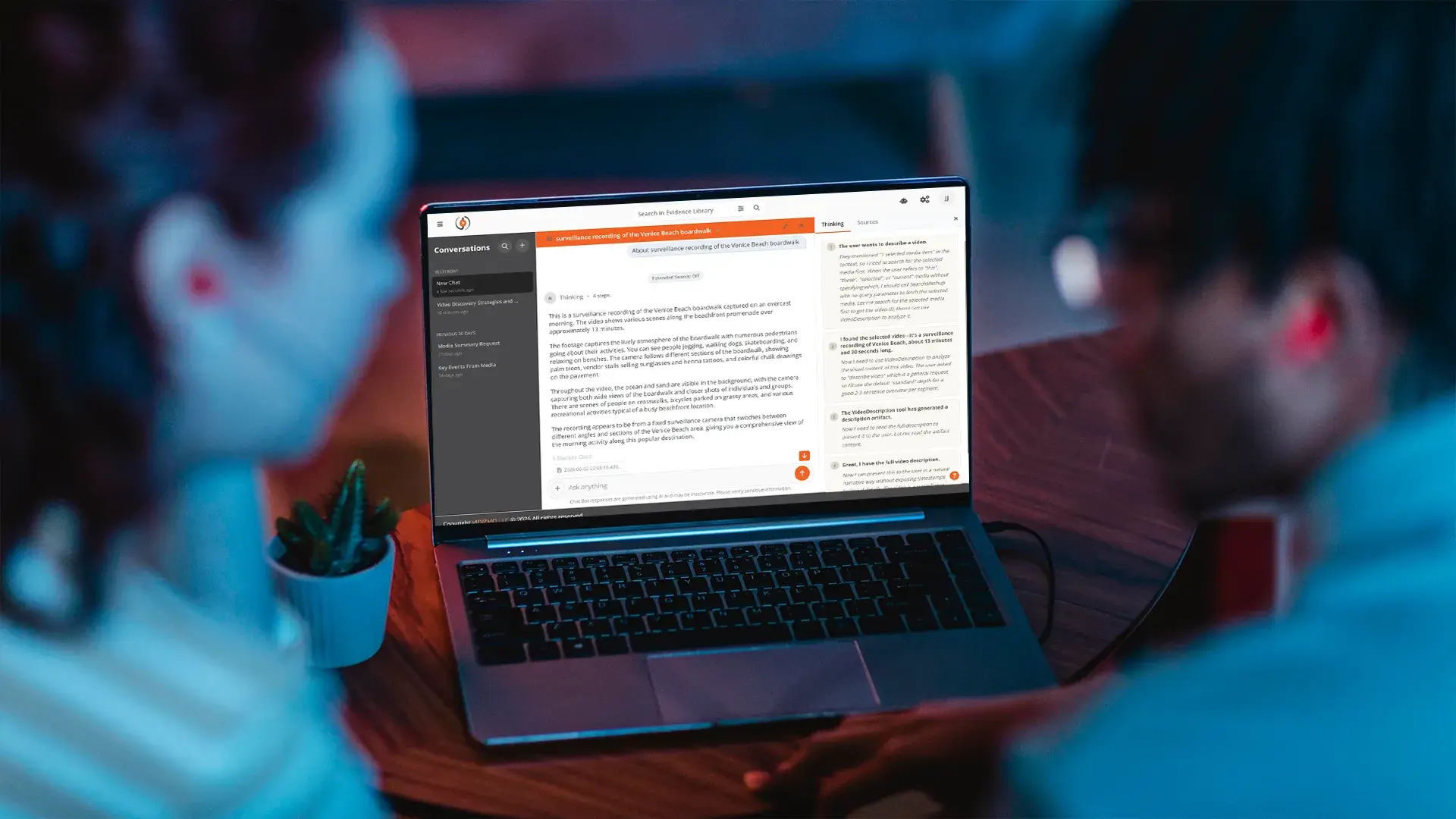
AI surveillance video analysis is the practice of running that footage through models that make it searchable, so a litigation team can find the incident, reconstruct what led up to it, and tie every finding to a timestamp instead of scrubbing through each camera by hand. This guide covers how that works in injury and premises liability matters, where it helps, and the evidentiary limits that still apply.
Why surveillance video carries so much weight in these cases
Surveillance footage records the conditions, the behavior, and the timing that a case depends on, and it does so without the gaps and bias of witness memory. In a premises liability matter, the central question is usually notice: did the property owner know, or should they have known, about the hazard, and did they fail to fix it. Video can answer that more directly than any testimony, because it shows the hazard appear, shows how long it stayed, and shows whether anyone inspected the area in between.
The footage rarely comes from one tidy source. A single incident might be captured by store cameras, a parking lot system, a neighboring business, a traffic camera, a rideshare dashcam, or a doorbell camera down the block. Each runs on its own clock and its own retention schedule. Pulling a coherent account out of that scatter is exactly the work that manual review does slowly, and it is where analysis earns its place as part of a broader move toward AI for legal evidence analysis across every format.
The clock problem: preservation and spoliation
Surveillance video has a short shelf life. Many systems overwrite themselves within days, sometimes within a week, so the evidence can be gone before a claim is even filed. That makes preservation the first move, not a later one. A litigation hold or preservation letter goes out to the property owner as soon as litigation is reasonably anticipated, and it has to name the cameras and the time window specifically enough that nothing is lost to a routine overwrite.
The stakes are real. When a party destroys or fails to preserve footage it knew was relevant, courts can impose spoliation sanctions, up to and including an adverse inference instruction. None of that is an AI problem, but it sets the constraint analysis operates under: the footage you can analyze is only the footage someone preserved in time. Once it is secured, the question becomes how fast a team can make sense of it.
How AI analyzes surveillance footage for an injury case
With analysis applied, a stack of recordings becomes a record a litigation team can question directly. Four uses do most of the work.
Finding the incident is the obvious one. Instead of fast-forwarding through a day of footage to locate a fall, a reviewer can search by description or let activity recognition surface the moment, then jump straight to it with the clip attached.
Establishing notice is the one that wins premises liability cases. Analysis can pinpoint when a hazard first appeared, a spill, a loose mat, an object left in a walkway, and measure how long it remained before the incident, while flagging whether any employee passed through or inspected the area. A timeline showing a spill present for forty minutes with three staff walking past is a far stronger fact than a witness guessing at "a while."
Tracking people across cameras ties the scatter together. The same individual can be followed from one camera's frame into the next, building a continuous movement timeline across systems that were never synchronized.
Building the summary and transcript closes it out. Long recordings are reduced to key events with timestamps, and any spoken audio is transcribed, so the team reviews an account of the footage before deciding which minutes to watch in full. Every item points back to its source moment, which matters for the next problem.
Plaintiff side and defense side use it differently
The same capability serves opposite goals depending on who holds it. For a plaintiff's team, analysis is about proving the hazard and the owner's notice of it, and about finding the clip that shows the mechanism of injury. For the defense, surveillance often means footage gathered of the claimant, the recordings meant to test whether someone's daily activity squares with the limitations they have claimed.
That footage can run to many hours across weeks, and analysis is what makes it reviewable, surfacing the moments worth a closer look rather than leaving an investigator to watch all of it. Knowing both uses helps a team anticipate what the other side is doing with the same tools.
Keeping sensitive footage and case data secure
Surveillance footage in these matters shows uninvolved bystanders, sometimes minors, and an injury case usually pulls in medical records alongside the video. Where the analysis runs is not a detail. Routing that material through a public AI service is a confidentiality and compliance problem before it is anything else.
VIDIZMO AI Intelligence Hub analyzes surveillance video, audio, incident reports, and medical records together on infrastructure the firm controls, returning answers with the source clip, a timestamp, and a confidence score so each one can be verified. For firms handling protected health information in injury, mass tort, or employment work, it supports HIPAA-compliant deployment under a Business Associate Agreement, and it can detect and redact bystander identifiers before footage is produced. Nothing leaves the firm's environment.
You can see how the AI Intelligence Hub handles mixed-format evidence, or run a real closed matter through it to see what surfaces.

FAQ
Frequently Asked Questions
Can AI find the moment of an accident in surveillance footage?
Yes. AI analysis can search hours of footage by description or recognize the activity itself, then return the exact moment with the clip attached, so a reviewer jumps straight to a fall or collision instead of scrubbing the timeline. Treat the result as a lead to verify against the source, not a finding on its own, since camera angle and image quality affect what the model detects.
How long do businesses keep surveillance footage in injury cases?
Retention varies widely, and many systems overwrite footage within a few days to a few weeks. Because of that, preservation is urgent. A litigation hold or preservation letter should go to the property owner as soon as a claim is anticipated, naming the specific cameras and time window. If a party destroys footage it knew was relevant, courts can impose spoliation sanctions, including an adverse inference against that party.
How is surveillance video authenticated as evidence?
Authentication runs through Federal Rule of Evidence 901, either by a witness with knowledge of what the video shows or by establishing that the recording system reliably captured it. Courts now scrutinize authenticity more closely given synthetic video. Preserving the original file with an integrity hash, analyzing only a copy, and documenting chain of custody are what keep the footage defensible when opposing counsel challenges it.
Can surveillance video prove a property owner knew about a hazard?
Often, yes. Premises liability usually turns on notice, meaning the owner knew or should have known about the danger. Footage that shows when a hazard appeared and how long it remained before the incident, along with whether anyone inspected the area, is direct evidence of constructive notice. AI analysis pinpoints those timestamps across long recordings, turning a vague timeline into a specific, provable sequence.
TopicsAI Intelligence HubLegal and Privacy

About the author
Ali Rind is a Product Marketing Executive at VIDIZMO, where he focuses on digital evidence management, AI redaction, and enterprise video technology. He closely follows how law enforcement agencies, public safety organizations, and government bodies manage and act on video evidence, translating those insights into clear, practical content. Ali writes across Digital Evidence Management System, Redactor, and Intelligence Hub products, covering everything from compliance challenges to real-world deployment across federal, state, and commercial markets.
You may also like
Predictive Maintenance With Video AI: What Cameras See Before a Machine Fails
A predictive maintenance program is built on instruments: vibration probes on the bearings, thermal surveys of the ...
Quality Control in Manufacturing: Inspection, Defects and the Evidence Behind Every Hold
Quality control in manufacturing is four jobs that most plants treat as one: inspecting what was made, preventing the ...
Knowledge Transfer in Manufacturing: Keeping What Experienced People Know
Every plant has a handful of people whose absence shows up in the numbers during the same week they are gone. When the ...