
Video technology is transforming healthcare by enhancing training, patient follow-ups, internal communication, and collaboration among professionals. This blog outlines five impactful ways videos can improve care delivery, reduce costs, and streamline operations for healthcare providers.
Healthcare has evolved over the past decade, where technology is an essential tool for improving efficiency, minimizing costs, and achieving favourable outcomes.
Healthcare professionals, such as doctors, paramedical staff, and pharmacists, consider communication to be of utmost importance and are finding that there are benefits to staying up to date with technological enhancements.
The sector has been relatively fast when it comes to adopting mobile access, wireless functionality, analytics, and cloud storage. Moreover, the doctors and patients are making use of video-driven remote interactions for diagnosis, remote treatment, and prescribing medicines.
On the other hand, hospitals are using videos to govern their business operations. Thus, video-based content has become an invaluable asset for the healthcare fraternity; it assists in offering optimum care to remote patients globally.

1. Employee Training
Training is extremely important in the healthcare sector since treatments, diagnoses, and technology are constantly evolving; healthcare professionals must be well-equipped to stay ahead of the curve.
Hospitals have difficulty conducting training sessions for their employees since doctors and other professionals are mostly too busy to take time out of their busy schedules to attend such courses.
Employees can access content at their convenience by creating an online video portal for training. With the help of videos, large training sessions can be conducted on diversified topics per healthcare professionals' needs.
2. Patient Follow-Ups
Doctors find it extremely difficult to offer the same care once a patient has been discharged. Many times, patients require being reminded about prescribed medicines, therapy or care.
Moreover, patients with mobility issues can not afford to be transported to the hospital frequently.
Patients suffering from medical conditions such as Alzheimer’s could particularly benefit from visual stimulations that help them deal with their conditions better.
With videos, doctors can ensure that the patients are complying with the treatment. Doctors can upload videos on an enterprise video portal, and patients can access information about the treatment, precautions, etc.
3. Seamless Internal Communication
There are fewer chances of collaboration at healthcare facilities than in the workplace.
This underscores the need for an Enterprise YouTube solution to strengthen internal communication. Departments are generally working in isolation, where one employee has no contact with the other.
Bolstering employee communication with the help of an employee video portal can assist in knowledge sharing and collaboration.
Sharing knowledge through videos minimizes the chances of misinterpretation and facilitates productive outcomes.
4. Streamlining Resources
Healthcare professionals are required to collaborate with another specialist for diagnosis and treatment several times. It becomes extremely hard for patients to transfer to and from it.
It is equally hard for doctors to communicate on the fly when wanting a second opinion or to better understand a particular diagnosis. Using Digital Asset Management (DAM) systems allows them to essentially.
By making use of videos, healthcare providers can record the relevant details and get feedback from other specialists on the subject. Other consultants do not have to visit the patient physically but can give their input, saving time and money.
5. Saves Cost
One of the most important factors to take into consideration for the healthcare fraternity is the cost reduction they will benefit from. Doctors can see images of their patients at any time from anywhere and can collaborate with the in-house team for further treatment.
This minimizes the cost involved in traveling. As mentioned earlier, video training also saves money since employees can be at diverse locations but still leverage the resources. Moreover, hospitals can also play their part in lowering their carbon footprint significantly while saving on tangible monetary costs.
Enterprise video portals are making their way in the healthcare sector, and VIDIZMO provides an out-of-the-box video solution to ensure a smooth video experience.
Doctors can upload video content and track patients’ activity with the help of advanced analytics, whereas hospitals can ensure swift work mechanisms via video training and smooth internal communication.
At the same time, VIDIZMO offers a HIPAA compliant video platform to ensure sensitive patient data is not breached.
Enhance Patient Care and Efficiency with a Video Platform for Healthcare
The benefits of using a video platform for healthcare are clear: improved training, better patient follow-ups, seamless internal communication, resource optimization, and significant cost savings.
From enabling on-demand training for busy staff to offering remote care solutions for patients, videos are transforming the way healthcare providers operate.
With a secure, HIPAA-compliant video management platform like EnterpriseTube, hospitals and clinics can streamline operations, protect patient data, and deliver a higher standard of care.
Whether it’s uploading training content or tracking video engagement through analytics, a video platform for healthcare provides the tools needed to drive meaningful improvements.
Ready to modernize your healthcare delivery? Start your Free Trial of EnterpriseTube or Contact Us to discover how a video platform for healthcare can help you improve patient outcomes and streamline clinical operations.

FAQ
Frequently Asked Questions
How can videos improve employee training in healthcare?
Videos improve employee training in healthcare by offering flexible, on-demand access to educational content. Healthcare professionals can learn at their convenience, keeping up with evolving procedures and technologies without disrupting their schedules.
Why are videos useful for patient follow-ups?
Videos are useful for patient follow-ups as they provide clear, visual instructions that patients can revisit at any time. This ensures better adherence to treatment plans and helps patients with mobility challenges stay informed from home.
How do videos help streamline communication in hospitals?
Videos help streamline communication in hospitals by enabling departments to share knowledge efficiently. An enterprise video portal reduces misinterpretation and encourages collaboration among healthcare professionals.
What role do videos play in reducing healthcare costs?
Videos play a significant role in reducing healthcare costs by cutting down on travel, facilitating remote training, and enabling virtual consultations. These efficiencies lower both operational expenses and environmental impact.
Can videos support remote diagnosis in healthcare?
Yes, videos support remote diagnosis by allowing specialists to review patient footage and provide input without being physically present. This helps deliver faster, collaborative medical opinions regardless of location.
Why is video-based training important in healthcare?
Video-based training is important in healthcare because it ensures consistency, improves retention, and is accessible anytime. It is especially beneficial in keeping staff updated on new treatments, protocols, and compliance standards.
How does video improve patient compliance after discharge?
Video improves patient compliance after discharge by reminding them of medication routines, therapy steps, and necessary precautions. Visual learning aids can be more effective for patients with cognitive or memory-related challenges.
Is video communication secure for healthcare organizations?
Yes, video communication can be secure when hosted on a HIPAA-compliant video platform. This ensures patient data privacy and protects sensitive medical content from unauthorized access.
What is the environmental benefit of video use in healthcare?
Using videos in healthcare reduces the need for travel and printed materials, which contributes to a lower carbon footprint. It also minimizes waste while promoting sustainability in healthcare operations.
How can hospitals use video portals effectively?
Hospitals can use video portals effectively for staff training, patient education, internal communication, and sharing diagnostic content. With features like analytics and secure access, video portals enhance operational efficiency and care delivery.
TopicsEnterpriseTube
About the author
See how VIDIZMO helps you securely stream, manage, and maximize your video and digital evidence data with compliant, expert solutions.
You may also like

Deploying a Low-Latency Surveillance Pipeline: An Architecture Guide
"Real-time" is one of those phrases that gets used loosely, and in a video analytics pipeline it hides a lot of ...

Choosing a GPU for Real-Time Video Analytics
Capacity planning tells you how many GPUs a deployment needs. This is the other half of the question: which GPU to ...
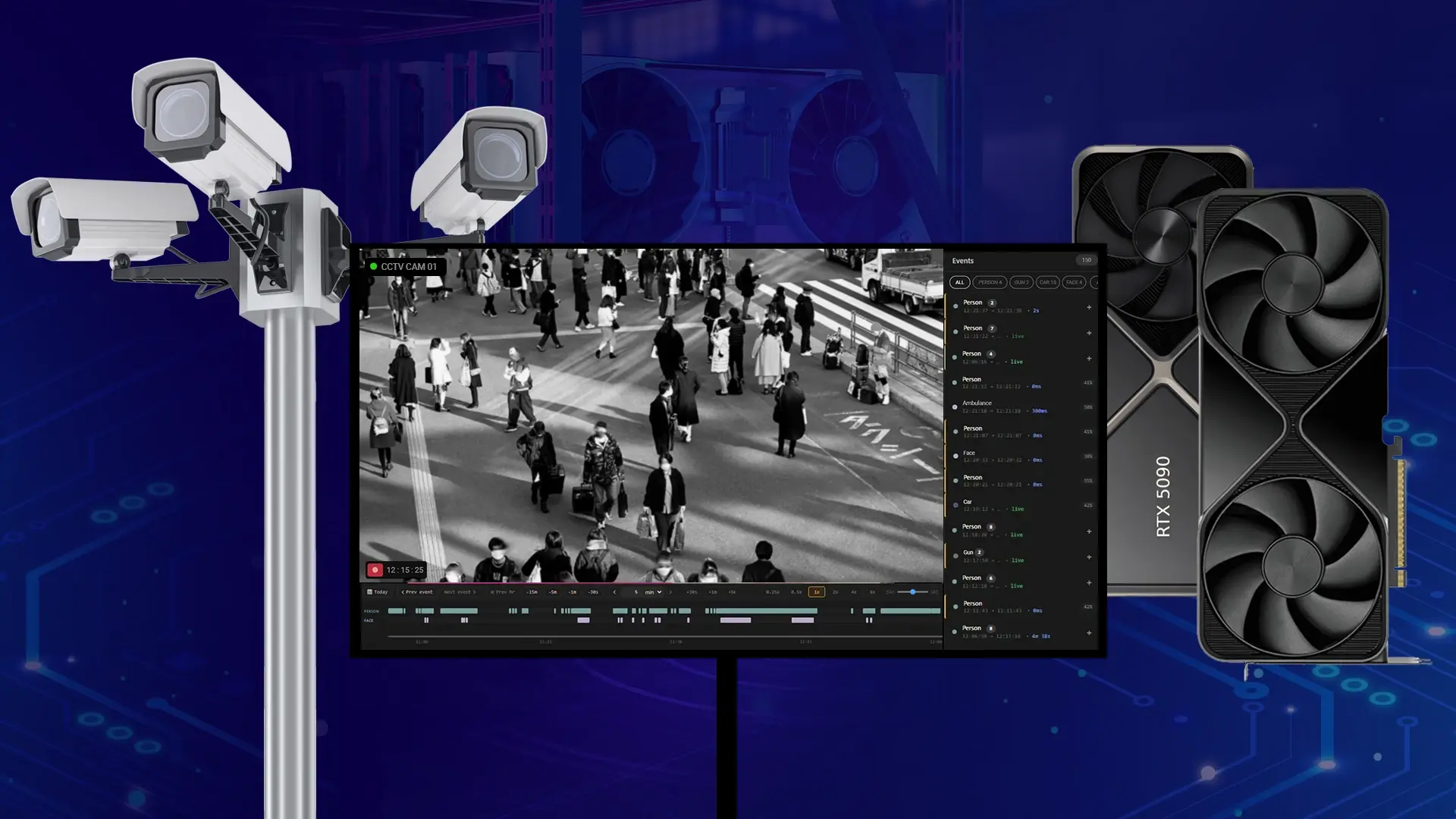
GPU Capacity Planning for Real-Time AI Video Analytics
Ask a vendor how many cameras their AI runs on one GPU and you will usually get a single confident number with no ...