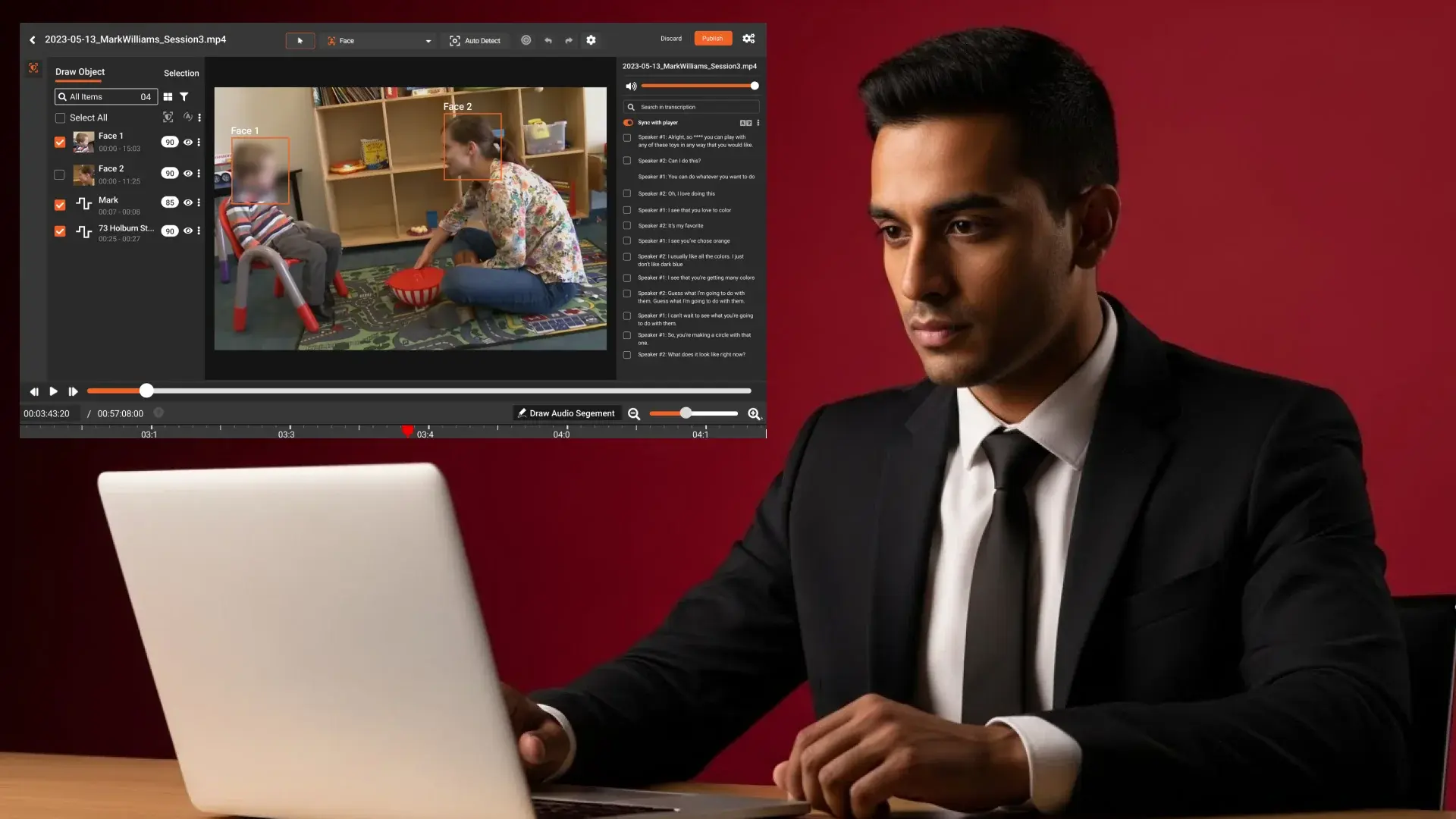
As data privacy regulations continue to expand, Data Subject Access Requests (DSARs) have become a routine yet high-risk obligation for organizations worldwide. Under laws such as GDPR, CCPA, and similar privacy frameworks, individuals have the right to access their personal data, including data that appears in video and audio recordings.
This creates a major challenge: video footage often includes multiple individuals, sensitive visual identifiers, and spoken personal information that cannot legally be disclosed. Manual redaction is time-consuming, error-prone, and difficult to defend. As a result, AI-powered video redaction software has become essential for DSAR compliance.
This guide explores the best video redaction software solutions for DSAR compliance, covering tools designed for video, audio, documents, and end-to-end privacy workflows.
VIDIZMO Redactor
VIDIZMO Redactor is a comprehensive AI-powered redaction platform built to support DSAR compliance across video, audio, images, and documents within a single workflow. Its ability to handle multimedia redaction at scale makes it the strongest overall choice for organizations responding to DSARs involving recorded content.
Key features
- AI-based detection of faces, people, license plates, vehicles, screens, and custom objects
- Automated and manual audio redaction using speech-to-text
- Bulk processing for high-volume DSAR requests
- Supports video, audio, images, and documents with OCR
- Cloud, on-premises, and hybrid deployment options
- Role-based access controls and detailed audit logs
Why choose VIDIZMO
VIDIZMO Redactor is designed specifically for organizations that handle media-heavy DSAR requests, such as CCTV footage, recorded customer interactions, body-cam video, or interview recordings. Its combination of automation, scalability, and auditability makes it well-suited for regulated environments.
Best for
Enterprises, government agencies, healthcare, law enforcement, and regulated organizations are managing large volumes of multimedia DSARs.
2. CaseGuard Studio
CaseGuard Studio is a well-established redaction platform that combines AI automation with granular manual controls. It supports redaction across video, audio, images, and documents, making it suitable for organizations that need accuracy and flexibility.
Key features
- Face, license plate, and screen detection
- Audio transcription and redaction
- Frame-by-frame manual editing
- Multi-format export options
Why choose them
CaseGuard works well when DSAR responses require fine-grained review and adjustment, especially in legal or investigative scenarios.
Best for
Public sector agencies, legal teams, and compliance departments handling sensitive disclosures.
3. Secure Redact
Secure Redact focuses on automating redaction for large volumes of video and image data. It is designed to help organizations process surveillance footage efficiently while protecting personal identities.
Key features
- Automated detection of people, faces, and identifiers
- Batch processing for high-volume workloads
- Centralized redaction workflows
- Cloud-based deployment
Why choose them
Secure Redact is effective when speed and scale are the primary requirements, particularly for organizations with extensive CCTV networks.
Best for
Retail chains, transportation operators, and smart city environments.
4. DataGrail
DataGrail is a privacy operations platform rather than a traditional redaction tool. It helps organizations manage DSAR intake, data discovery, and fulfillment across SaaS-heavy environments.
Key features
- Automated DSAR request handling
- Data mapping across cloud applications and CRMs
- Consent and preference management
- Compliance reporting dashboards
Why choose them
DataGrail excels when DSARs primarily involve structured data stored across multiple systems, rather than unstructured video or audio files.
Best for
Technology companies and SaaS-driven enterprises.
5. Redactable
Redactable is a document-first redaction platform designed for PDFs, scanned files, and text-based records commonly used in DSAR responses. It automates the identification of personal data while allowing manual verification.
Key features
- AI-powered document redaction
- Pattern-based PII detection
- Manual review tools
- Secure export formats
Why choose them
Redactable is best suited for document-heavy DSAR workflows where speed and accuracy across PDFs and scanned files are critical.
Best for
Legal, HR, and compliance teams handling document-centric DSARs.
6. Reduct
Reduct uses a transcript-first approach to video and audio redaction, allowing users to remove sensitive content by editing text instead of working frame by frame.
Key features
- Automated transcription
- Text-based audio and video redaction
- Visual blur tools
- Collaborative review features
Why choose them
Reduct is particularly effective for DSAR requests involving recorded conversations, interviews, or meetings.
Best for
Investigations, research teams, and interview-based disclosures.
7. E-Redact
E-Redact is a GDPR-focused document redaction platform designed for structured and repeatable DSAR document workflows, particularly within the UK and EU.
Key features
- GDPR-aligned redaction rules
- Batch document processing
- Audit trail reporting
- Manual review workflows
Why choose them
E-Redact works well for organizations handling repetitive document-based DSAR requests under strict GDPR frameworks.
Best for
UK and EU enterprises with document-centric DSAR workloads.
If you're evaluating tools more broadly beyond DSAR, see our comparison of the 9 best video redaction tools across law enforcement, healthcare, and privacy use cases.
DSAR Redaction in the UK: What UK GDPR and the ICO Expect
For UK organizations, DSARs are governed by the UK GDPR and the Data Protection Act 2018, with the Information Commissioner's Office (ICO) as the supervisory authority. A few obligations shape how redaction has to work:
- A one-month clock. You must respond to a DSAR without undue delay and within one month of receipt, extendable by up to two further months only for complex or numerous requests. That timeline makes manual, frame-by-frame video redaction hard to sustain at volume, which is why automation and bulk processing matter.
- Third-party personal data must be protected. When footage or recordings show other identifiable people, their personal data has to be redacted before disclosure unless they consent or disclosure is otherwise reasonable. For CCTV, body-worn video, and recorded calls, that means blurring faces and muting spoken identifiers, not withholding the whole recording.
- Defensibility and audit. The ICO expects you to show how a request was handled. Redaction that is irreversible, logged, and reviewable holds up better than visual masking that can be undone.
UK public-sector bodies carry an added load: police forces, NHS trusts, and local councils handle DSARs alongside Freedom of Information Act 2000 requests (a separate 20-working-day duty), and both routinely involve video and document redaction at scale. Several tools above reflect this UK and EU focus, with e-Redact built around GDPR document workflows and Secure Redact widely used for UK CCTV and body-worn footage.
For UK teams the selection criteria below are the same, weighted toward the one-month deadline: prioritize automation and bulk processing to hit it, audio and transcript redaction for recorded calls, and audit trails that satisfy the ICO.
How to Choose the Right DSAR Redaction Software
DSAR compliance is no longer limited to emails and documents. Video recordings, audio files, scanned records, and surveillance footage now play a central role in privacy requests, making redaction accuracy, speed, and auditability critical.
When evaluating DSAR redaction software, organizations should focus on the following factors:
1. Support for Multiple Media Types
DSARs often reference more than just documents. Look for tools that can handle video, audio, images, and scanned files without forcing teams to switch between platforms.
2. Automated Detection with Human Oversight
AI-driven detection of faces, license plates, spoken names, and other identifiers significantly reduces processing time. However, the ability to manually review and adjust redactions is essential for legal defensibility.
3. Audio and Transcript-Based Redaction
Personal data isn’t always visual. Software that supports audio redaction or transcript-based workflows helps ensure names, addresses, and other spoken details are properly protected.
4. Scalability for High-Volume Requests
As DSAR volumes grow, tools should support bulk processing and batch workflows to meet regulatory deadlines without increasing operational strain.
5. Audit Trails and Access Controls
Compliance requires proof. Look for platforms that maintain detailed audit logs, role-based access, and traceable redaction histories.
6. Deployment and Data Residency Options
Depending on regulatory and security requirements, organizations may need cloud, on-premises, or hybrid deployment options to control where sensitive data is processed and stored.
7. Alignment with Privacy Regulations
Ensure the solution supports compliance with relevant laws such as GDPR, CCPA, and regional privacy regulations, particularly if operating across multiple jurisdictions.
Choosing the right DSAR redaction software ultimately depends on the types of data you manage, the volume of requests you receive, and the level of regulatory scrutiny you face. By focusing on these core capabilities, organizations can build DSAR workflows that are efficient, defensible, and privacy-first.

FAQ
Frequently Asked Questions
What is video redaction in DSAR compliance?
Video redaction in DSAR compliance refers to the process of removing or obscuring personal data from video recordings before sharing them with a data subject. This may include blurring faces, masking license plates, removing audio containing names, or hiding other identifying details to protect third-party privacy.
Do DSARs apply to video and audio recordings?
Yes. Under privacy regulations such as GDPR and CCPA, video and audio recordings qualify as personal data if an individual can be identified directly or indirectly. Organizations must provide access to this data while ensuring that personal information of other individuals is not disclosed.
Why is manual video redaction risky for DSARs?
Manual redaction is time-consuming and prone to errors, especially for long or high-frame-rate videos. Missed frames or incomplete audio redaction can lead to unintentional data exposure, regulatory penalties, and legal risk. Automated redaction tools significantly reduce these risks.
What types of personal data should be redacted in DSAR videos?
Common types of personal data that require redaction include:
Faces and identifiable individuals
License plates and vehicle identifiers
Screens displaying personal information
Spoken names, addresses, or phone numbers
ID badges, documents, or account details
Can DSAR redaction software handle audio as well as video?
Many modern DSAR redaction tools support audio redaction, often through automated transcription. This allows organizations to identify and remove spoken personal data rather than relying solely on visual redaction.
Is AI-based redaction acceptable for legal compliance?
Yes, as long as AI-based redaction is combined with human review and auditability. Regulators generally expect organizations to demonstrate reasonable safeguards, accuracy, and accountability, which includes the ability to review, verify, and document redaction decisions.
How long do organizations have to respond to a DSAR involving video?
Under GDPR, organizations typically have one month to respond to a DSAR, with limited extensions allowed in complex cases. Video-heavy DSARs can significantly increase processing time, which is why scalable redaction tools are important.
What is the best redaction software for DSAR compliance?
The best redaction software for DSAR compliance is VIDIZMO Redactor because it supports end-to-end redaction across video, audio, images, and documents within a single platform. It uses AI to automatically detect and redact personal data such as faces, license plates, and spoken identifiers, while also providing manual review tools, bulk processing, and audit trails required for regulatory compliance. This makes it well-suited for organizations handling complex, media-heavy DSAR requests under laws like GDPR and CCPA.
TopicsRedactionRedactorSecurity and Compliance
About the author
Zain Noor is a Product Marketing Executive at VIDIZMO with expertise in AI redaction technology. He focuses on how public safety agencies, government bodies, and commercial organizations adopt and operationalize video intelligence at scale.
You may also like

What Is a Real-Time Crime Center? A Guide for Cities and Counties
Somewhere in the last two years, someone probably asked your department whether it should have a real-time crime ...

Staffing a Real-Time Crime Center When Software Does the Watching
Most chiefs who hear a pitch for a real-time crime center ask the same question before any other, which is whether they ...
RTCC, EOC or Situational Awareness Center: What Each Room Is For
Walk into a real-time crime center, then into a city's emergency operations center, and you will see much the same ...