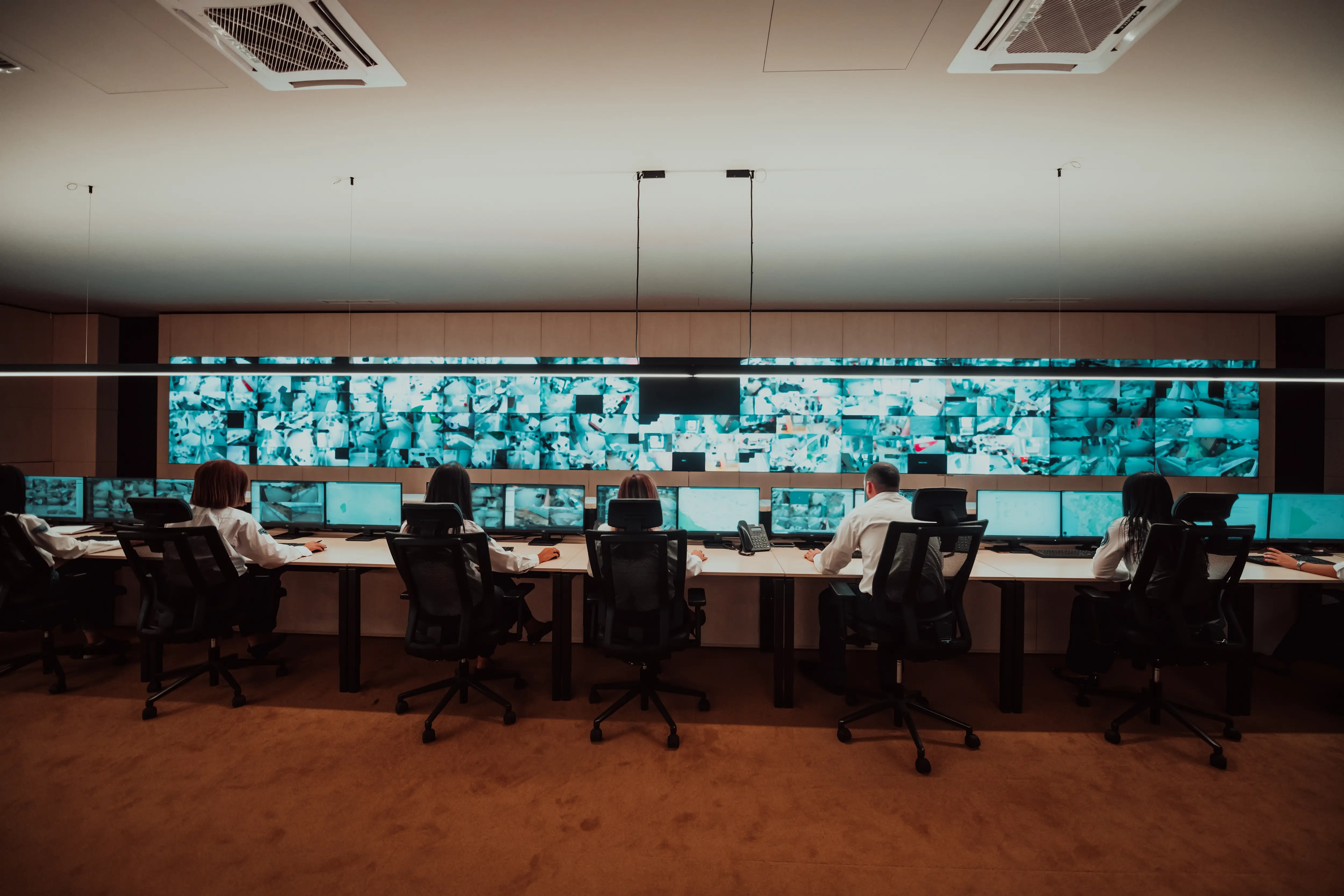
Every school emergency plan contains a sentence like "upon confirmation of a threat, initiate lockdown procedures," and buried in that sentence is the hardest operational problem in school safety: the word confirmation. Who confirms, from what information, in how many seconds, while doing what else? The tabletop exercise assumes a calm administrator with good information; the actual event supplies a terrified front office, a partial report relayed twice, and a decision that must be made faster than information arrives. Technology vendors have noticed this gap, and some now promise to close it by removing the human entirely, AI that locks the school itself. This article is about why that promise should be refused, what should be automated instead, and how a district writes the policy that gets the speed without surrendering the decision. It belongs to our full guide on AI video analytics for school and campus safety, and its position can be stated in one line: automation assembles and accelerates the decision, and a named human makes it.
Where the minutes go today
Walk through a real activation and the time reveals where it hides. A weapon is seen, or a fight erupts, or an intruder enters, and the interval between event and campus-wide response is consumed by a chain of human relays: someone sees, someone tells the office, the office tries to verify, an administrator decides, the administrator or their delegate operates the notification system, doors get secured by whoever is near them, and law enforcement gets a call with secondhand facts. Each relay adds seconds and subtracts fidelity, and the total routinely runs to several minutes, which is the entire budget of the event.
Now lay the detection stack from this series under the same timeline. The event is detected as it happens, weapon, intrusion, aggression, per the articles on weapon detection and fights. For the gravest detection types the alert and the second look travel in parallel, so the event lands in front of the named decision-maker at detection speed and the model's reading of the clip arrives into the same alert seconds behind it, frame, location, and live view attached, which is the confirmation problem solved as an information problem: the human still decides, but they decide looking at the thing itself, not at a relayed fragment. And the moment they decide, the orchestration layer executes the plan as fast as machines execute: notifications to the campus through the mass-notification system, the event into the dispatch channel with the evidence attached, door actions requested from the access-control platform, the state panic-alert obligations of the Alyssa's Law family satisfied through the channels the district configured. Minutes of relay collapse into seconds of assembly plus one human decision, and the decision itself is better informed than it has ever been.
That is the honest offer of automation in this domain: not fewer humans, but humans deciding sooner, with evidence, and executing at machine speed once decided.
The three-tier response policy
The design question every district must answer is which actions run automatically at which confidence, and the answer belongs in a written policy the board adopted, not in a vendor default. The framework that works divides every possible response action into three tiers.
Notify-automatically actions run without approval, because they are informative and reversible: the alert to the safety team with the clip, the heads-up to the School Resource Officer (SRO), the pre-staging of a draft notification, the camera wall snapping to the affected zone. A district should automate this tier aggressively, since its only cost is attention and its speed is pure gain.
Approve-to-execute actions wait for the named human: campus-wide lockdown, mass notification to families, door-control commands, law-enforcement escalation beyond the informational. The approval is designed for speed, a decision screen with the evidence assembled and a single action to confirm, seconds not minutes, and the approver roster is defined per site and per shift with unambiguous succession, because a policy that names only the principal has not planned for the assembly, the field trip, or the flu.
Never-automated actions are the district's own red lines, stated in the same document: whatever the district decides no system may ever do without a human, and the act of writing that list is itself the governance exercise that surfaces every assumption. The deck-level principle this platform family maintains does the summary work: no unconstrained AI independently calls 911 or locks a school, and any vendor whose architecture cannot express these tiers, with logging, is offering a different product than a school should buy.
Fail-safe design threads through all three tiers, and it deserves its own sentence because it is where engineering meets duty of care: every automated pathway fails toward the safe state, a dead integration means the notification queue alerts a human rather than silently dropping, a lost camera means the zone reports unknown rather than clear, and the system's own health is monitored with the same severity as any detection, because a response chain that might be down is worse than none, it is a false assurance.
Writing an approver roster that works
The approve-to-execute tier is only as strong as its roster, and rosters fail in predictable, fixable ways. The failure modes: the policy names titles rather than people, and the title is at a conference; the succession is implicit, so two people each assume the other holds it; the after-hours case routes to an office phone; and the approver has the authority but not the interface, receiving a decision request they must leave a classroom crisis to go answer at a desk. The roster that works names people per site per shift with explicit succession, puts the decision screen on the phones they actually carry, distinguishes school-day, activity-evening, and empty-building periods because each has a different plausible approver, and drills the handoff, not just the decision, because succession that has never been exercised is succession on paper. Universities substitute their dispatch operation as the standing approver for most tiers, which is the luxury of a staffed desk, and their roster problem inverts into span-of-authority: which events the dispatcher may approve alone and which wake the chain, written with the same explicitness.
One more line the policy should contain, learned from every domain where automation meets emergencies: the human may always act without the system. The lockdown initiated by a principal who saw something with their own eyes proceeds exactly as it always did, the orchestration layer amplifying rather than gatekeeping, because a response architecture that inserts itself between a human's judgment and the alarm has confused its role, and the fastest way to lose a faculty's trust is to make them ask a computer for permission to protect children.
Drills and partial activations
Lockdown discourse fixates on the full activation, and the daily value of orchestrated response lives mostly below it. The zone response, clearing and securing one wing while the rest of the school continues, the hold-in-place for a medical event in a corridor, the exterior-threat posture that locks doors without moving students, each is a workflow with its own tier assignments, and the graduated menu is what keeps responses proportionate, which is itself a safety property: a school that can respond narrowly will respond earlier, because the cost of acting is no longer a full-campus disruption.
Drills are where the orchestration layer pays twice. The drill itself runs as a workflow, scheduled, announced per policy, executed through the same chains as the real thing, and the record it produces is the after-action review pre-assembled: notification timestamps, acknowledgment times, door-securing intervals where access control reports them, evacuation or shelter timings from the crowd layer, and the camera record of the corridors during the drill. Districts run the review against measurements instead of impressions, fix what the timings expose, and file the record where the next tabletop, the insurer, and the state compliance report can use it. The drill record is also the community's evidence: a district that can show its response chain tested quarterly, with times, is answering the question every parent meeting asks, will it work, with the only answer that means anything.
What orchestration is and is not
The positioning this platform family maintains everywhere bears its sharpest edge in this article, so it gets stated once more with the mechanics visible. The orchestration layer sends validated events and commands to compatible external systems through their integrations: the mass-notification platform sends the campus alert, the access-control system executes the door actions under its own fail-safe logic, egress hardware remaining life-safety compliant because that is the access vendor's engineered obligation, and the dispatch interface carries the event to responders, with Computer-Aided Dispatch (CAD) systems of the CentralSquare class among what the integration catalog records on the public-safety side. VIDIZMO supplies no door hardware, no notification infrastructure, and no dispatch service, and a district should treat any visual-intelligence vendor claiming otherwise as having wandered outside its competence. The integration model is the manifest-and-API pattern the platform runs everywhere, each connection scoped, credentialed, logged, and tested in drills, and the district's integration inventory, which systems, which actions, which tier each action sits in, is a one-page document the CIO should be able to produce on request, because it is simultaneously the architecture diagram and the accountability map.
Planning for the aftermath
Every activation, real, partial, or false, produces obligations the architecture should meet by construction. The event record assembles itself: what was detected, what the second look read, who approved what and when, which systems were invoked and how they responded, and the footage from before the trigger through the all-clear, preserved under holds, access-logged, and export-controlled per the discipline in our investigation article. False activations get the same record, which is how they become tuning input and community answers rather than rumors, and the Family Educational Rights and Privacy Act (FERPA) dimension arrives whenever the footage involves identifiable students in disciplinary or safety processes, with the access and redaction obligations our FERPA article details. The after-action review, run against this assembled record, is where the policy's tier assignments get their annual test: what waited that should not have, what ran that should have waited, and the policy revision that follows is the loop closing exactly as it closes everywhere in this series.
The metrics that govern this layer are few and unforgiving, and they belong in the quarterly review beside every other number this series tracks: time from detection to verified event in front of the approver, time from approval to last notification delivered, drill completion times by phase, acknowledgment rates on the approver roster, and the integration health checks that prove the chains the policy depends on were actually up. A response architecture measured this way stays real; one measured by its purchase order decays into the emergency plan's appendix.
One community note completes the architecture, because response automation is the part of a camera program parents ask about with the most feeling. The three-tier policy is showable, and showing it answers the fear beneath the question: no machine locks the school or summons the police alone, a named educator does, faster and better informed than before, and every activation, drill, and false alarm leaves a record the district reviews. Districts that put the tier table itself in the community presentation report the same result the rest of this series does: specificity beats reassurance, and the policy that fits on one slide earns more trust than any promise about safety ever has.
How VIDIZMO fits
VIDIZMO's platform implements the architecture this article describes as its native shape rather than as a customization. AI Live Insight supplies the detection and the frame cache; the second look and the orchestration run through AI Intelligence Hub's event-driven workflows, with human-in-the-loop approval gates as explicit workflow steps, integrations invoking the district's own notification, access-control, and dispatch systems through their APIs, and every run, tool call, approval, and outcome audit-logged; and the Nexus portal holds the evidence under access control, retention holds, and redaction on export. The three-tier policy lives in the deployment's written terms, drills run as scheduled workflows with assembled after-action records, and processing stays on the district's own infrastructure. The starting exercise costs a meeting: take the district's current lockdown procedure, walk it event by event against the three tiers, and write down which steps are relays that automation should collapse and which are decisions that must keep their human. That document, more than any purchase, is the response plan modernized.