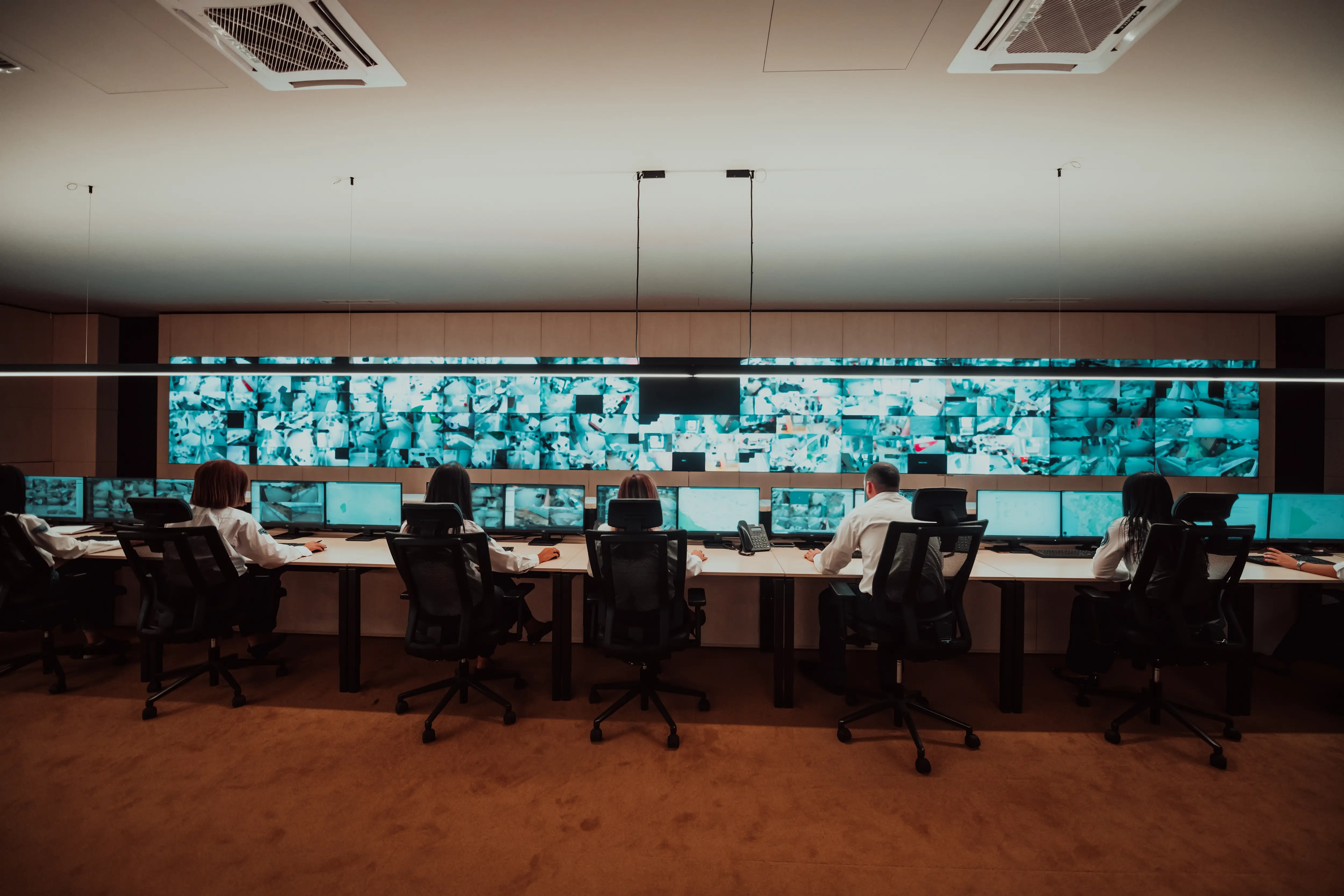
Somewhere in every district deploying camera analytics, a privacy officer is asking the question that this article exists to answer: what does the Family Educational Rights and Privacy Act (FERPA) actually do to all this footage? The question deserves better than the two answers it usually gets, the vendor's breezy "we're FERPA compliant," which is a category error, since FERPA governs institutions rather than products, and the maximalist "video of students is an education record," which is wrong in both directions at once. The real doctrine is specific, the Department of Education has published usable guidance on exactly this territory, and a camera-AI program can be designed to meet it by architecture rather than by improvisation. That design is the subject here. One boundary first: this article describes the published guidance and its operational consequences for program design, and it is not legal advice; the district's counsel owns the application to any particular case. It belongs to our full guide on AI video analytics for school and campus safety.
What the Department of Education's guidance says
FERPA attaches to education records, and the Department of Education's guidance on photos and videos gives the two-part test: a video becomes an education record when it is directly related to a student and maintained by the educational agency or a party acting for it. Everything operational flows from what "directly related" means, and the Department enumerates the circumstances: the school uses the video for disciplinary action or other official purposes involving the student; the video depicts activity that resulted in discipline or shows a student violating law; it shows a student "getting injured, attacked, victimized, ill, or having a health emergency"; the creator intended a specific student to be its focus; or it contains personally identifiable information from an education record.
Read those against the detection stack this series describes and the mapping is direct. The hallway fight clip used in a disciplinary process is, per the Department's own example, directly related to both students fighting. The person-down clip of a student's seizure is the Department's other example, the health emergency becomes the focus of the video. The intruder clip, the crowd count, the after-hours perimeter event with no student in frame, none of these is anyone's education record, and the background students incidentally captured in an ordinary corridor scene are, per the guidance, typically not directly related at all. The honest summary for program design: most of what a safety program generates never becomes an education record, and the specific clips that do are largely predictable in advance, the incident clips involving identifiable students in disciplinary, injury, and victimization contexts.
Two more pieces complete the doctrine a district needs to hold in view. Records "created and maintained by a law enforcement unit of an educational agency or institution for a law enforcement purpose" sit outside the education-record definition entirely, which matters enormously for districts with their own police departments and for universities, and which means one incident can lawfully generate two differently governed files, a distinction the investigation article operationalizes. And when a video is an education record of multiple students, the parents of each may inspect it, the school must "redact or segregate out the portions" involving other students where reasonably possible without destroying the video's meaning, and, in the detail that should reorganize every district's planning, the redaction cost cannot be charged to the parents.
The redaction obligation
Sit with that last rule, because it converts doctrine into budget. A fight clip involves two students directly and captures fifteen bystanders. Both sets of parents may inspect; each inspection requires the other students masked where reasonably possible; the district bears the cost; and the school year produces these events on a schedule of its own choosing. Districts that meet this obligation by hand, frame-by-frame blurring in whatever tool the IT office found, discover the arithmetic quickly: a single corridor clip can consume a technician's day, the requests cluster after exactly the incidents when staff time is scarcest, and the temptation that follows, discouraging inspection requests, slow-walking, over-claiming the "destroys the meaning" exception, is a compliance posture with a short life expectancy.
This is why redaction capability belongs inside the camera program rather than beside it. AI-assisted redaction, faces detected and tracked across frames, bystanders masked in bulk, the original preserved intact under the hold while the redacted copy goes to the viewing, turns the obligation from a staffing crisis into a workflow, and the platform-family design this series describes, where the same governed portal holds the evidence and produces the redacted export through logged, controlled channels, means the education-record copy never leaves custody to be redacted somewhere less governed. For districts, the procurement lesson is blunt: a camera-AI program without a redaction plan has an unbudgeted FERPA liability exactly as large as its incident volume.
Meeting FERPA by design
The doctrine rewards a program that sorts its own output, and the sorting can be built in rather than adjudicated clip by clip.
The default stream of camera output stays operational, and deliberately so. Routine detection events, counts, perimeter alerts, and the footage behind them are surveillance records under the district's general policies, retained on short cycles, and the program's register says so. The incident stream is where education records are born, and the workflow acknowledges it at the moment of birth: when a clip enters a disciplinary, injury, or victimization process, it is flagged, moved onto the education-record handling path, held past routine retention, access-restricted to the roles the process names, audit-logged per view, and queued for redaction readiness, because the inspection request, when it comes, runs on the parent's timeline, not the district's. Where a law-enforcement unit exists, its purpose and custody are documented so the unit-records distinction is real rather than asserted, and disclosures outward, to outside agencies, insurers, or counsel, run through the controlled export path with their own log.
The AI layers add two FERPA-flavored notes of their own. Detection events and generated descriptions about identifiable students in incident contexts travel with the footage they describe, the timeline and the reading are part of the record the parent may inspect, which is one more reason the written-question layer's prompts are preserved and its phrasing stays observational. And the no-identification default this series maintains everywhere does quiet FERPA work: a program that never attaches names to routine detections generates far fewer arguable education records in the first place, confining the doctrine's weight to the incident stream where the district's process already lives.
Third-party processing rounds out the design questions counsel will raise. FERPA's school-official pathway is how districts lawfully use service providers, under direct control, for legitimate educational interests, with contracts that say so, and the deployment posture this platform family runs, processing on the district's own infrastructure, footage never leaving the district's custody, is the strongest possible answer to the outsourcing questions the pathway raises. A district's counsel writes the contract language; the architecture is what makes the language true.
Two retention clocks
Retention design under this doctrine runs on two clocks, and conflating them is the most common structural error in district programs. The operational clock is short by design: routine surveillance cycles in days or weeks, per the district's general records schedule, and short retention is itself a privacy control, the guidance's spirit being that footage not directly related to any student has no business persisting. The record clock is long and event-driven: the moment a clip enters the incident stream, its retention follows the process it joined, disciplinary record schedules, litigation holds, the multi-year horizons of Title IX and claims, and the hold must be applied at entry, because a record clock started late is a record already destroyed. The architecture that serves both is per-clip retention with holds, exactly what the governed portal provides, and the register states both clocks plainly, which preempts the two community suspicions that haunt district video programs, that everything is kept forever, and that the important thing was conveniently taped over. Neither is true in a well-run program, and the schedule is how the district proves it.
Transparency with boards and parents
FERPA compliance in this domain is ultimately a transparency practice, and the instruments this series builds everywhere serve it directly. The scope register tells the community what is watched, what is excluded, and what happens to footage, in language a parent meeting can absorb. The retention schedule distinguishes the operational stream from the incident stream and says who holds what for how long. The access and audit logs answer, on demand, who has seen any given clip, which is the question behind most parental distrust. And the annual review, program metrics beside privacy metrics, inspection requests fulfilled, redactions produced, average response time, gives the board a compliance picture no binder of policies ever has. Districts that run this openly report the counterintuitive result this series keeps finding: transparency about a well-governed program builds more community support than silence about a modest one, because the parents' real question was never whether cameras exist. It was whether anyone is in control of them, and the register, the logs, and the working redaction pipeline are what being in control looks like.
State privacy laws on top of FERPA
FERPA is the floor, not the ceiling, and a district's counsel will layer the state's own student-privacy and surveillance statutes over everything above: several states regulate school video retention, biometric use, and vendor data-handling more tightly than federal law, and a program built to this article's architecture absorbs those additions as register entries and configuration rather than redesign. The no-identification default already forecloses most biometric questions; per-clip retention accommodates whatever schedule the state prescribes; and the audit and custody controls satisfy vendor-oversight provisions by construction. The design lesson generalizes: build to the strictest plausible regime, and the map of fifty variations becomes a checklist instead of a threat.
Questions your counsel will ask
Districts get more from their counsel when the operational facts arrive organized, so here is the one-page inventory this article implies, phrased as the questions the lawyer will ask anyway. Which streams of camera output can become directly related to students, and does the workflow flag them at entry into any official process? Who are the school officials with access to the incident stream, under what contract language for any vendor in the chain? What is the redaction capacity, in clips per week, and who operates it? Where does the law-enforcement unit's custody begin and end, in writing? What are the two retention clocks, and who applies the hold? What does the annual notification say about video, and does the register match it? And for the third-party questions, where does processing physically run, and can the district attest that footage never leaves its custody or trains anyone else's models? A district that walks into the meeting with those answers drafted converts an open-ended legal review into an afternoon of refinement, and the document that results is the program's FERPA posture, maintained thereafter like any other living policy.
How VIDIZMO fits
VIDIZMO's platform gives a district the FERPA architecture this article describes rather than a compliance adjective. Footage and events live in the Nexus portal under role-based access, hash-verified integrity, per-clip retention and holds, and audit logs over every view and export; the incident stream's education-record handling is a configuration of those controls, not a new system; AI-assisted redaction in the same platform family masks bystander students in bulk while originals stay intact in custody; and processing runs on the district's own infrastructure, which is the substance behind the school-official contract language counsel will write. The preparation that makes the counsel meeting productive costs one page: the district's current answer to a parent's inspection request for a two-student fight clip with fifteen bystanders, timeline and cost included. If that page is hard to write, this article was the diagnosis.