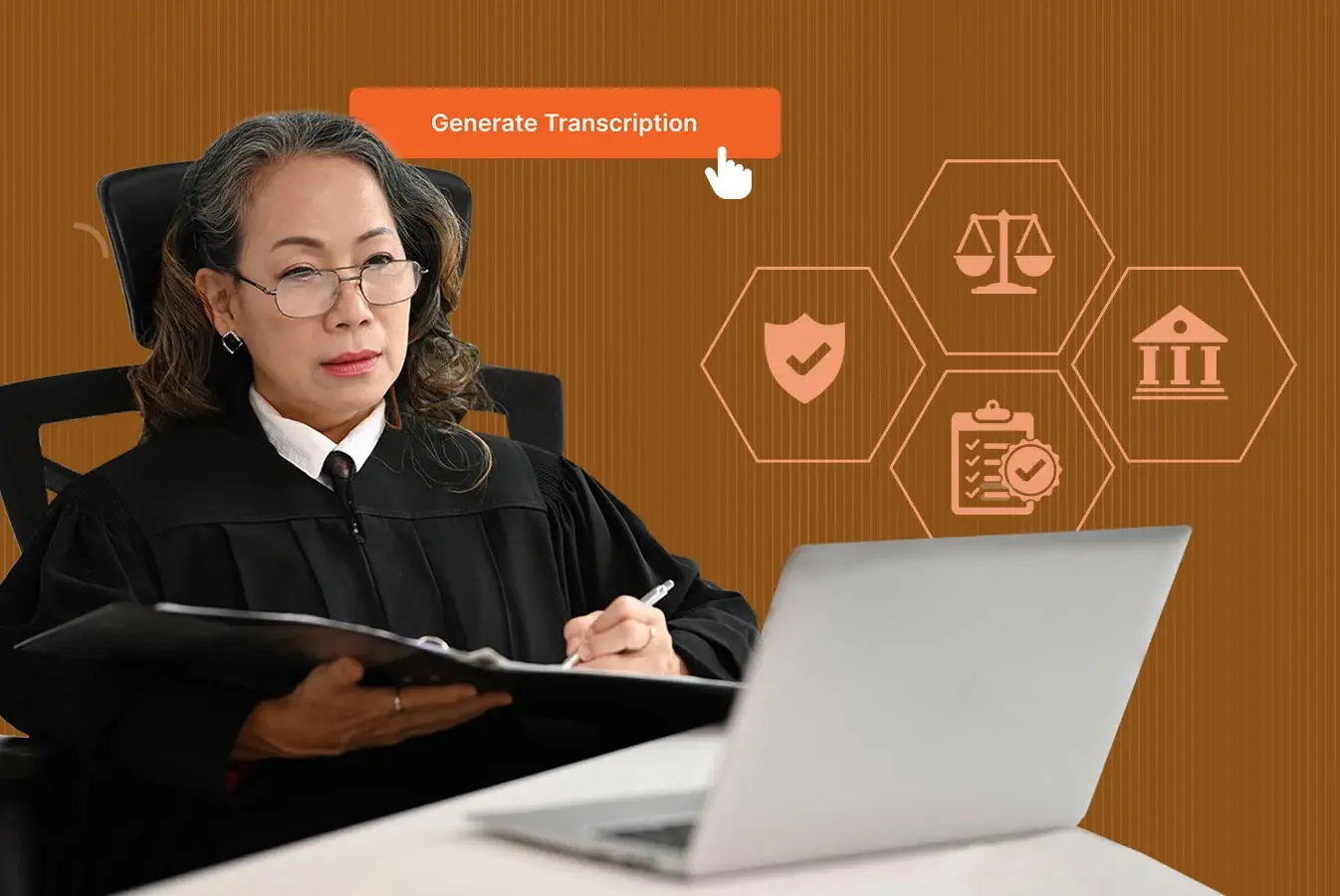
Evidence transcriptions are an essential part of the legal proceedings. From presenting evidence in court to clarifying important details, legal transcription has a lot of benefits. Today most legal agencies, agencies such as law enforcement, usually leverage manual subscription services to transcribe evidence and other audio/video recordings. However, modern technology such as AI has made it easier and efficient to generate transcriptions.
What exactly is legal transcription and why do you need it?
The definition of legal transcribing is simply converting any legal proceeding from audio and spoken words into a formatted text document that can be used to read afterward. Legal transcripts include transcriptions of court hearings, depositions, testimonies, interrogations, legal briefs and relevant correspondence. Legal transcription is as essential for legal personnel as a tax return transcript is for a filer.
A high-profile case requires everything to be documented. Law enforcement agencies usually prefer using a third-party transcription service for important cases. But when it comes to something as important and sensitive as evidence, it is best that evidence changes as little hands as possible. In addition to security threats, it becomes tricky maintaining chain of custody when opting for third-party services. For evidence, law enforcement agencies need to maintain an unbroken chain of custody.

4 Reasons Why Law Enforcement Need Legal Transcription
Having a sound legal transcript becomes one of the most essential aspects of solving the case. Below are 4 most important reasons for using legal transcription:
It makes audio/video recordings easier to understand
Many at times, the voice in the digital recordings could be distorted so special attention needs to be given. Sometimes the suspect might be having a conversation in a foreign language which makes understanding difficult. It is also possible that some background noise or conversation could be a valuable insight to solving a case. Having a legal transcription avoids all such issues.
It streamlines the flow of information for attorneys
Legal transcription makes it convenient to follow the flow of events and in portraying the point. Having a legal transcription, a lawyer does not have to spend time finding the information and can utilize the time to strengthen the argument instead.

It improves accessibility and clarity
At times some vital information heard during depositions and court hearings etc. can become difficult to recall. Legal transcriptions have timestamps which allow an accurate version of events to be accessed. Legal transcripts can also be used to find relevant information when needed. Having a digital version of the legal transcript means you do not need to carry heavy files and can access everything from a tablet or mobile phone. Additionally, legal transcriptions are convenient for people who are hard of hearing.

It is important for appeals
The decision given in courts is not always favorable for one party. Legal transcription comes in handy during appeals. A slight information which is not registered by the mind when listening to it first time can be found while going back through the transcription later on. Moreover, some jurisdictions legally require a complete written record during appeal.

Save time and Resources with Automatic Transcription
In the contemporary world, technology is playing its part to improve the efficiency in the criminal justice process. The ability to transform evidence speech to text using Artificial Intelligence (AI). This latest technology can assist law enforcement in focusing on the communities rather than spending their time in administrative tasks.
Police officers often have to listen to recordings repetitively and having to pause multiple times at places where they think the suspect might have revealed essential information. In any case, police officers will have to pause, rewind and listen to evidence again and again which is time intensive. Using third-party services solely for transcription can prove to be costly. A legal transcript generated automatically simply saves a large amount of time which can be utilized to analyze the cases. A higher intellectual level is required for the latter so having a transcription tool signifies those resources are being utilized in an efficient manner.
Key Takeaways
-
The Importance of Legal Transcription: Legal transcription is the process of converting audio and video recordings from legal proceedings into written text, which ensures accurate documentation of important details for legal review, analysis, and future reference. It plays a crucial role in enhancing case management, improving accessibility, and supporting the integrity of the evidence.
-
Challenges of Traditional Transcription: Relying on manual transcription services often poses significant challenges in terms of time, accuracy, cost, and security. Manual transcription can lead to human error, slow turnaround times, and potential mishandling of sensitive evidence, which compromises both the case and the chain of custody.
-
How a Legal Transcription Benefits Law Enforcement:
-
Clarity and Accessibility: Transcriptions make distorted or unclear audio more understandable, helping officers and attorneys identify important details that could have been missed or difficult to interpret.
-
Efficiency in Case Management: Legal transcription enables officers and attorneys to access relevant information quickly, saving time and improving the efficiency of case management.
-
Appeals and Legal Compliance: Transcriptions play an essential role in appeal cases, where reviewing past proceedings becomes crucial. Additionally, they help in complying with legal requirements by creating complete, accurate records of proceedings.
-
Improved Collaboration: With digital transcripts, law enforcement agencies and legal teams can easily share information across multiple jurisdictions or agencies, enhancing collaboration in multi-jurisdictional cases.
-
-
The Benefits of AI-Powered Transcription: Using AI for legal transcription dramatically speeds up the process, reduces manual work, and allows law enforcement to focus on analysis rather than repetitive tasks. AI transcription can also transcribe in multiple languages, ensuring accessibility for diverse cases.
-
VIDIZMO’s Role in Transforming Legal Transcription: VIDIZMO's Digital Evidence Management System (DEMS) integrates AI-powered transcription features to streamline the transcription of audio and video evidence. This system supports multiple languages, making it more adaptable for international cases. With AI-assisted searching, law enforcement can instantly find and highlight key details in transcribed evidence, saving time and ensuring accuracy in case preparation.
-
Security and Chain of Custody: By automating transcription in a secure, digital format, VIDIZMO ensures that evidence remains tamper-proof, and the chain of custody is maintained. This minimizes the risk of errors and unauthorized access, which is particularly important for high-profile cases where security and compliance are paramount.
Automate Legal Transcription using VIDIZMO
VIDIZMO offers a one-stop integrated solution providing Digital Evidence Management System (DEMS) with industry-leading features such as artificial intelligence, transcription, redaction and more. Audio and video files can be automatically transcribed simultaneously in over 12 languages and translated into over 50 languages.
And that's not all! You can search inside the evidence by simply typing a keyword and instantly jump to the relevant part, a perfect fit for busy lawyers and officers.
Imagine: You are working on a high-profile case, appearing as a plaintiff in court hearings every day for a month thinking today might be the day you get the ball in your court and have the judge give a verdict in your favor. After countless sleepless nights, you find out a minute detail buried in evidence which gives you the edge over the opposition party.
Now imagine: you have a transcription tool which allows you to search specific events and keywords inside evidence allowing you to find out the key evidence which makes you win the case in a shorter time frame. This is where a complete Digital Evidence Management System (DEMS) steps in.
VIDIZMO also provides other artificial intelligence features that make it quicker and more efficient to find and present evidence in court, such as face and object detection. Instead of spending hours sifting through evidence, extract valuable insights from evidence to find specific details and moments inside evidence. Learn more about DEMS and how it can help better manage and present evidence in court.
Now picture this: You make use of an efficient, time-saving digital evidence management system to improve efficiency in solving the high-profile case. You appear as the mastermind when you are praised for your efforts for solving the case not only by the law enforcement and government agencies, but also by the media.

FAQ
Frequently Asked Questions
What is legal transcription?
Legal transcription is the process of converting spoken words from legal proceedings, such as court hearings or depositions, into written text. This transcription ensures that all details are captured accurately for legal review and future reference.
Why is legal transcription important for law enforcement?
Legal transcription is essential because it provides a written record of crucial evidence, making it easier for law enforcement and attorneys to review, analyze, and present key details. It also ensures that nothing is missed or misunderstood in audio/video recordings.
How does legal transcription improve case management?
Legal transcription simplifies case management by making it easier to access and reference vital information. With written transcripts, attorneys and law enforcement officers can quickly find and review relevant portions of evidence, saving time and increasing efficiency.
What are the benefits of using automatic transcription?
Automatic transcription, powered by AI, saves time by quickly converting audio and video recordings into text. This eliminates the need for manual transcription, allowing law enforcement to focus on case analysis rather than administrative tasks.
How can legal transcription improve accessibility for individuals with hearing impairments?
Legal transcription makes court hearings and depositions more accessible to individuals with hearing impairments by providing a readable version of spoken content. This ensures that all participants have equal access to critical legal information.
How does AI-powered transcription enhance the transcription process?
AI-powered transcription improves efficiency by automatically transcribing audio and video files in real-time, eliminating the need for manual effort. It can also transcribe in multiple languages, improving accessibility and reducing turnaround time.
Can legal transcription help with appeals?
Yes, legal transcription is crucial during appeals because it provides a complete and accurate written record of court proceedings. Transcripts allow attorneys to review key moments that may have been missed during the initial trial, supporting the appeal process.
How does transcription help clarify distorted or unclear evidence?
Transcription helps clarify distorted or unclear audio by accurately converting spoken words into text. It can also provide clearer insight into background noise or foreign languages that might be difficult to understand in the original recordings.
What is VIDIZMO's role in legal transcription?
VIDIZMO offers an integrated Digital Evidence Management System (DEMS) that automates the transcription process using AI. It supports transcription in over 12 languages and translates text into over 50 languages, making it easier to manage and present evidence in court.
How does VIDIZMO's transcription feature save law enforcement time?
VIDIZMO’s transcription feature automates the process of converting audio and video evidence into text, saving law enforcement agencies time. Officers no longer need to manually listen to recordings repeatedly, and they can instantly search for keywords or relevant parts of evidence to support their cases.
TopicsDigital Evidence ManagementEnterpriseTube
About the author
See how VIDIZMO helps you securely stream, manage, and maximize your video and digital evidence data with compliant, expert solutions.
You may also like

Deploying a Low-Latency Surveillance Pipeline: An Architecture Guide
"Real-time" is one of those phrases that gets used loosely, and in a video analytics pipeline it hides a lot of ...

Choosing a GPU for Real-Time Video Analytics
Capacity planning tells you how many GPUs a deployment needs. This is the other half of the question: which GPU to ...
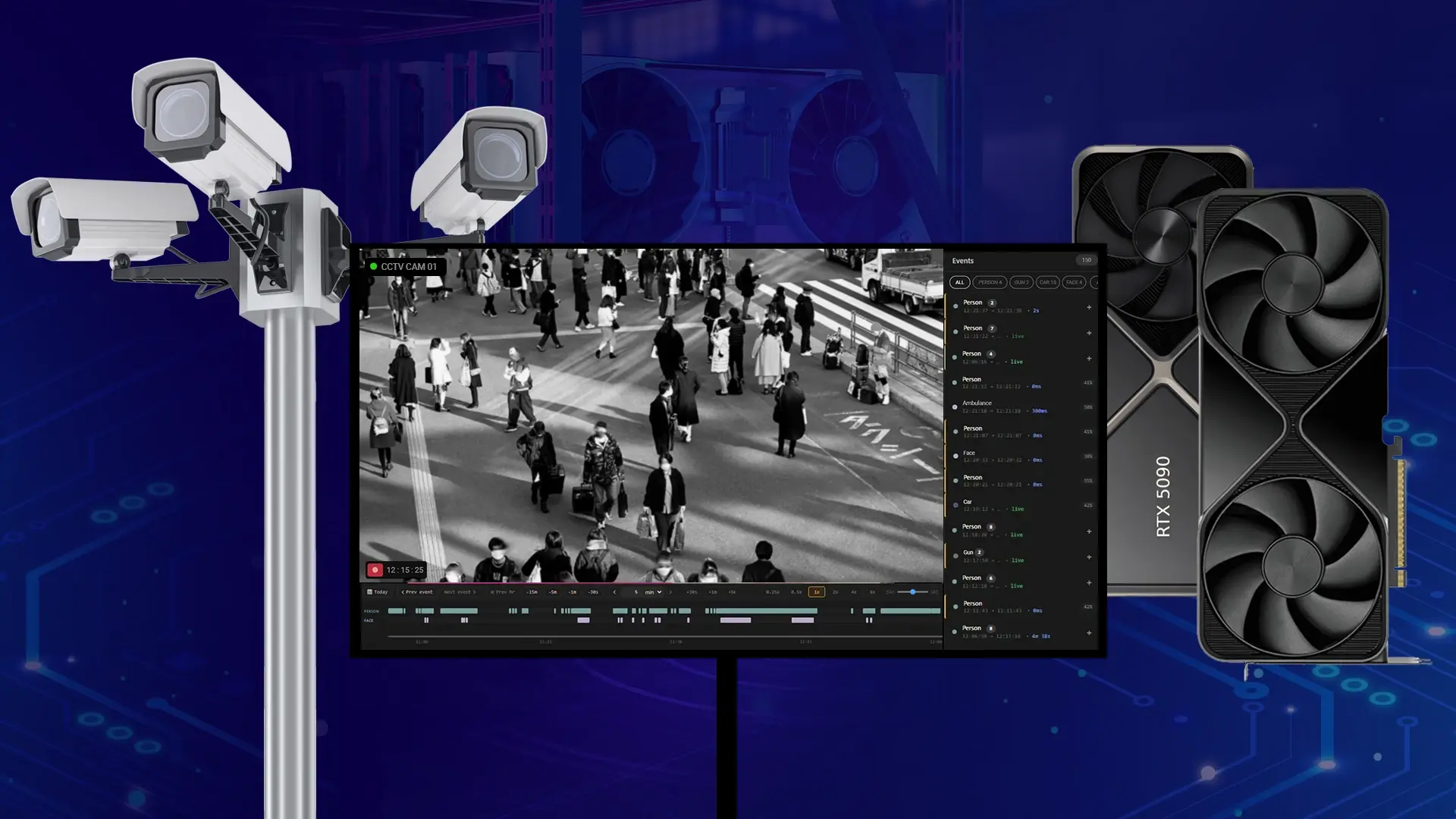
GPU Capacity Planning for Real-Time AI Video Analytics
Ask a vendor how many cameras their AI runs on one GPU and you will usually get a single confident number with no ...