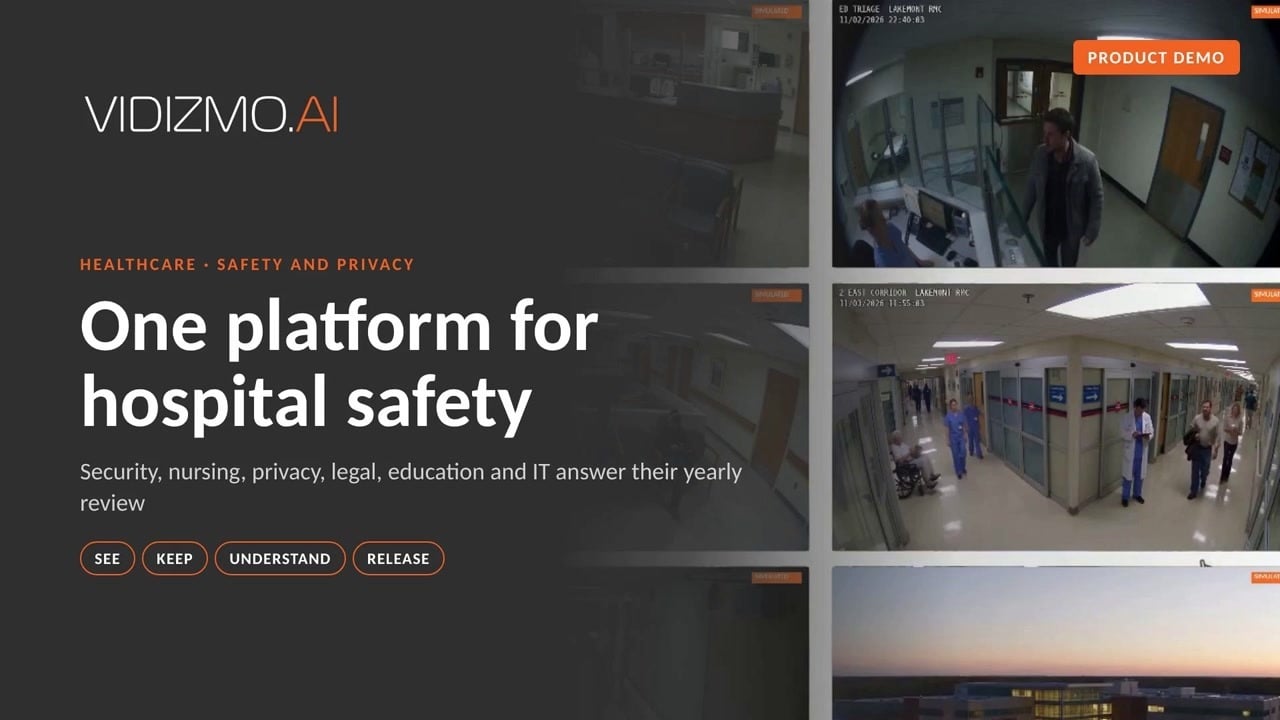
Hospitals already have cameras on the waste enclosure, the pharmacy door, and the nursery wing. Here is what VIDIZMO adds to those cameras. California requires medical waste storage to be secured against unauthorized access. A lock keeps people out, but it can't tell anyone who walked in at 2:00 a.m.
The cameras record, but nobody watches the waste area or the pharmacy door at night. And when footage has to be shared, someone blurs every patient by hand. Meet Theo, security director at a regional hospital. Here is one night on his cameras.
First, the medical waste enclosure. The enclosure rule runs only during the hours Theo sets, 10:00 p.m. to 6:00 a.m. At 2:14, someone walks in and the alert fires. On the next camera, a person stays at the containers.
The loitering rule flags anyone who stays in the zone longer than the time Theo sets. Inside the waste room, a worker handles waste bare-handed. AI Live Insight flags missing protective equipment, such as gloves. Next, restricted areas.
Each zone is drawn on the camera view and given its own hours. When the pharmacy door opens at 1:12 in the morning, Theo gets an alert. The behavioral health unit door has its own after-hours rule, so an entry outside the scheduled hours is flagged. The nursery wing gets a zone and a schedule too.
Staff move freely during their shifts, and entry outside the hours Theo sets is flagged. On a staff-only door, the box shows who crossed into the zone and when. Then, safety events. In the emergency waiting room, a visitor collapses.
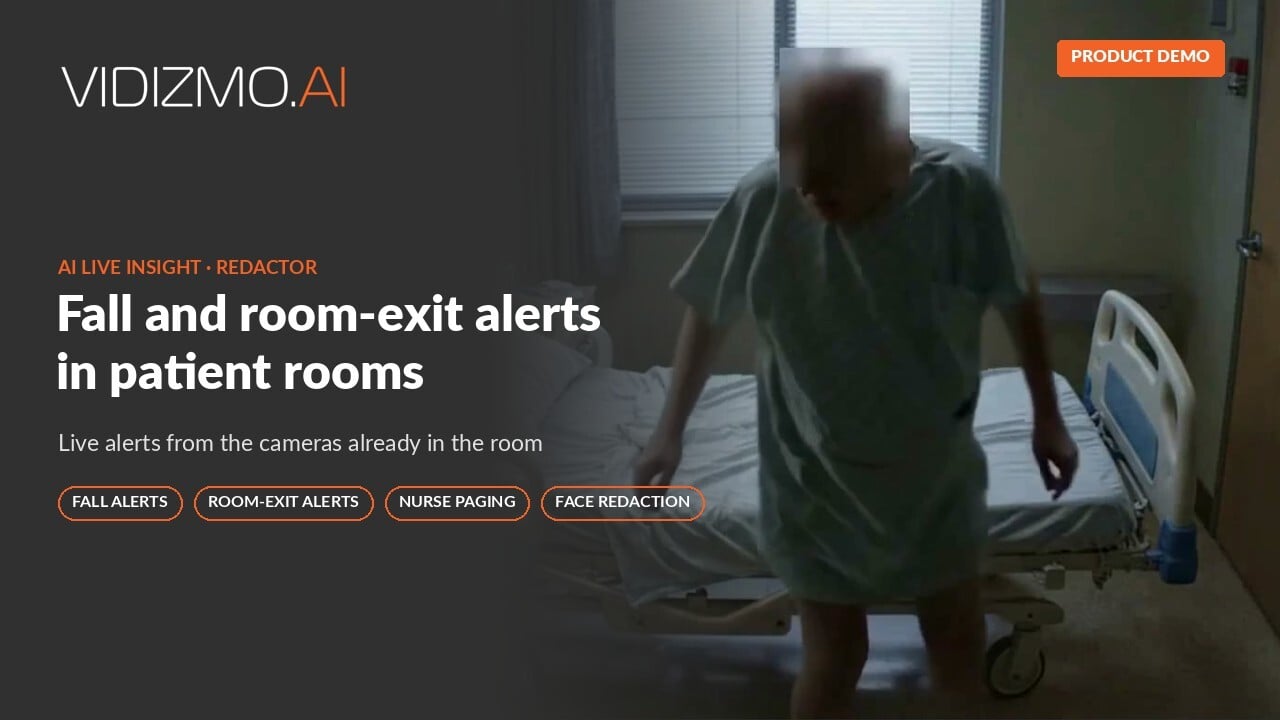
A person on the floor raises an alert with the clip. AI Live Insight can also flag a visible weapon on a camera feed using the same cameras and the same alert flow. Every alert reaches people. Alerts land on the operator dashboard with their clips and go out by email with a snapshot or by webhook to paging.
Each alert is acknowledged and resolved with a required note, so every step is attributed. Every alert stays on the record, searchable and linked to its clip. When footage has to leave the building, Redactor detects the faces of patients, visitors, and staff, and blurs them automatically, ready for review before release. The reviewed copy goes out on a link with an expiry date.
The original stays inside, and every action is logged in the audit trail. And it all runs on the cameras already installed. Every existing camera appears in one view. Adding another takes a name and its stream address over RTSP or ONVIF, no new hardware.
Verkada and Avigilon cameras are listed as available on vidizmo.ai, connected over RTSP. Alerts can also go by webhook to any system that accepts external events. More than 150 integrations are listed, and anything not listed can be built to your requirement or reached through an MCP server or a REST endpoint you define. Start with a pilot on a few of the hospital's cameras.
Connect the streams, set the zones and hours, and review the alerts together. It runs on your own servers or in your own cloud and can run fully air-gapped. Hazardous waste, restricted areas, safety events, and redaction, all on the cameras a hospital already has. Request a demo at vidizmo.ai.