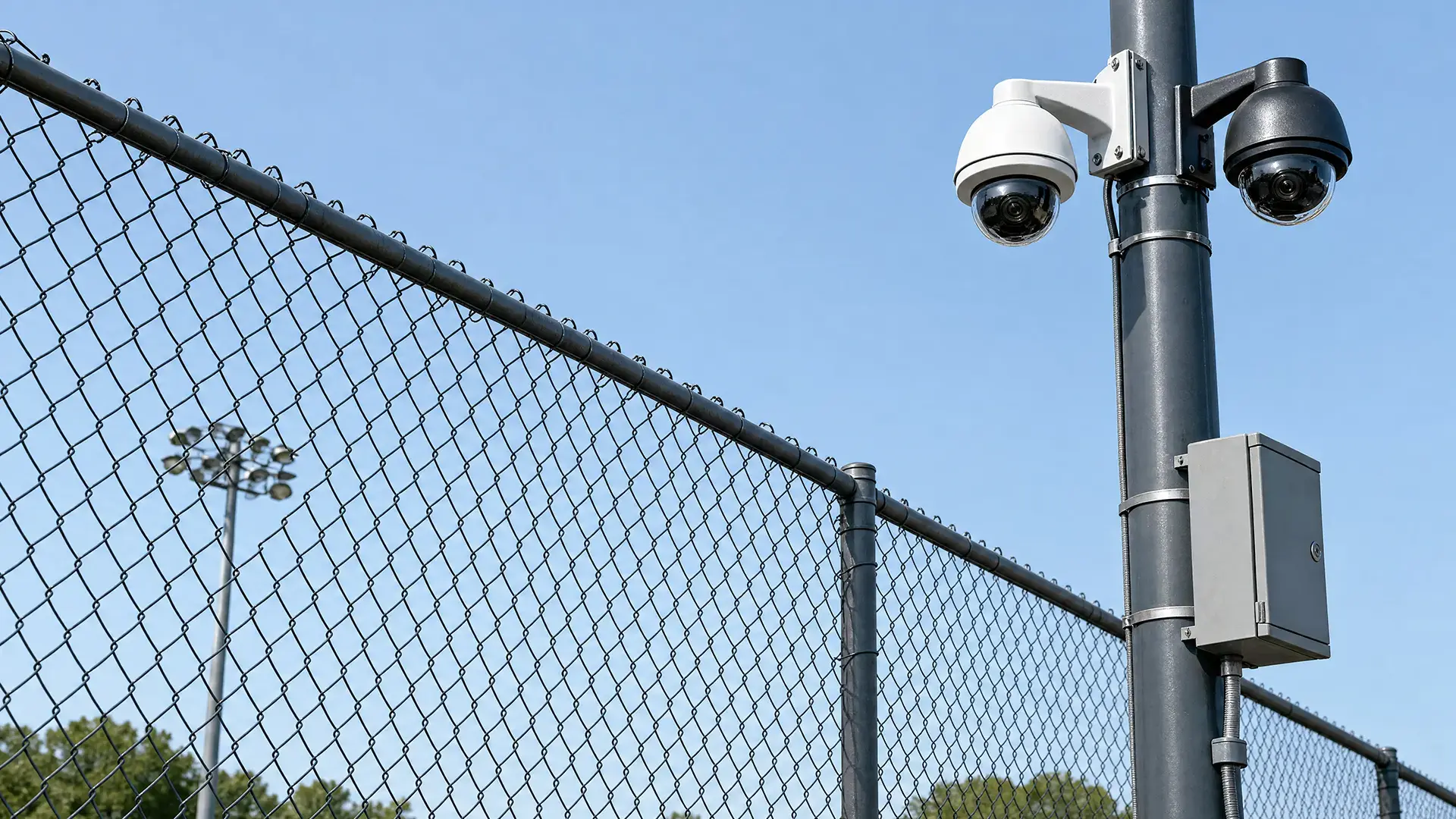
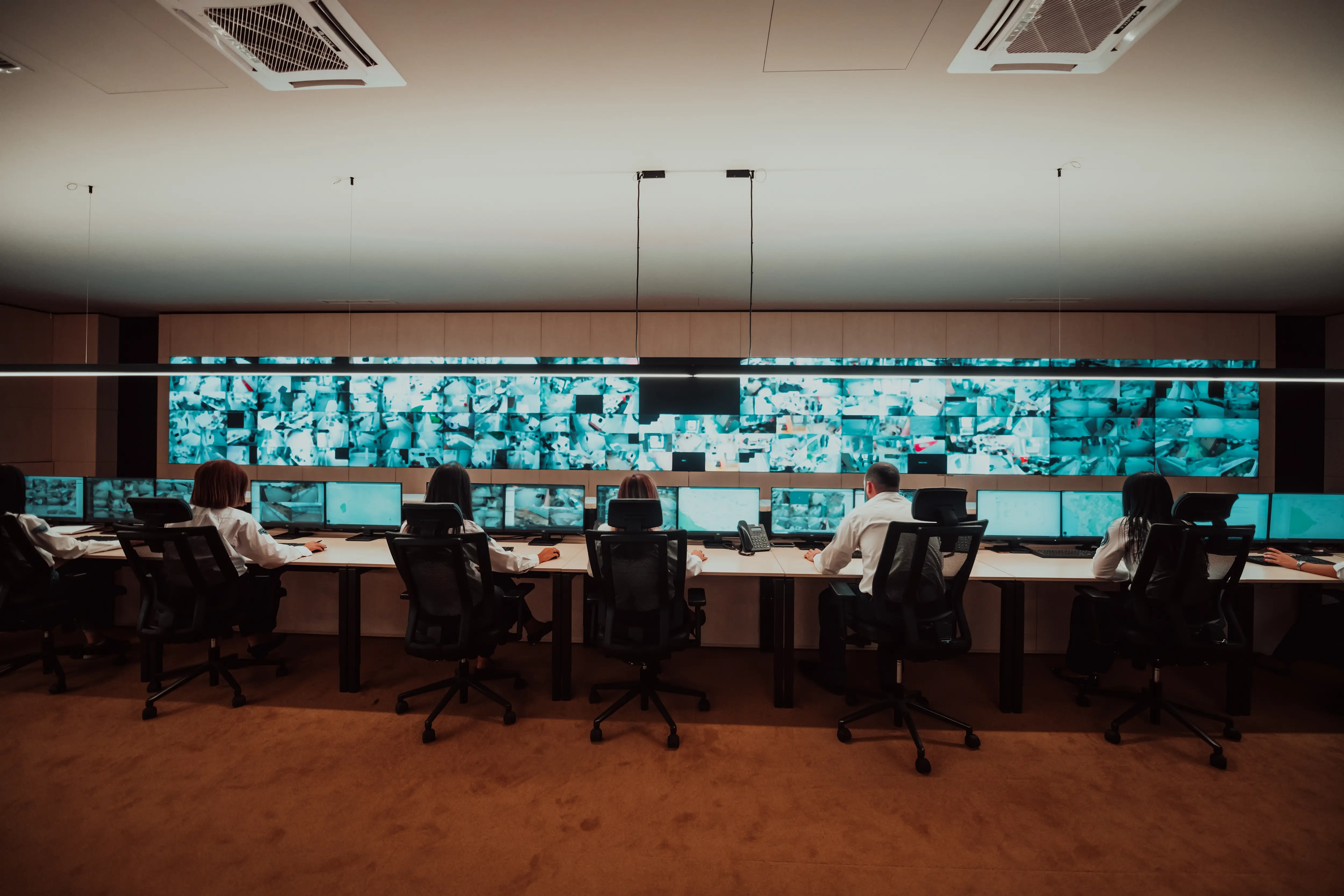
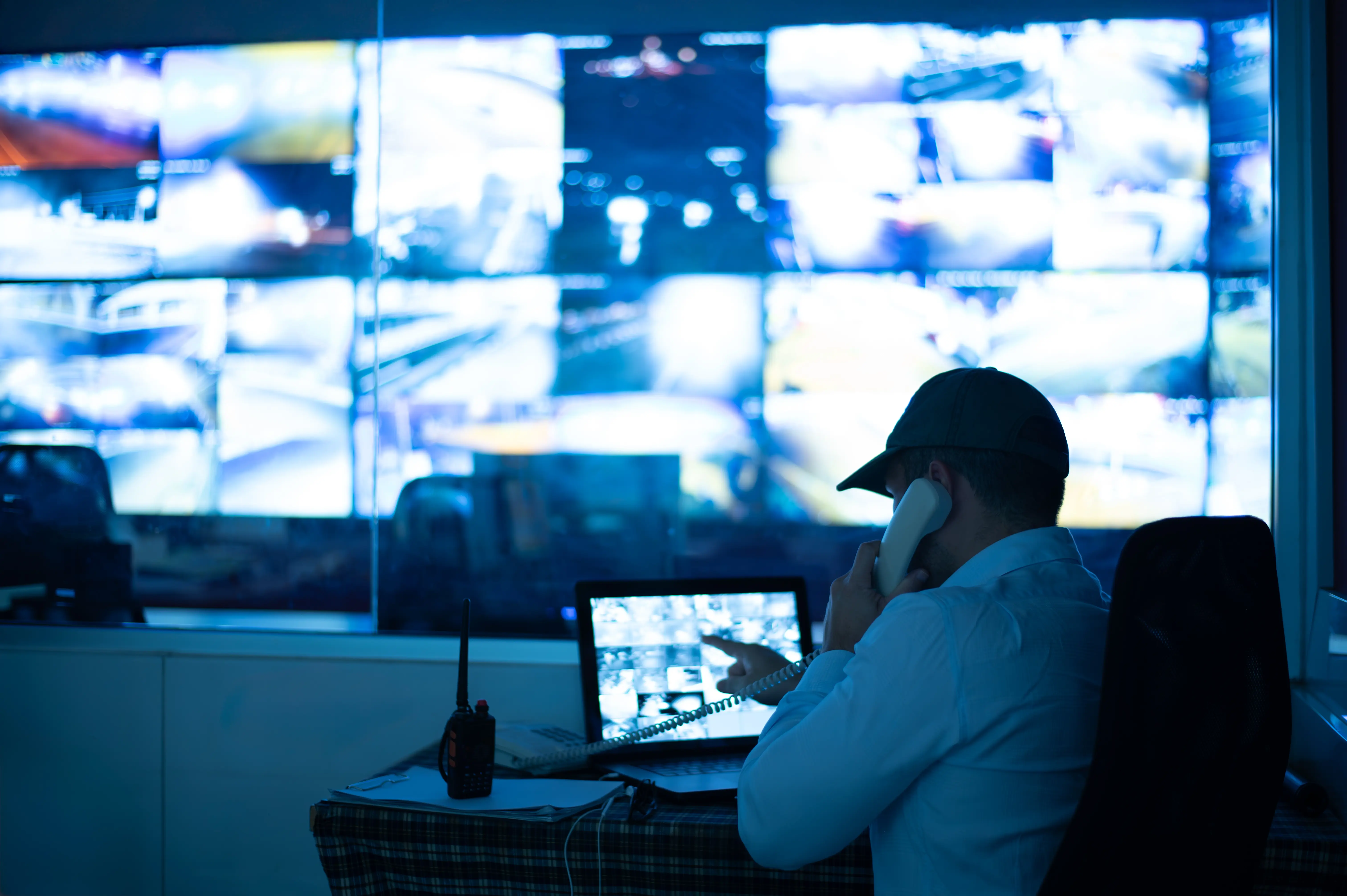
A school building spends most of its life empty. Add the nights, the weekends, the holidays, and the summer, and a typical K-12 facility is unoccupied for something like three-quarters of the hours in a year, which is precisely when it is most vulnerable and least watched. The vandalism that greets the Monday custodian, the copper stripped from the rooftop units over a long weekend, the break-in discovered by first period, the fire set in a dumpster against a wall, almost all of it happens in the empty hours, on camera, recorded by systems nobody was watching, discovered by daylight. Every school security camera purchased in the last two decades has faithfully documented this pattern without interrupting it once, and the difference between documenting and interrupting is the subject of this article. It belongs to our full guide on AI video analytics for school and campus safety.
The school schedule becomes the rulebook
Intrusion detection in most settings struggles with a hard question: who belongs here? Schools are the exception, because a school's answer is written down. The bell schedule, the activity calendar, the facility-use permits, and the custodial shifts together define, hour by hour and wing by wing, what presence is legitimate, and that specificity is a tuning asset no warehouse or office park can match.
The detection building blocks are the standard kit, applied against that schedule. Zone rules drawn on each camera's view mark the perimeters, the entries, and the interior boundaries: the fence line, the roof access, the door bank at the gym, the corridor into the academic wing. Line-crossing rules carry direction, so leaving the gym toward the parking lot after an evening game is ordinary while moving from the gym into the locked academic wing is an event. Dwell rules separate passage from lingering, the shortcut across the grounds from the person working the door handles, and schedules attached to the rules flip each zone's meaning by the calendar: the track that welcomes the community at 7 a.m. Saturday is a monitored perimeter at 1 a.m. Tuesday, and the same camera enforces both without anyone touching configuration in between.
Person and vehicle detection under those rules covers the ordinary catalog of after-hours trouble, and text recognition adds the piece schools rarely think to ask for: a plate read in the parking lot at 2 a.m. is retained as a searchable event whether or not anyone was watching, which is often the single most useful fact the district can hand a responding officer after the fact.
Designing the response chain
An after-hours detection is only worth what happens next, and school districts have a response-design problem the industrial world does not: at 2 a.m. there is no security operations center, no shift supervisor, nobody on site at all. The alert has to reach someone off site, with enough evidence to act on, through a chain that was designed on purpose.
The chain that works is layered by design rather than by accident. The alert lands by SMS and email with the snapshot attached, so the recipient sees the person at the door, not just a camera name, and the first decision, real or nuisance, takes five seconds on a phone. The routing follows a duty roster rather than a person, facilities on call for alarms of the property kind, the School Resource Officer (SRO) or local law enforcement contact for the person-on-grounds kind, with escalation if the first recipient does not acknowledge. And where the district runs an alarm-monitoring contract or a school-resource-officer arrangement with the local agency, the event flows into that channel through the integration layer, arriving as a verified alarm with video attached rather than as one more unverified trigger, which changes how it gets prioritized on the other end. A patrol dispatched to a verified person-at-the-door event with a snapshot in hand is a different response from a drive-by for an alarm that is false four times out of five.
The escalation chain this series describes elsewhere earns its keep here in a specific way: the ambiguous after-hours event, movement at the edge of a lot, a figure near the fence, gets its second look from the model before anyone's phone buzzes, describe what the person in this clip is doing, and the answer separates the dog walker cutting across the field from the person testing doors, at 2 a.m., without waking anyone to make that call. Only what survives the second look interrupts a human, and the interrupt arrives pre-triaged with the reading attached.
Tuning around legitimate community use
The hard part of school perimeter work is not the intruder, it is the community, because a school site is public property that the public legitimately uses at odd hours: the walkers on the track at dawn, the pickup basketball at the outdoor courts, the parents at the playground on Sunday, the maintenance contractor with Saturday access. A configuration that pages on all of them dies in its first week, and the fixes are specific.
Zone geometry does the first cut: the track, the courts, and the playground are drawn as community zones with relaxed or no after-hours rules, while the building envelope, the roof accesses, the door banks, and the service yards carry the strict ones. The building line, not the property line, is the perimeter that matters at most sites. Schedules do the second cut, encoding the permitted uses the district already tracks in its facility calendar, and the integration between the facility-use system and the monitoring schedule is worth automating at districts with heavy community use. Dwell and direction do the third, because the person crossing the lot is traffic while the person circling the building is a pattern, and the rules can tell them apart. What remains after those three cuts is a small, high-quality event stream, and the two-week silent baseline every deployment in this series runs will prove it before a single page goes out.
Camera reality deserves its plain paragraph here as everywhere: after-hours detection lives or dies on night performance, and the survey that matters walks the perimeter at midnight, not noon. Infrared range, the actual pools of light and shadow, the glare of the lot lights on the lens, the camera that shows the door beautifully at 3 p.m. and a smear at 3 a.m., all of it belongs in the commissioning review, and the handful of cameras that fail the midnight walk are the capital request that makes the rest of the system real.
Summer, breaks, and the construction season
The long vacancies deserve their own planning pass, because they invert the building's normal risk profile. Summer is when districts run construction and deep maintenance, which means the monitored site is full of legitimate contractors on irregular schedules, and it is also when unoccupied buildings absorb most of their annual vandalism and theft. The pattern that works ties monitoring schedules to the project calendar the district already keeps: contractor zones and hours are entered as scheduled exceptions, logging continues through the exceptions so the record shows who was where, and everything outside the scheduled envelope pages as usual. Rooftops earn special attention in every season, because Heating, Ventilation and Air Conditioning (HVAC) units and their copper are the most reliably targeted assets on a school site and roof access points are the most reliably under-covered camera views in the camera network; the midnight walk that audits night performance should audit roof coverage in the same pass. And the last week of summer deserves a configuration review of its own, because a year of drift, new portables, moved fences, a re-striped lot, accumulates precisely when nobody is watching the cameras that watch it.
Running it across a whole district
District scale changes the operating model in ways a single-site article can undersell. Forty buildings mean forty perimeters but one configuration standard, one duty roster, and one review, and the districts that run this well treat the buildings as instances of a template: a standard zone taxonomy, entries, envelope, roof, service yard, community zones, applied per site with local geometry, so the facilities team reads every school's events in the same vocabulary. Central monitoring with local routing follows naturally, the district operations center or on-call chain sees every school's cameras while each alert also reaches the building's own responder, and the weekly review ranks buildings by event rate, which is how the district discovers that two sites generate most of the trouble and deserves most of the hardening budget. The same template discipline is what makes the insurance and grant conversations scale, because a district that can state its monitoring standard in one page, applied at every site, presents as a managed program rather than forty local experiments.
What the record is worth between incidents
The after-hours record earns quiet value even in weeks when nothing dramatic happens. Patterns surface: the same car in the back lot every Thursday night, the door that gets tried monthly, the fence section where the shortcut runs, and each pattern is a cheap fix, a light, a camera adjustment, a conversation, made before it becomes an incident. The insurance conversation changes the way it does everywhere in this series, because a district that can show verified perimeter monitoring, response times, and an event history is presenting underwriters with evidence rather than assertions, and vandalism claims themselves resolve faster with footage attached. And when something serious does occur, the investigation inherits everything this platform family provides, the pre-event footage, the cross-camera timeline, the plate reads, the audit-logged handling that keeps the clip usable when it reaches police and prosecutors, per the practice in our school incident investigation article.
One governance note keeps the program clean: after-hours rules watch empty buildings, but the same cameras watch full ones by day, and the district's written scope register, the document our the Family Educational Rights and Privacy Act (FERPA) and privacy article describes, should state plainly which rules run when, so the community conversation about night-time perimeter security never blurs into questions about daytime surveillance of students that the program was never designed to raise.
Camera health closes the loop the way it does in every deployment this platform family runs: a dead camera on the perimeter is a silent gap read as safety, so stream health carries its own alerts on the same duty roster, and the quarterly review walks the zone list against the camera list asking the standing question, if this one failed on Friday night, when would we know.
One budget note rounds out the case: after-hours monitoring is the education deployment with the cleanest dollar story, because its losses are already line items. The district knows what last year's vandalism, theft, and break-in repairs cost, the glass, the copper, the graffiti abatement, the stolen Chromebook carts, and the before-and-after comparison writes itself in the same ledger. It is also the use case that raises the fewest privacy questions, since it watches empty buildings, which makes it the natural first phase of a broader program: the community meets the technology guarding their school at night before anyone discusses the daytime layers, and the trust earned in phase one is spendable in phase two.
How VIDIZMO fits
VIDIZMO AI Live Insight runs after-hours detection on the cameras a district already owns, reading standard Real-Time Streaming Protocol (RTSP) and ONVIF (Open Network Video Interface Forum) streams from the existing cameras and Video Management System (VMS), processed on the district's own hardware. Zones, lines, dwell rules, and schedules are drawn per camera; person, vehicle, and plate detections fire under them with per-detection-type confidence and severity; the escalation chain adds the second look before anyone is paged; and every event lands with its clip in the Nexus portal, under role-based access, retention policy, and audit logs, with alerts routing by SMS and email and events flowing to alarm and dispatch channels through the REST API and webhooks. For a district, the natural pilot is the building that gets hit most: one silent month there produces the after-hours baseline, the pattern list, and the before-and-after argument for everything that follows.