72 hours, 2,000 claims, one team. This is what a catastrophe surge looks like from the inside, and how Priya's team gets through it without letting a single account number slip out the door. The hard part isn't the storm, it's the week after. Every folder fills with roof photos, estimates, checks, and bank statements, and all of it has to go out to independent adjusters and regulators. Swiss Re puts last year's insured natural catastrophe losses at 107 billion dollars.
Priya runs catastrophe claims for a regional carrier. Here's her week. Day one, the photos start arriving. She doesn't email anyone for photos. Each new claim gets its own upload link tied to its folder with a date when it expires. A policyholder taps the link, confirms a one-time code, and sends in the roof and the car. No attachments, no lost emails. Every upload lands in its claims evidence record in Nexus with retention and an audit trail from the first file.
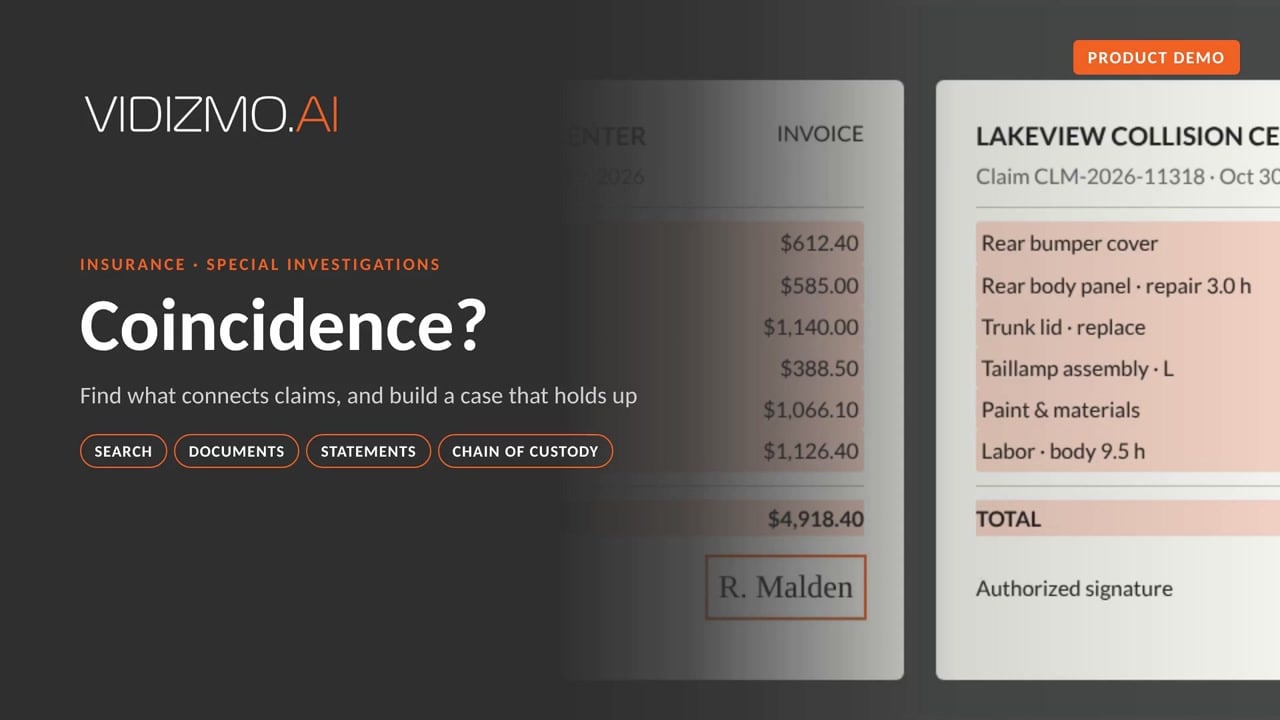
Day two, the paperwork. Estimates, invoices, and proof of loss forms are read, sorted, and turned into fields. One deductible is smudged on the scan, so a person checks it instead of a guess going into the claim. Behind it is a workflow you can see. Read the document, route it to the right department, apply that department's redaction rules. Night two, 2,000 folders still need redacting, so nobody does it by hand. The folders go into a queue at midnight.
By morning, they're done, and only the exceptions are waiting. Account and card numbers come off checks, ACH forms, and bank statements. License plates come off the photos, and the carrier's own policy number format is caught by a custom pattern. The exceptions get a human. The reviewer opens each document in Redactor and confirms it page by page. Day three, out the door. Each independent adjuster gets a link of their own with an expiry date. When the job is done, access ends by itself.
And when a regulator asks who saw what, the answer is already there in audit logs that can't be edited or deleted. It plugs into the claim stack you already run, Guidewire ClaimCenter on request, SharePoint, OneDrive, and Box, Salesforce and ServiceNow, and your cloud storage. If something's missing, it's built to your requirement or reached through an MCP server or a REST API. 72 hours later, every claim has its evidence, the paperwork is data, the folders are clean, and every share is on the record.
Send us a folder from your last storm, and we'll run it through. Request a demo at vidizmo.ai.