Every city already records its streets, its meetings, and its paperwork. Here's how one platform puts all of it to work on the city's own servers. Most of that record is hard to use. Cameras run with nobody watching. Records requests now ask for video, audio, and email. Ohio lets agencies charge for the hours spent reviewing police video. Federal accessibility rules reach meeting video for smaller cities in April 2028, and residents want to know who can see what the cameras record.
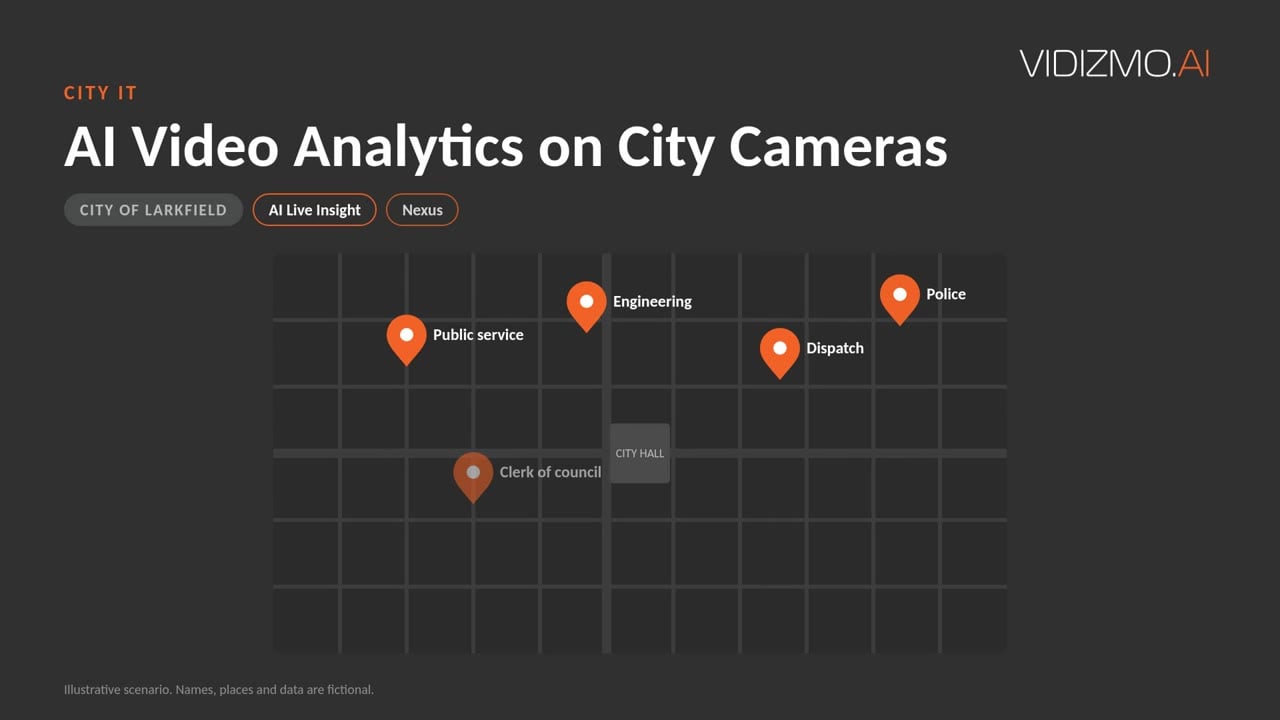
Let's follow one week at the City of Larkfield through five stages: watch, keep, understand, protect, and share. It starts with the cameras the city already owns. Thursday, 11:04 PM, a truck stops at the Elm Street drop-off and leaves a load. The camera flags it, pages public works and the on-call crew with the clip, and saves the footage for code enforcement. Uncertain flags get an AI review before anyone is interrupted, and a detector like this is tuned on the site's own footage first.
The event opens a work order in the system the crew already uses, with the location, the time, and the footage attached. The street sweepers carry cameras too. A pothole seen on three passes becomes one prioritized work order, not three tickets. In dispatch, cameras with active alerts rise to the top, related events are grouped, and the city decides camera by camera which events page people instantly. Saturday afternoon at Riverside Park, a man goes down after a fight.
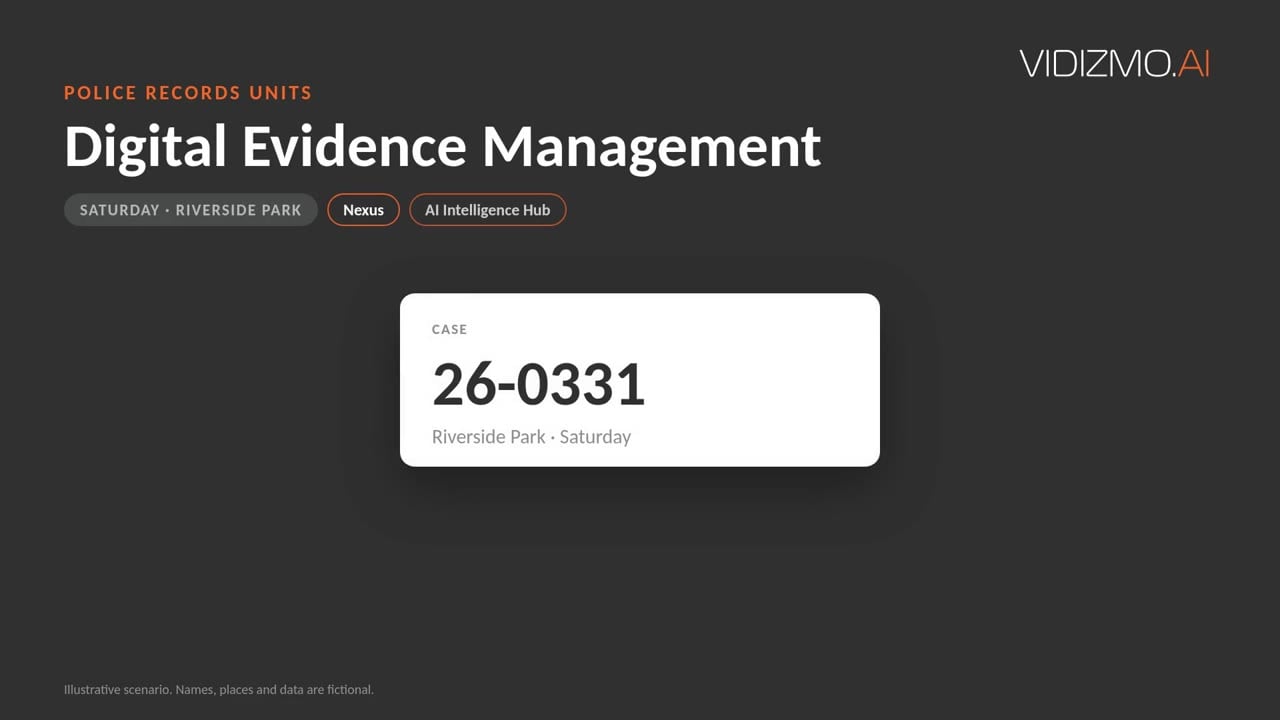
A person on the ground pages the officer on duty right away, picture attached, and the AI adds its read of the clip moments later. Once the officer confirms it, dispatch sends the nearest unit. Every file lands in one record. A witness filmed the fight on her phone. Police records send her a request with a secure link instead of chasing the video. She uploads it with no account and no app. It lands in the case beside the body-worn camera video, the 911 call, and the report, each logged on arrival.
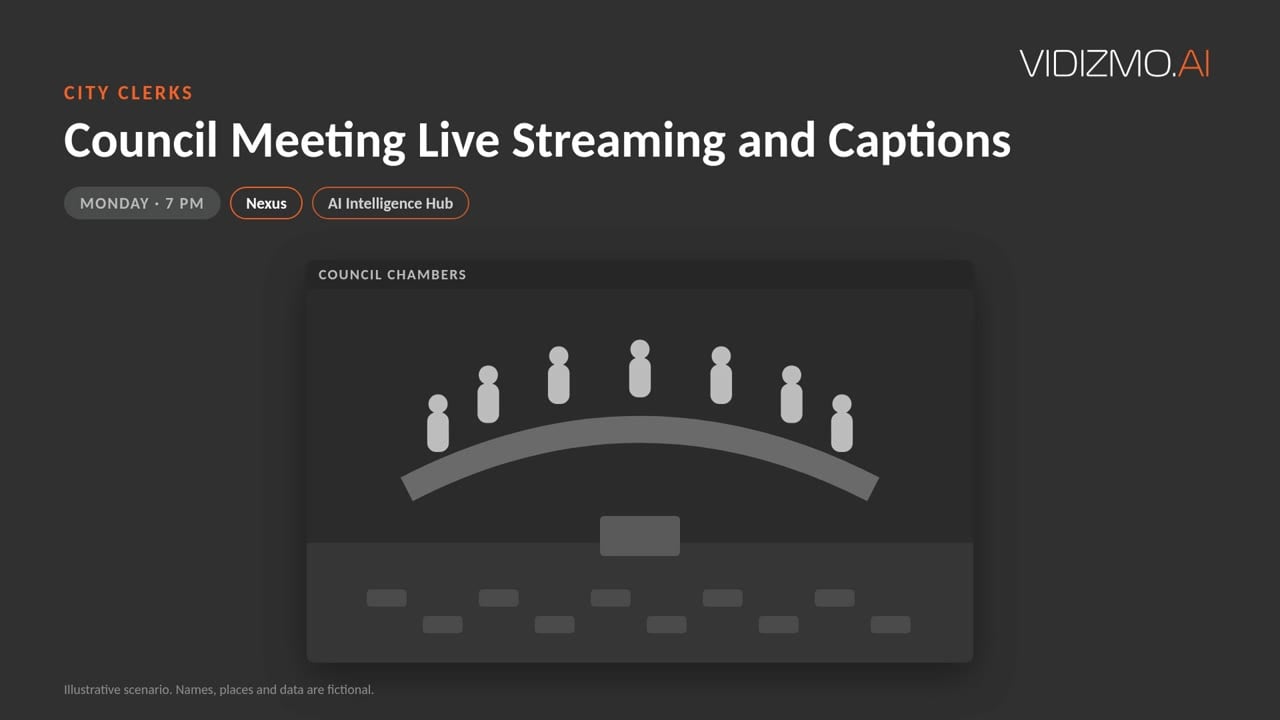
Every file carries its chain of custody, who viewed it, downloaded it, or shared it, from where and when. Council meetings live on the same platform. On Monday, the meeting streams live with captions, and residents watch with no account, ads, or tracking. When it ends, the recording is already archived with a chapter for each agenda item. A search for Elm Street lands on the minute it was discussed. Then a reporter asks for everything. The records office asks one question in plain language.
The answer lists the camera events, the work orders, the emails, the body-worn camera videos, a dispatch call, and the council minute, each with its source and timestamp. Now triangulation. The camera shows the truck at 11:04, the work order opens two minutes later, and council discusses it on Monday. Three systems, one consistent account. And at the front desk, the city's assistant answers residents from its own ordinances and minutes, citing the source each answer came from.
Before anything leaves, it is redacted. The body-worn camera video is redacted, faces covered and spoken details bleeped. Listen. Ma'am, did you see what happened? -Yes, I filmed it on my phone. -The 911 call is redacted the same way, with the caller's address and names bleeped in the audio and the transcript. Reports and documents too. Names, an ID number, and an address blacked out, with the original untouched. Nothing is redacted blind. Every detection is reviewed before export.
Each redaction carries its exemption code and the reviewer's name, so the law director can defend the release if it is challenged. Then it goes out on the record. The release goes to the reporter, and the case goes to the prosecutor, each through a link that expires. And one audit log covers the whole system, so every action in every department can be accounted for. Finally, here is how the city sets it up. Every camera sits in one library. The drop-off cameras, the intersections, the parking deck, and the streets.
Adding one takes a name and a stream address, with no new hardware on the city's own servers. Rules are drawn, not coded, so each department writes its own. On the street camera, a wrong direction check watches the zone drawn right on the street. It runs where the city decides. Government cloud, the city's own servers, or fully disconnected on a CJIS security policy-aligned architecture. Staff sign in through Microsoft Entra ID, and each department sees only what its role allows.
It connects to the cameras, Microsoft 365, Teams, Zoom, SharePoint, and service. Now a city already runs with Milestone, Genetec, Tyler, and Cablecast connectors on request. More than 150 integrations are listed, and anything else can be reached through an MCP server or a REST endpoint you define. One platform for the whole city. Cameras that flag what matters, one record for every file, answers with sources, and releases that protect residents and hold up to scrutiny.
VIDIZMO, for municipal government. Bring one backlog, a records queue, a meeting archive, or a camera nobody watches, and see it on your own content. Request a demo at VIDIZMO.ai.