Every auto claim now arrives with video, photos, recorded calls, and medical records. Here's one claim seen by the two people who own it, the head of claims and the CISO. Tuesday, 5:40 in the afternoon. A dash cam in the car behind catches it. The hatchback brakes at the light, and a gray sedan pulls in from the left and strikes its rear. The hatchback's driver reports a neck injury. For the claims team, the hard part is everything after the crash.
Evidence sits in inboxes and shared drives, and every video has to be watched before anyone knows what's in it. For security, every one of those files is personal data. Insurance fraud costs Americans over 300 billion dollars a year, and a breach in financial services averages more than 6 million dollars. Meet Dana, who runs claims, and Marcus, the CISO. Dana needs this claim closed fast and paid correctly. Marcus needs to prove that every file in it was protected.
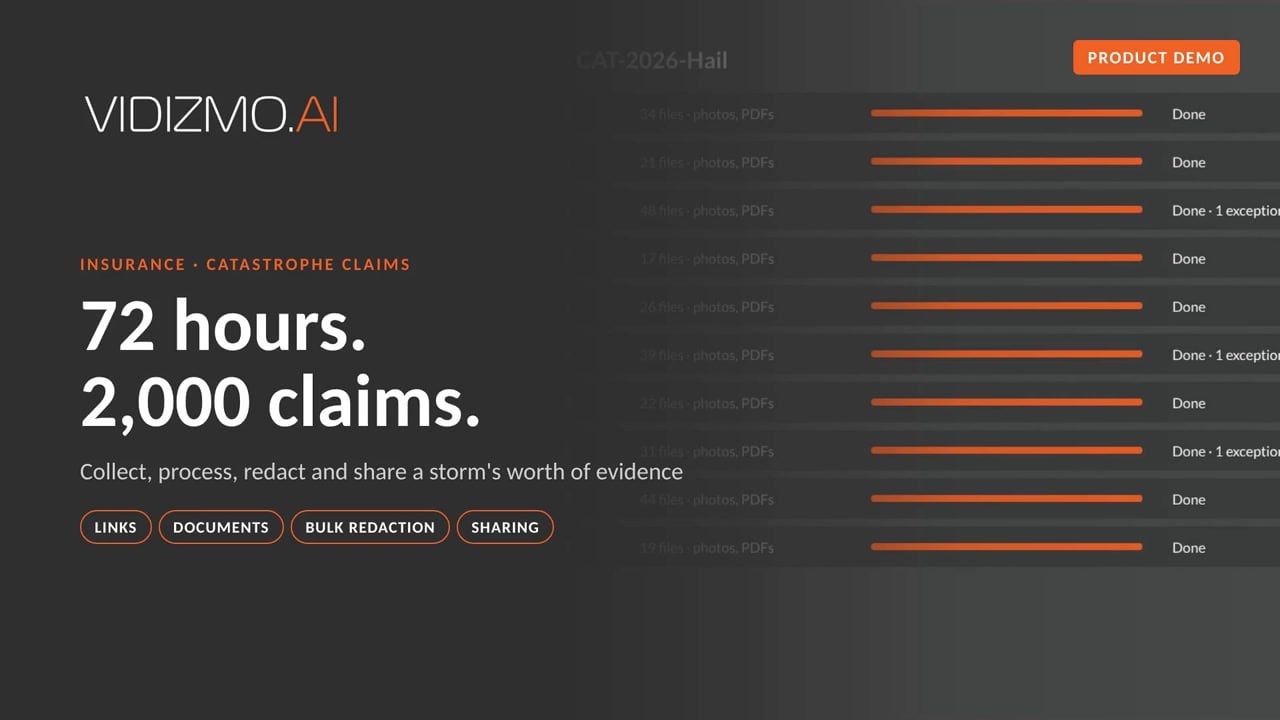
Let's follow it from first notice of loss to the final share. Dana's goal: cut the time and cost of handling each claim without paying for something she shouldn't. First, get every piece of evidence into one place. In Nexus, every claim has its own folder, one evidence record per claim with retention and an audit trail from the first file. Instead of chasing email attachments, the adjuster sends an upload request, a title, the claim it belongs to, the form the submitter fills in, and the date the link expires.
The witness opens the link, verifies with a one-time code, fills in the form, and uploads the dash cam video. It lands straight in the claim folder. A homeowner on the corner sends doorbell camera video through the same kind of link. Two pedestrians turn toward the intersection at the moment of the crash. Next, understand what the evidence shows. The adjuster asks the AI Intelligence Hub to build a timeline of the collision. Each step comes back with a time in the video: brake lights, the sedan entering from the left, the impact.
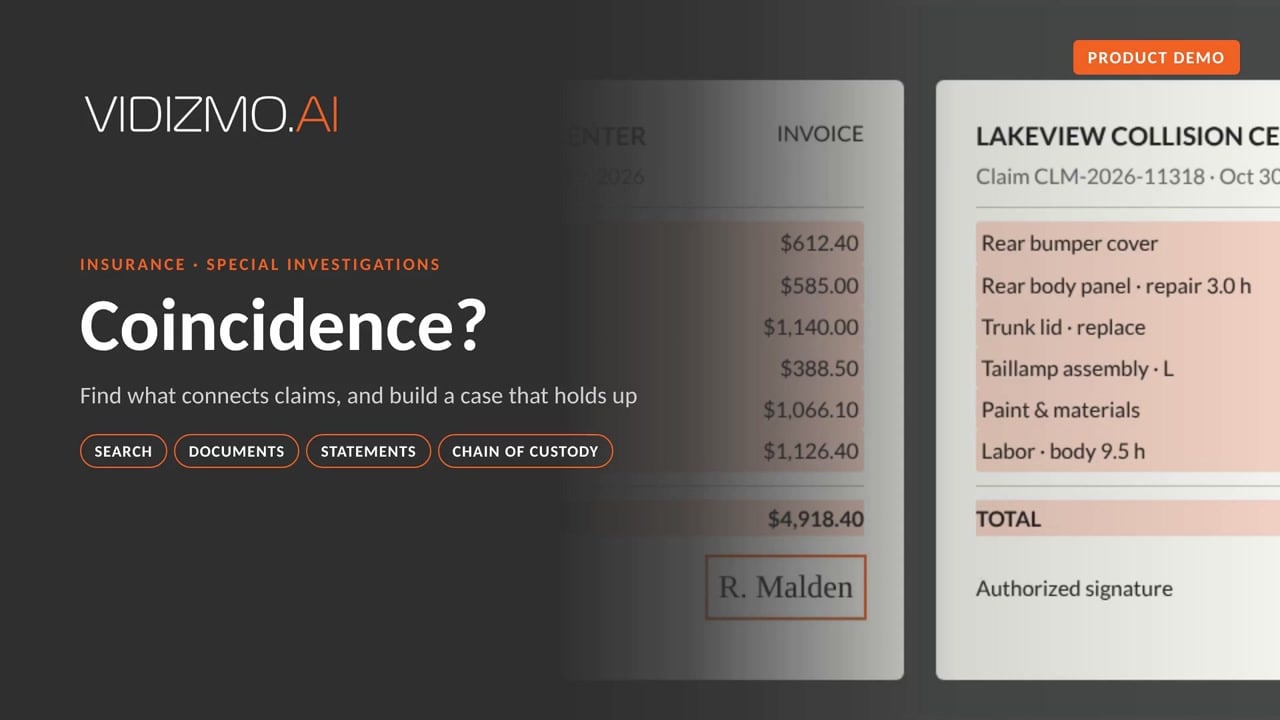
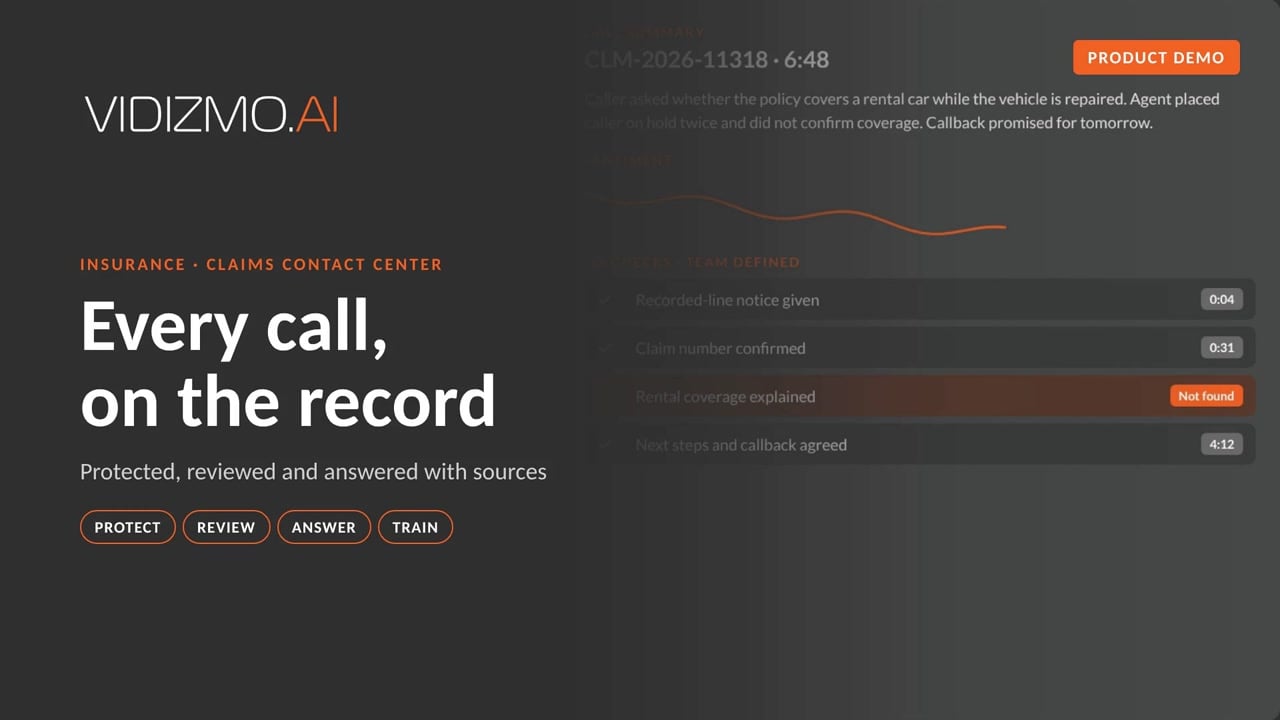
One click jumps to that moment. The same hub transcribes and summarizes the recorded statements and answers questions across video, calls, and documents, citing the timestamp or page. The special investigations team can check each statement against the footage before the payout, not after. Claim documents get the same treatment. This workflow reads each uploaded document, routes it to the right department, and applies that department's redaction rules.
Now Marcus's side. Every file in this claim carries someone's personal data. State insurance data security laws, like Ohio's, require a written security program, and the carrier has to show it was followed. Before anything is shared, protect the people in it. Start with the first notice of loss call. The claimant read out a policy number, a date of birth, and a card number. Redactor finds them in the transcript and bleeps them in the audio. Listen.
Thanks for calling claims. This is Jen. Can I start with your policy number and date of birth? Sure. Policy number is [bleep]. Date of birth [bleep]. I live at [bleep]. For the rental car, you can put it on my card [bleep]. The doorbell video shows bystanders who have nothing to do with the claim. In Redactor, each face is detected and tracked and listed with its time range, so a reviewer can check every one. The injury file holds an encounter summary from the clinic, names, a social security number, an address, and health details.
Redactor finds the personal and health data on every page, and the reviewer confirms each item. The copy that goes out is redacted. The original stays untouched. Then share it and prove who saw what. The redacted file goes to defense counsel as a limited share, a link for that recipient with an expiry date, so access ends on its own. Every view, download, and change is recorded against the file in audit logs that can't be edited or deleted. That's the record Marcus hands to an auditor.
VIDIZMO connects to the systems carriers already run: Guidewire ClaimCenter on request, Salesforce and ServiceNow, SharePoint, OneDrive, and Box, Microsoft Entra ID and Okta, Amazon S3 and Azure Storage. 156 integrations are listed, and anything not listed can be built to your requirement or reached through an MCP server or a REST API. Run it as SaaS in your own cloud or on premises. Data is encrypted at rest and in transit. VIDIZMO is ISO/IEC 27001 certified, and HIPAA obligations are supported with a business associate agreement.
One claim, one evidence record. For Dana, evidence collected through a link and questions answered with citations. For Marcus, personal data redacted before it's shared, and every access on the record. Bring one of your claims, and we'll walk it through end to end. Request a demo at vidizmo.ai.