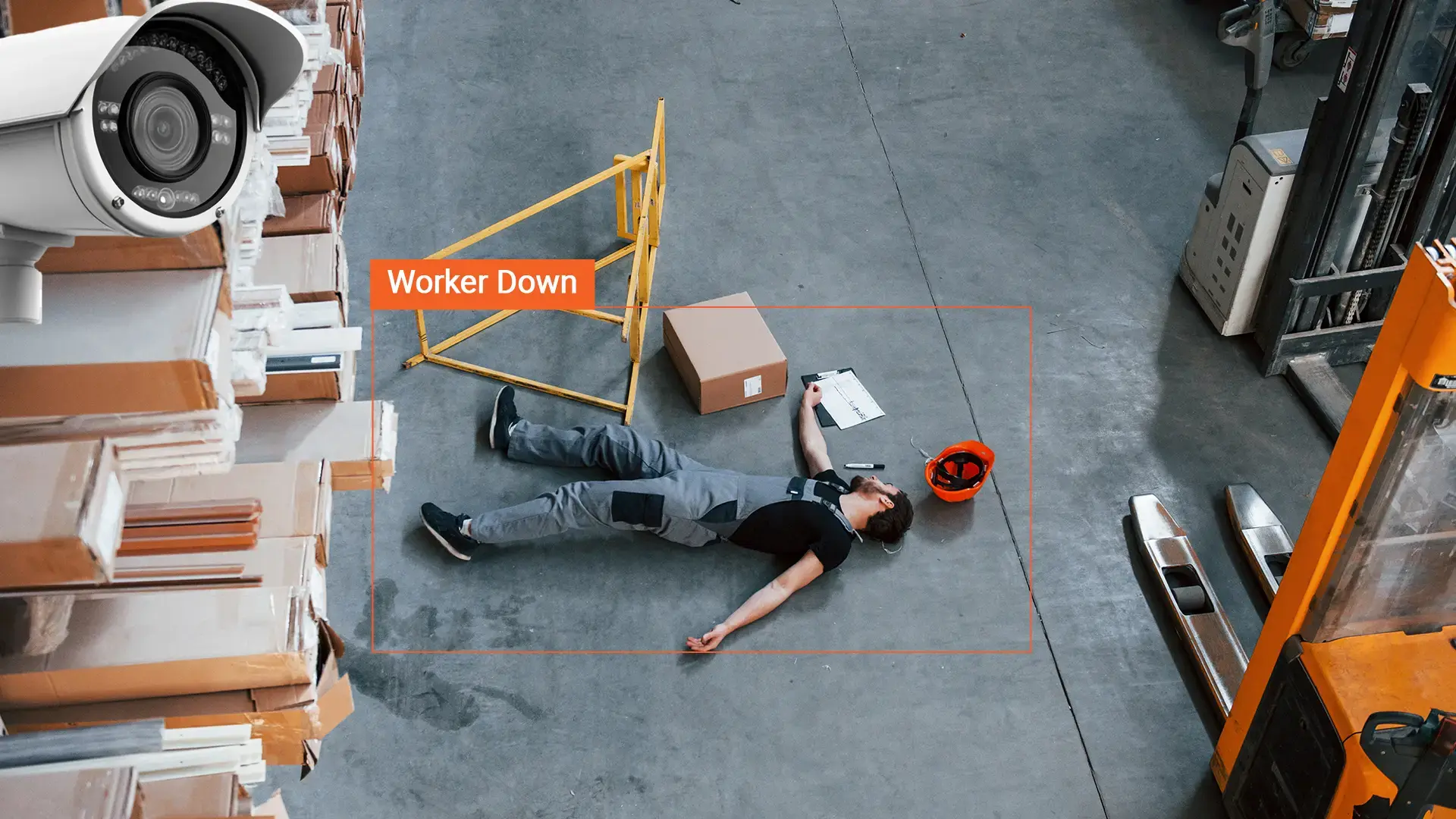
There is a category of workplace event where the harm is decided less by the incident than by the clock that starts after it. A worker who falls from a mezzanine ladder, or collapses from heat stress in a corner of the plant the walking routes do not pass, or is struck and left unconscious behind a line of racking, is in a race whose outcome depends on how long it takes anyone to notice. On a busy day floor in a staffed area, that might be seconds. In a warehouse aisle at 3 a.m., on a lone-worker shift, or in any of the low-traffic zones every large facility accumulates, it can be the better part of an hour, and the injury that would have been survivable becomes the one in the fatality report. This article is about using the cameras already covering those spaces to shorten that clock, and about being precise on what the technology genuinely requires, because fall detection is a capability where the gap between the demo and the deployment is wider than most. It belongs to our full guide on AI for workplace safety in manufacturing.
What the fatality data shows about falls
Falls remain one of the stubborn categories of workplace death. The 2024 Census of Fatal Occupational Injuries, released in February 2026 and the most recent national data available, recorded 844 deaths from falls, slips, and trips, down 4.6 percent from the year before, with 10.8 percent of those fatalities involving a fall from over 30 feet. The height detail matters for how a safety leader should think about this: the large falls from structural height are the ones fall-protection programs under the Occupational Safety and Health Administration's (OSHA) walking-working surfaces rules in Subpart D are built around, but the majority of fatal falls happen from lower heights or on the level, exactly the events that occur out of sight, without drama, and without anyone nearby to call for help.
Detection, it should be said without hedging, does not prevent any of these deaths. That is worth saying without hedging, because the value proposition is different and it is real: for the event that has already happened, the interval between occurrence and response is the one variable still in play, and it is the variable camera monitoring addresses. A medical response that starts ninety seconds after a collapse instead of forty minutes after is, in a meaningful fraction of cases, the difference in outcome.
Fall detection is a trained capability, not a checkbox
Fall and worker-down detection sits in a different category from detecting a person or a vehicle, and buyers should understand why before comparing claims. A fallen person is not a distinct object. It is a person in an unusual posture, and postures vary with camera angle, distance, clothing, and what the person fell against or behind. A body partially occluded by a pallet reads very differently from one in open floor. General-purpose models trained on upright pedestrians handle this poorly, which is why credible fall detection is delivered as a detection type trained for the purpose, on footage representative of the environment it will watch.
In VIDIZMO's platform this is exactly how the capability exists: fallen-person detection belongs to the family of domain-trained detection types, built per engagement against representative footage, alongside detection types like platform-edge safeguarding that were developed for transit deployments where the same problem, a person down and unattended, carries the same urgency. A trained detection type then behaves like any other in the pipeline, with a per-camera confidence threshold, a severity, and the same alerting path. What this means practically is that fall detection is scoped, not switched on. The cameras that will carry it need review for angle and coverage, the detection type needs training or validation against the site's own conditions, and the areas worth covering need choosing deliberately, which is a smaller and more honest project than "enable fall detection everywhere" and a far more reliable one.
Posture is also not the only signal, and the strongest deployments use time as the second one. A person who goes down and gets up is a slip, worth a log entry and a housekeeping look. A person who goes down and stays down is the emergency. Dwell logic over a tracked object expresses that distinction directly: the detection that persists beyond a threshold escalates, the one that resolves itself does not, and the alert channel stays quiet enough to be trusted. For the ambiguous cases in between, a further layer exists that fixed detection types cannot provide: a short clip around the event can be put to a multimodal model with a written question, is this person in distress or working close to the ground, and the answer arrives seconds later to decide the escalation. That escalation pattern, detector flags, model examines, only what survives reaches a person, is covered fully in our article on how the agent decides to look closer.
Where to deploy coverage first
The instinct in most projects is to deploy fall detection where people are, and it is almost exactly backwards. Staffed areas already have the best fall-response system available, which is other people. The coverage that changes outcomes is in the places the staffing plan forgets: the far aisles of the warehouse, the mezzanines and stair landings, the yard corners, the compressor rooms and rooftop plant accessed by one technician on a schedule nobody cross-checks, and every zone that a lone worker or an off-shift skeleton crew passes through.
Lone-worker coverage deserves particular attention because it is where the response-time math is worst and where the existing controls are thinnest. Check-in procedures and man-down pendants both help and both have failure modes, the check-in because its interval is the response time, the pendant because it must be worn, charged, and triggerable by someone who may be unconscious. A camera watching the space rather than the person fails differently, and the layered combination is stronger than either alone.
Response design is the other half, and it is organizational rather than technical. A worker-down alert is not a supervisory notification, it is a medical dispatch trigger, and it needs an owner per shift, a defined action, and a drill that has actually been run. The alert carries the camera, the location, and the snapshot, so the responder moves toward a place rather than a guess. Sites that treat the first month's alerts as drills, timing the response and fixing what the timing exposes, get a system that works on the night it matters. Sites that wire the alert to an inbox get a timestamp for the investigation.
The same archive serves the after side too. When an incident does occur, the preserved clip, with footage from before the trigger through the response, answers the questions every investigation and workers' compensation review asks: what happened, when exactly, how long until aid arrived. Our article on investigating workplace accidents from camera footage covers that use in full.
Build the response chain before you need it
The technology conversation tends to crowd out the response conversation, and the response is where the minutes actually get saved, so it deserves its own treatment.
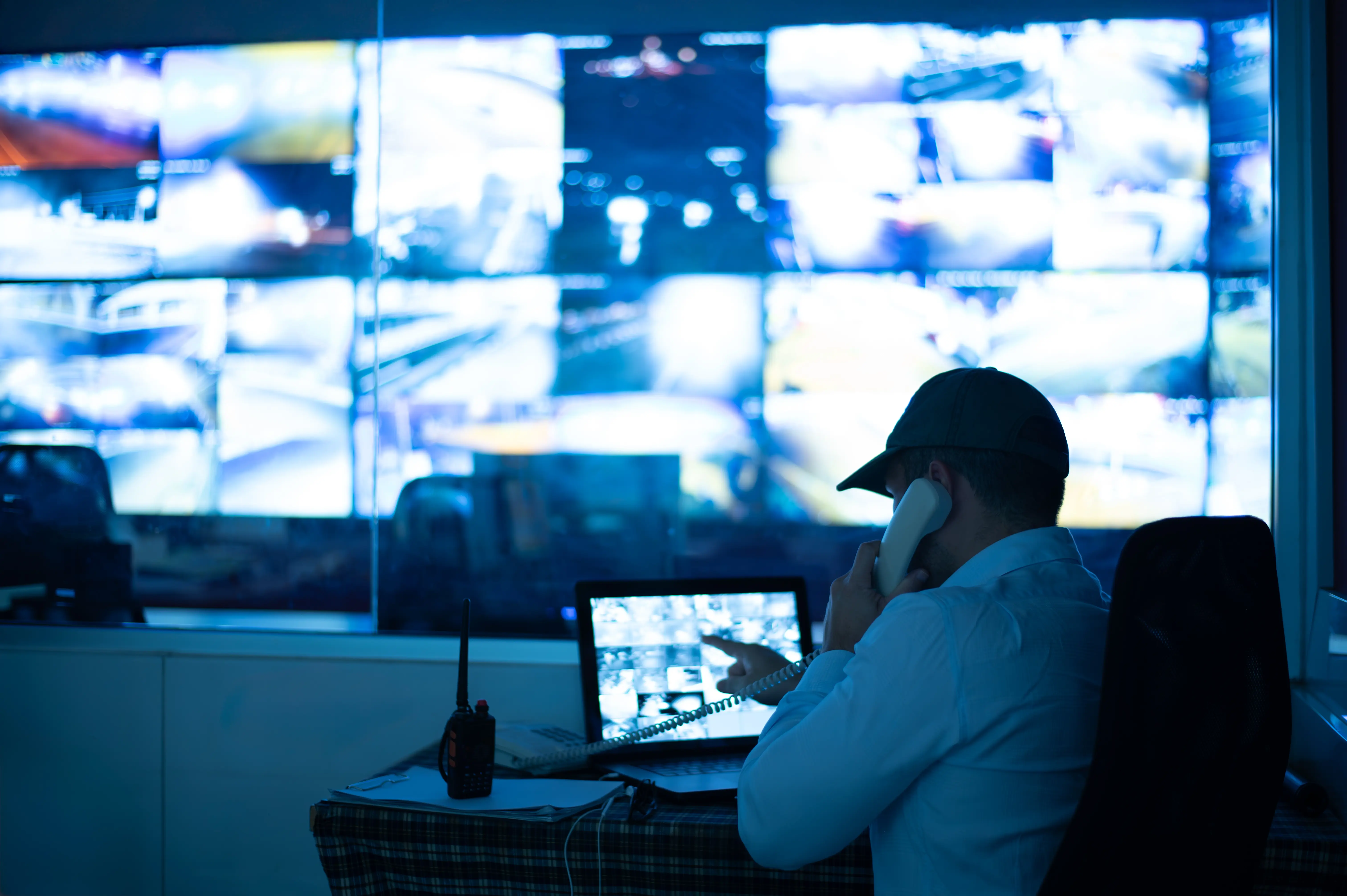
A worker-down alert needs to arrive as a dispatch, not a notification, and it belongs in the page-immediately tier of the escalation policy: the dispatch goes out at detection speed, and the model's reading of the clip, distress or resting, follows into the same alert seconds later rather than holding the page back. The difference is concrete: a notification lands in a channel and waits to be seen, while a dispatch names a responder, carries the location and the snapshot, and starts a clock somebody is accountable for. In practice that means the alert routes by email and SMS to the named responder for that zone and shift, first-aid trained, with the backup named for when the primary is on leave, and the escalation defined for when neither acknowledges within a set interval. Routing through webhooks into whatever the site already uses for urgent communication, a radio dispatch system or a mass-notification tool, beats inventing a new channel, because the night this matters, people will act through the tools they touch every day.
The drill is where the design gets tested, and the first month's false positives are free drills if the site chooses to treat them that way. Time each response from alert to arrival. The gaps the timing exposes are rarely technological: the responder did not know which mezzanine "camera 14" covers, the SMS went to a phone left in a locker, the after-hours path assumed a guard post that is unstaffed on Sundays. Each of those is fixable in an afternoon once seen, and invisible until timed. A site that runs this loop for a month typically cuts its response interval by more than any detection improvement could, which is a slightly deflating fact for a technology article to admit and exactly the kind of fact a safety leader should want.
There is also a floor-level design choice that shapes worker acceptance: what the workforce is told this system is for. Fall detection framed as "the cameras will find you if something happens to you on the night shift" is one of the few analytics use cases that workers tend to actively welcome, particularly lone workers who have done the mental arithmetic on how long they would lie unnoticed. The same system framed vaguely, or bundled quietly into a general monitoring rollout, forfeits that goodwill. Being specific about the purpose, and about what the system does not do, is both the honest move and the tactically smart one, and the wider version of that argument lives in our article on worker privacy and the no-discipline commitment.
Heat is quietly changing the shape of this problem, and coverage plans written five years ago have not caught up. Collapse from heat stress does not happen at the machines where the safety program's attention lives, it happens in the poorly ventilated corners, on rooftop plant during summer maintenance, in the yard, and it happens progressively, a person slowing and steadying themselves against a rack minutes before going down. Those preceding minutes are visible to a camera in a way they are rarely visible to a distant supervisor, and the escalation pattern described earlier, where an ambiguous clip gets a second look before anyone is paged, fits this progression particularly well. Sites in hot climates increasingly treat summer heat coverage as its own seasonal deployment, widening the watched areas from June to September.
What to expect in real conditions
A few plain statements calibrate this capability better than any feature list. Detection quality depends on the camera seeing the event, so occluded areas, blind racking corridors, and doorway shadows stay blind regardless of the model, and the coverage review has to be honest about it. False positives will exist, because kneeling maintenance work, stretching, and floor-level tasks share geometry with distress, which is why the dwell threshold and the escalation review exist, and why the goal is a rate low enough to keep response sharp rather than a fantasy of zero. Accuracy claims for a trained detection type mean something only against footage like yours, so validate on your cameras during commissioning rather than accepting a number from someone else's environment. And because seconds are the entire point here, this workload runs on site, close to the cameras, where the processing does not wait on a round trip to anywhere.
How VIDIZMO handles it
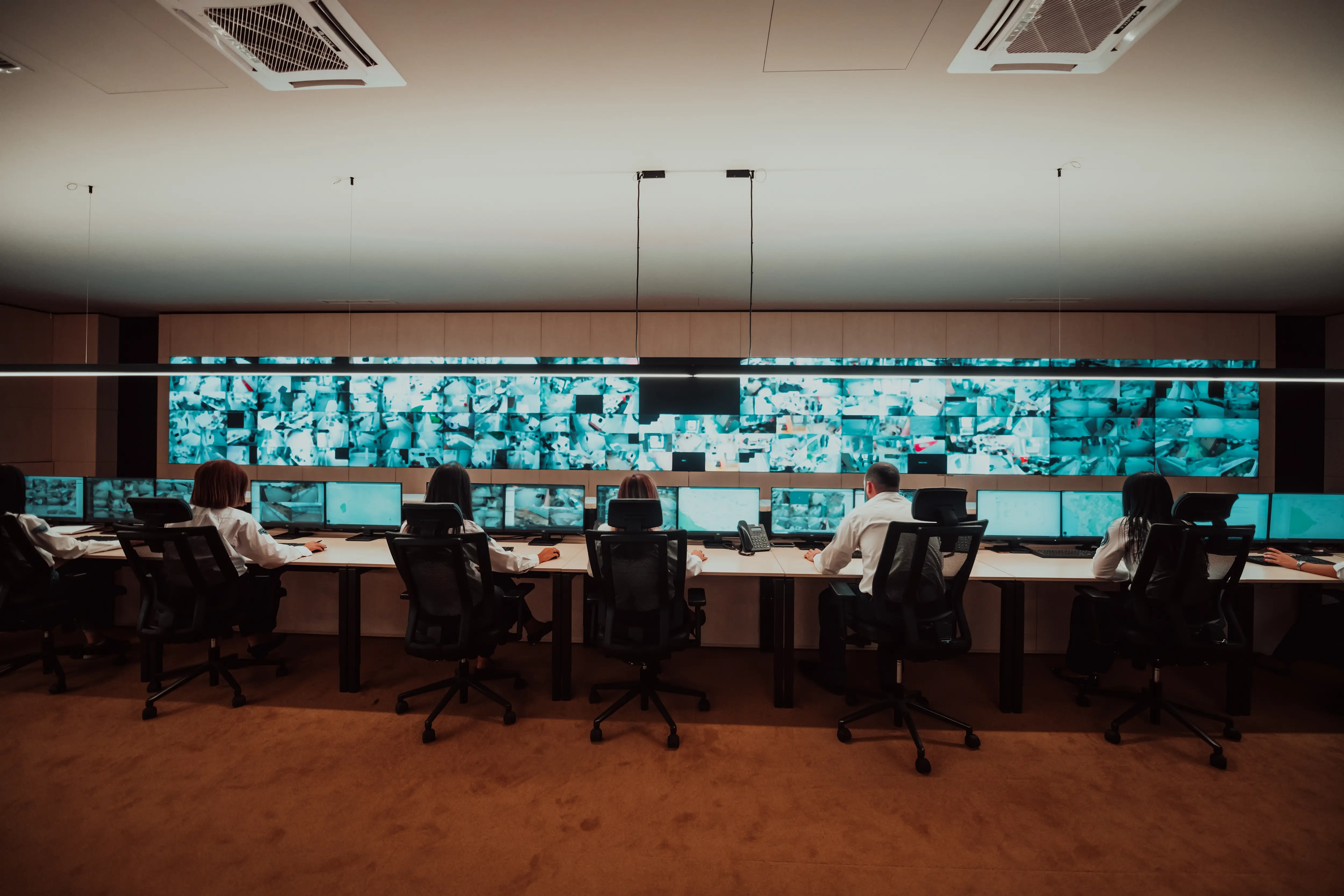
VIDIZMO AI Live Insight leverages the cameras a facility already owns rather than requiring AI-enabled replacements, and processes their streams on the customer's own hardware, on premises, which is where a workload measured in seconds belongs. Fallen-person detection is delivered as a trained detection type scoped to the cameras and areas that need it, tuned per camera for confidence and severity, with dwell logic separating the slip from the emergency and the option of putting the ambiguous clip to a multimodal model before escalation. An alert dispatches with location and snapshot attached, the event lands on the timeline, and the surrounding footage is preserved automatically in the VIDIZMO Nexus portal the deployment works with, under its access control and retention rules, ready for the medical review, the investigation, or the claim that follows.
The right first conversation for this capability is not a camera count. It is a map of where a person could go down unseen, one shift walked with fresh eyes, and that map tends to make the case on its own.