Video Analytics, Government, AI Live Insight
What Is a Real-Time Crime Center? A Guide for Cities and Counties
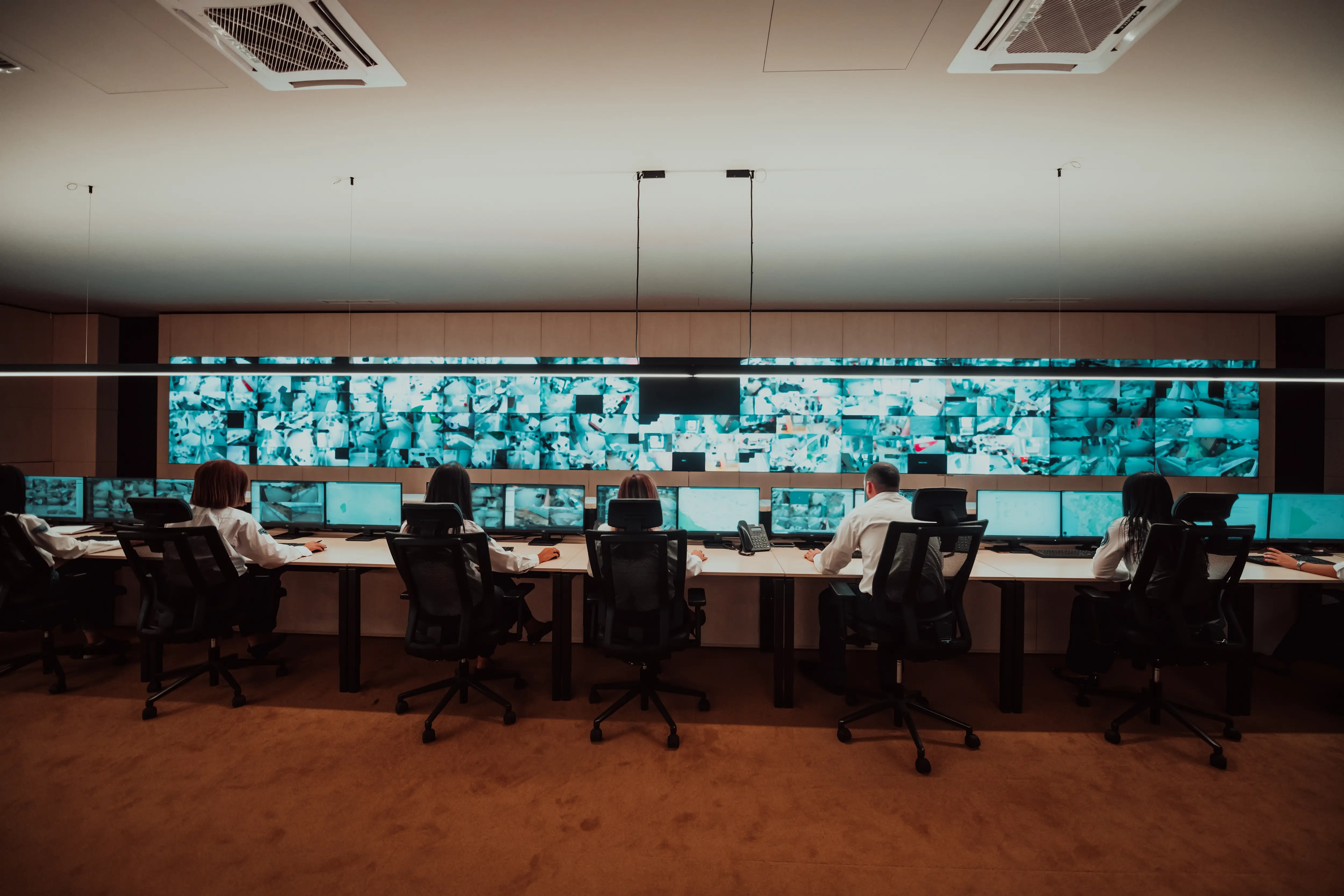
Somewhere in the last two years, someone probably asked your department whether it should have a real-time crime center. Maybe a council member saw one on the news, maybe a neighboring sheriff opened one, or maybe a vendor left a brochure showing a dark room and a wall of screens. The question sounds like a technology question, and most of what is written about it treats it as one, largely because the companies that sell the screens write most of it. In practice a real-time crime center is mostly a decision about people, records and public trust, with technology underneath, and the agencies that run one well usually settled the people and records questions before they bought anything.
Why so many agencies are asking now
Real-time crime centers started in the largest cities, with New York opening the first widely known one in 2005, and for about a decade the model stayed with departments big enough to staff a room around the clock. A criminologist writing in The Conversation in 2024, drawing on the Electronic Frontier Foundation's Atlas of Surveillance, counted about 150 agencies with one and put the growth at 148% over four years, while noting that fewer than 1% of US police agencies had one at the time. The growth is real but the base is still small, which is why so many agencies are looking at the idea for the first time rather than replacing something they already have.
Two pressures account for most of that growth, and the more familiar one is that departments of every size have struggled to hire and keep officers since 2020, and a center that lets fewer people cover more ground is an obvious answer for a chief who cannot fill patrol shifts. Cities also own far more cameras than anyone watches, because traffic, building, park, transit and school cameras were bought one project at a time and almost none of them has a person looking at it when something happens in front of it. A real-time crime center promises to turn that footage into something an officer can use while an incident is still unfolding.
Federal pandemic recovery money paid for a lot of the recent wave. Spokane County, Washington, built its center for about $4 million, nearly all of it American Rescue Plan Act money, and staffs it with three analysts, according to a 2024 report in Police1. That money has to be spent by the end of 2026, which matters for anyone planning a center today, and the cost section below comes back to it.
What a real-time crime center is, and what it is not
A real-time crime center (RTCC) is a function inside a police department or sheriff's office that uses live information in two directions. It supports officers already responding to a call by putting better information in front of them before they arrive: what the person looks like, which way they went, what they are driving, whether there is a weapon. It can also start a response that would otherwise never happen, because when a camera picks up something nobody has phoned in, such as a break-in at a closed business or a fight outside a bar at 2 a.m., the alert can be checked and turned into a call for service. After an incident, the same people and systems help investigators reconstruct what happened.
The word "center" suggests a room, and in large cities it usually is one, but the function scales down further than the name implies, and it helps to think of three sizes.
| Size | What it looks like | Who does the work |
|---|---|---|
| A capability without a room | Software watches cameras and sends alerts to people who have other jobs | A dispatcher, a patrol sergeant or a detective, as alerts arrive |
| A staffed room | A dedicated space with analysts on some or all shifts | Two to five analysts, often civilians, plus a supervisor |
| A multi-shift operation | Around-the-clock coverage, several analysts per shift, investigative follow-up | A team of ten or more, with its own management |
A small agency usually starts in the first row and often stays there, which is a reasonable place to be rather than a lesser version of the idea. An agency of forty officers with no room and no dedicated analyst can still have cameras watched by software, alerts that reach whoever is on duty, and footage that is easy to find afterward. Some small agencies get the second or third row by joining a center that a county or larger neighbor already runs, and our article on real-time crime centers for small agencies covers how to choose between running your own and sharing one, while our sample plan for a town of 20,000 shows what the first row could look like in practice.
Cities do end up paying for the wrong thing, so the boundaries matter. The 911 center answers calls and holds the authority to send units, and a real-time crime center feeds it, sometimes with information for a call already under way and sometimes with an incident of its own, when a camera shows something no one has reported and the center asks dispatch to send someone. An emergency operations center is different again, being the room that activates during floods, storms and large events to coordinate every city department. The three rooms sometimes share walls, screens and even staff, and our comparison of RTCCs, EOCs and situational awareness centers walks through how to tell which one is actually being proposed.
What a real-time crime center runs on
Every real-time crime center draws on the same kinds of sources, and the useful first exercise for a department is to list which of them it already has, because most agencies own more than they think.
Cameras come first, starting with the ones the city owns outright on buildings, parks and streets. Traffic cameras in most cities belong to public works or the transportation department rather than to the police, so connecting them means an agreement between departments before it means any technology. That agreement also lets the same cameras serve traffic safety, public works and code enforcement, which is often what persuades a council. Schools and transit add more, and private cameras at businesses, apartment complexes and places of worship can join when their owners agree and their streams can be reached over the network. Programs that bring private cameras in are a governance project as much as a technical one, which our article on community camera registries explains.
Beyond cameras, a center typically draws on license plate readers, gunshot detection sensors where a city has them, the computer-aided dispatch (CAD) system for open calls and unit locations, and the records management system (RMS) for history on people, vehicles and places.
Most cities already record their cameras in a video management system (VMS), and often in more than one. Adding analytics does not have to mean replacing it, because a platform that fetches live streams directly from cameras, or from any recorder that republishes them over the standard RTSP or ONVIF protocols, adds the part the VMS does not do, which is noticing when something in the picture matters. Our engineering article on analytics that work with any camera goes further into how that connection works.
That noticing is where the arithmetic of a modern center has changed. A person can watch a handful of screens with real attention for a limited time, while software can watch every stream continuously for the conditions it has been told to look for, such as a person in a closed park after midnight or a crowd forming quickly outside a venue, and raise an alert only when one occurs. The analyst's job shifts from watching screens to deciding what to do about alerts, which is a much better use of a scarce person. The software will still be wrong some of the time, so any vendor should show how its alerts perform on your own cameras in a structured pilot that counts how many alerts each rule produces and how many turn out to be real, as our article on running a video analytics proof of concept describes.
Who staffs it
Staffing used to be the largest cost of a real-time crime center, because the job was watching screens and a seat covered around the clock takes several people once leave, training and turnover are counted. Most agencies therefore concluded that a center was something for bigger departments.
Once software watches the cameras, the job in the room changes from watching to deciding. The system raises alerts with a clip and a location, sends each one where the agency has decided it should go, and keeps the record. What stays with people is judgment: checking an alert before an officer is sent, deciding what to do about it, talking to officers during a live incident, following up for investigators and answering for those decisions afterward, which a growing number of city AI policies now require. For many small and mid-size agencies the number of alerts needing that judgment is low enough that no dedicated analyst is needed, and our article on staffing a real-time crime center when software does the watching shows how to work out the number from your own alert volume and who to hire.
How an alert reaches an officer
In most centers the difficult part is getting information to the officer who can act on it quickly, without adding a step that slows the response. This matters most for incidents that start with the camera rather than a phone call. Someone has to look at the alert, decide whether it is real and, if it is, get a call for service created. In a staffed center that is the analyst's decision, and in an agency without a room the alert can go to a dispatcher or a patrol supervisor who makes the same judgment. Writing down which kinds of alert need that check, and who does it, is what stops a camera program from sending officers to false alarms.
From there the path usually runs through the dispatcher, who relays it by radio, or directly to officers through the mobile data terminals and phones they already carry. Each extra person in the chain adds time and a chance of detail being lost, so a center built around a new screen that nobody outside the room looks at can produce good information that arrives too late. It works better when alerts go into the systems people already use, and modern platforms can send each detection out as a webhook, a message another system receives the moment the alert is raised. CAD needs particular care, because the CAD vendor controls what its interface accepts, and some quote that work separately and schedule it on their own timeline. Our article on getting camera alerts to 911 dispatch covers the options, including what to do when the dispatch center is itself short-staffed.
What it costs to keep running
Most real-time crime centers are opened with one-time money and then have to run on recurring money, and programs that close usually do so because nobody planned for the second part. A grant or capital appropriation builds the room, buys the hardware and pays for the first term of software. Two or three years later the software renews, the servers need replacing, the analysts are on the payroll, and the general fund was never asked to carry any of it.
Several of the recurring lines surprise people the first time they appear in a budget. Software is usually priced per camera, per stream or per type of analytic, and the unit you are charged on decides whether doubling your camera count doubles your bill. Computing hardware for live analytics has a replacement cycle of a few years. Storage grows with the alerts and clips the system keeps as well as with the number of cameras. Integration with CAD is often another vendor's invoice, and staffing can range from a share of existing dispatchers' time to a full team. One cost lands outside the police budget entirely, because every alert and clip can become the subject of a public records request, and the review and redaction time falls on whoever handles those requests.
Funding has also become harder to plan around, because federal public safety grant priorities shifted in 2025 and pandemic recovery money has to be spent by December 31, 2026. A center planned today should assume the general fund carries its recurring costs from year three onward, and anyone offering a grant should be asked, in writing, which lines it will still pay for at renewal. Our article on budgeting a real-time crime center past the grant period builds that five-year model line by line.
What your council will ask
In a growing number of cities, a real-time crime center cannot be bought without a public process. According to the ACLU, 26 jurisdictions covering nearly 18 million people have adopted community control over police surveillance ordinances, which typically require council approval, a published use policy and regular reporting before a department can acquire this kind of technology. Even where no ordinance exists, councils have become much more likely to ask detailed questions, and several have paused or cancelled camera and license plate reader programs over the answers.
The questions are predictable, so they can be answered before the meeting rather than during it. Who can see the footage, and is every viewing recorded? How long is footage kept, and what happens to it after that? Is it shared with other agencies, and on what terms? Can the vendor use it to train its own products? Is facial recognition in use, and if so, under what rules? Where does the data physically live, and what happens to it if the city stops paying? How will the department show, a year from now, that the center did what it promised? A department that arrives with written answers, and with a system that can prove them, is in a much stronger position than one that promises to work them out later.
What your IT director will ask
The IT director has to run the system, secure it and pass it through a security review, and their questions start with where the processing happens and what crosses the network. When the analytics run on servers on the city's own network, close to the cameras, the full video streams stay local and only alerts and clips leave for the systems the agency chooses, which keeps bandwidth down and answers the council's question about where footage goes. Sizing depends on how many cameras are analyzed, how many frames per second on each and how many detection models run on each stream, and our sample plan for a town of 20,000 works through what that means for one server.
The security questions come next, and they start from the fact that criminal justice information falls under the FBI's CJIS Security Policy. The agency holds that compliance obligation, and a vendor should explain how its controls support it and where each part of the system runs, as our explainer on what CJIS actually requires when AI touches criminal justice data sets out. The IT director will also want to know how outgoing alerts are authenticated and how streams from private cameras enter the city's network, since a business owner's recorder pushing video into a city system is a new connection that needs the same scrutiny as any other. Whether any footage leaves the city at all is a deployment question, and our article on on-premises versus cloud processing for real-time video covers the tradeoffs, including why analysis close to the cameras also helps with speed.
What to ask any vendor
Every vendor in this market will demonstrate detection, but fewer can show what happens after a detection, and that is where a program either holds up under a records request, a court challenge or a council review, or does not. Put these questions to every vendor on your list, in writing:
| Question | Why it matters |
|---|---|
| Is every access to footage logged, with the person, the time and a stated reason? | This is what you will be asked to produce when a viewing is challenged |
| Does automated activity, such as an AI process reading a file, appear in the same trail as people? | Otherwise part of the record is missing |
| Does the custody record run from the moment footage is ingested to the moment it is deleted? | A record that covers only the middle is hard to defend |
| Can a retention schedule run automatically, and does a legal hold reliably override it? | Deleting footage under a hold is a serious problem |
| Can you export everything, footage and records, without raising a support ticket? | You will need to, for requests and for leaving |
| Where does the system physically run, and who can reach the data? | Councils ask, and some ordinances require an answer |
| How do alerts reach the systems we already use? | Information on a screen nobody outside the room looks at arrives too late |
None of these questions is about how well a system spots something, yet together they decide how much staff time the center consumes in years two through five, and how the department fares the first time something goes wrong.
Where VIDIZMO fits
VIDIZMO builds the layer underneath a real-time crime center rather than the room, as a platform with separately licensed parts that the other articles on this blog refer to. VIDIZMO Nexus is the platform every deployment is built on, holding clips, cases and the video library with chain of custody, retention schedules and legal hold. AI Live Insight runs on Nexus, reads and records the cameras, and raises alerts on the conditions the department defines. AI Intelligence Hub runs automated follow-up on an alert and connects to other systems through their APIs, and Redactor redacts footage, audio and documents before release.
Alerts go out to the systems people already use, and the operator dashboard serves whoever verifies them by bringing forward the cameras with active alerts. The platform runs on infrastructure the city or its regional host controls, including fully disconnected from the internet, and it includes no predictive scoring. Face recognition is optional and does nothing until an organization configures it and an administrator turns it on, so a city that decides against it never has it running. Several agencies can share one deployment while each keeps its own footage and camera access.
To see this on cameras like yours, read how AI adds real-time awareness to cameras a city already owns.
FAQ
Frequently Asked Questions
What does RTCC stand for?
RTCC stands for real-time crime center, a police or sheriff's function that uses live camera feeds, sensor alerts and records to support officers during incidents and investigators afterward.
Do real-time crime centers use facial recognition?
Some do and many do not. Several states and cities restrict or ban police use of facial recognition, and a center can operate without it, so the decision belongs in the use policy before the system goes live.
Is footage from a real-time crime center a public record?
In most states footage and alert records held by a police department fall under public records law, subject to exemptions that vary by state, such as active investigations. The records unit should be involved from the start, since releasing footage usually means reviewing and redacting it first.
TopicsVideo AnalyticsGovernmentAI Live Insight
About the author
Akhlaq Khan is Co-Founder and VP Delivery at VIDIZMO, where he leads the implementation and delivery team that deploys all of VIDIZMO's products and solutions for customers. In more than 20 years in software development and product management, he has worked with large enterprise customers in domains such as public safety and healthcare. His deployments include Redactor for a county contact center that redacts thousands of calls a day after clearing a backlog of about two million recordings, and for a county public safety agency whose video release time fell from 62 days to 7. He is an AWS certified professional.
You may also like

Staffing a Real-Time Crime Center When Software Does the Watching
Most chiefs who hear a pitch for a real-time crime center ask the same question before any other, which is whether they ...
RTCC, EOC or Situational Awareness Center: What Each Room Is For
Walk into a real-time crime center, then into a city's emergency operations center, and you will see much the same ...
Real-Time Crime Centers for Small Agencies: Run Your Own or Share One
A police chief in a town of twelve thousand people, with a department of twenty officers, has usually assumed that a ...
See it on your own content
Tell us what you are trying to solve and we will show you how it works on your infrastructure.