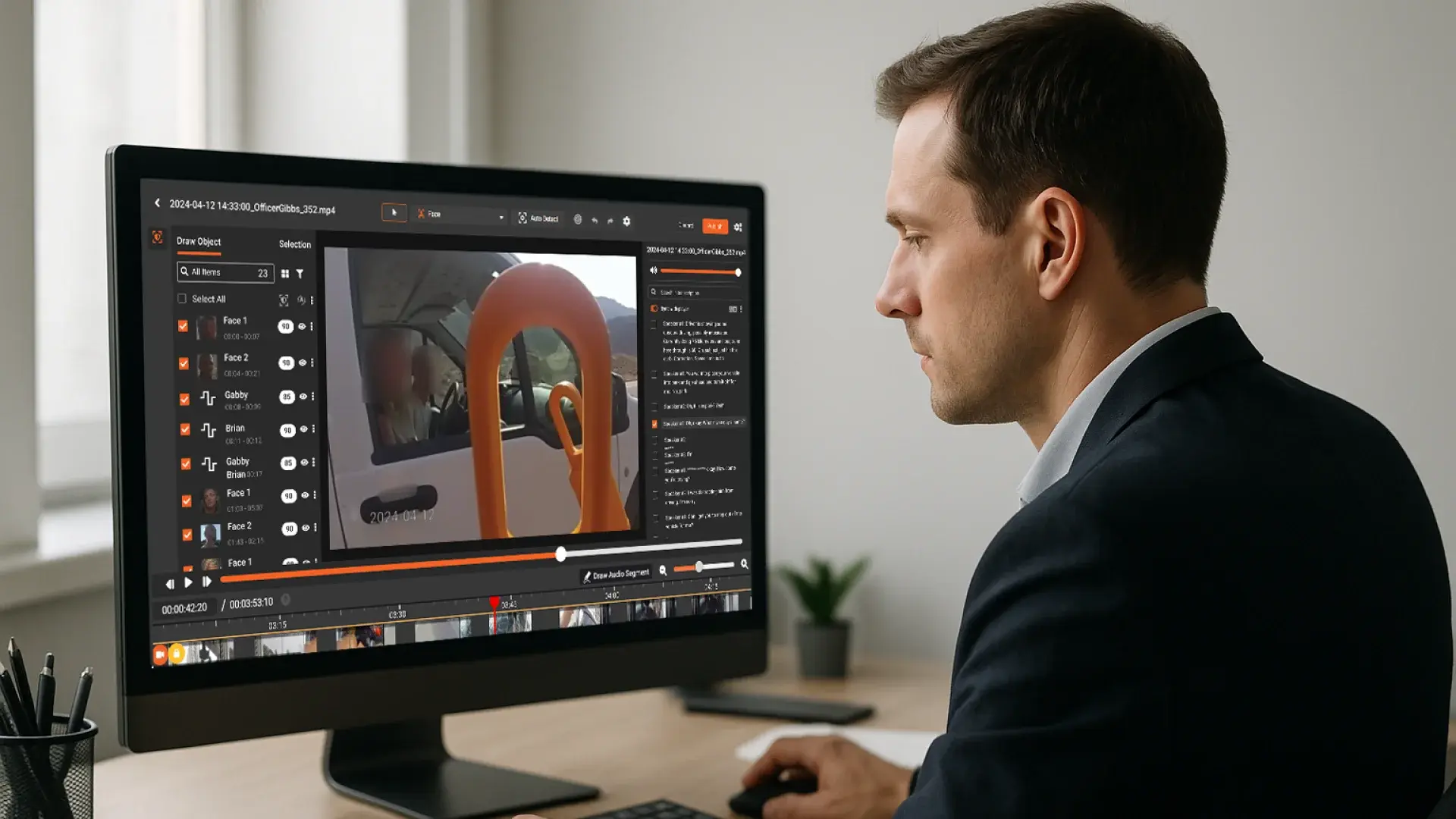
CCTV cameras are everywhere, from city surveillance networks and transportation hubs to corporate offices and industrial facilities. As the volume of surveillance footage grows, so does the responsibility to protect sensitive information captured within it. This is why organizations increasingly rely on bulk CCTV video redaction tools to safeguard privacy while ensuring compliance with regulatory and legal requirements.
Manual redaction of CCTV footage is no longer practical. Reviewing footage frame by frame consumes time, introduces human error, and delays critical workflows. Modern organizations need AI-powered bulk CCTV video redaction tools that can process large volumes of footage accurately, consistently, and securely.
Key Takeaways
- Bulk CCTV video redaction tools automate the removal of sensitive visual and audio information at scale
- AI-driven redaction improves speed, accuracy, and compliance compared to manual methods
- Enterprises require more than video redaction alone, including secure storage, audit trails, and access controls
- VIDIZMO Redactor supports bulk redaction across video, audio, images, and documents in one platform
- A unified redaction solution simplifies compliance with GDPR, FOIA, CJIS, and other regulations
Start Your Free Trial Today - No Credit Card Needed

What Are Bulk CCTV Video Redaction Tools?
Bulk CCTV video redaction tools are specialized platforms designed to automatically identify and obscure sensitive information across large volumes of surveillance footage. These tools use artificial intelligence and computer vision to detect and redact elements such as:
- Faces of bystanders, employees, and minors
- Vehicle license plates and identifying markings
- Screens, ID badges, and confidential displays
- Audio conversations captured by CCTV systems
Unlike traditional video editing software, bulk CCTV video redaction tools allow organizations to process hundreds or thousands of files simultaneously, making them ideal for enterprise and government environments.
Why Bulk CCTV Video Redaction Is Critical Today
Organizations managing CCTV footage face increasing pressure from multiple directions:
- Privacy regulations that mandate the protection of personally identifiable information
- Public disclosure and FOIA requests requiring timely video release
- Legal discovery obligations with strict deadlines
- Reputational and legal risks from accidental data exposure
Without bulk CCTV video redaction tools, teams struggle to keep up with demand. Automated redaction reduces processing time while ensuring consistent application of privacy policies across all footage.
Key Capabilities of the Best Bulk CCTV Video Redaction Tools
To be effective at scale, bulk CCTV video redaction tools must offer more than basic masking features.
AI-Powered Detection and Tracking
Advanced tools automatically detect faces, license plates, objects, and voices, and track them across frames even when subjects move.
True Bulk Processing
The ability to ingest, redact, and export large batches of CCTV footage without manual intervention is essential for enterprise use.
Multi-Format Redaction Support
Leading solutions support not only video but also audio recordings, images, and documents that accompany CCTV evidence.
Secure Storage and Access Control
Redacted and original content must be stored securely with encryption and role-based permissions.
Audit Trails and Legal Defensibility
Comprehensive logs and chain-of-custody records ensure every redaction action is traceable and defensible in court.
VIDIZMO Redactor as a Complete Bulk Redaction Solution
Many bulk CCTV video redaction tools focus solely on video. VIDIZMO Redactor is designed as a comprehensive, enterprise-grade redaction platform that addresses the full spectrum of sensitive content.
Bulk CCTV Video Redaction with AI
VIDIZMO Redactor automatically detects and redacts faces, license plates, and sensitive objects across large CCTV video libraries. Organizations can apply consistent redaction rules and process footage in bulk, significantly reducing turnaround time.
Bulk Audio Redaction
CCTV systems often capture audio that includes names, conversations, or confidential information. VIDIZMO Redactor enables bulk audio redaction by muting, bleeping, or removing sensitive speech segments while preserving context.
Bulk Image Redaction
Still images extracted from CCTV footage or captured separately can also contain sensitive data. VIDIZMO Redactor supports bulk image redaction to obscure faces, text, and identifiers across thousands of files.
Bulk Document Redaction
CCTV evidence is often accompanied by reports, transcripts, and supporting documents. VIDIZMO Redactor extends redaction capabilities to documents, allowing organizations to redact names, addresses, and identifiers at scale.
One Platform for Unified Redaction
By supporting video, audio, images, and documents, VIDIZMO Redactor eliminates the need for multiple tools. This unified approach improves efficiency and reduces operational complexity
Industry-Specific Use Cases for Bulk CCTV Video Redaction
Law Enforcement and Public Safety
Agencies must redact bystanders, minors, and sensitive audio before releasing CCTV footage to the public or courts. VIDIZMO Redactor enables bulk processing of case-related media while maintaining the chain of custody.
Government and FOIA Compliance
Government bodies handling frequent FOIA requests can use bulk CCTV video redaction tools to meet disclosure deadlines without compromising privacy.
Transportation and Smart Cities
Airports, rail networks, and smart cities manage vast CCTV systems. Bulk redaction ensures privacy compliance while allowing footage to be shared with stakeholders and investigators.
Corporate Security and Risk Management
Enterprises use CCTV footage for internal investigations and incident response. VIDIZMO Redactor ensures sensitive employee and visitor information is protected before sharing footage internally or externally.
Legal and Compliance Teams
Legal teams managing discovery requests benefit from bulk redaction across video, audio, images, and documents, ensuring consistent and defensible disclosures.
Why VIDIZMO Redactor Outperforms Standalone Bulk CCTV Video Redaction Tools
Standalone tools often focus narrowly on video masking. VIDIZMO Redactor offers:
- Unified bulk redaction for video, audio, images, and documents
- Enterprise-grade security and compliance controls
- Scalable processing for high-volume CCTV environments
- Centralized management and auditing across all content types
This makes VIDIZMO Redactor a strategic choice for organizations that treat CCTV footage as sensitive or legal evidence.
Choosing the Right Bulk CCTV Video Redaction Tool
The demand for bulk CCTV video redaction tools continues to grow as organizations face stricter privacy and compliance requirements. Tools that only blur video are no longer sufficient for enterprise and government use.
VIDIZMO Redactor delivers a complete, scalable solution by enabling bulk redaction across CCTV videos, audio recordings, images, and documents within a single secure platform. By unifying redaction workflows and compliance controls, VIDIZMO Redactor helps organizations protect privacy, reduce risk, and respond faster to disclosure demands.
FAQ
Frequently Asked Questions
What is bulk CCTV video redaction and how is it different from manual redaction?
Bulk CCTV video redaction uses AI to automatically detect and obscure sensitive information across hundreds or thousands of surveillance files simultaneously. Manual redaction requires reviewing footage frame by frame, which is slow, inconsistent, and prone to human error. Bulk redaction tools eliminate that bottleneck by applying consistent privacy rules across entire video libraries in a fraction of the time.
What types of sensitive information can bulk CCTV redaction tools detect and remove?
Most enterprise-grade tools can automatically detect and redact:
- Faces of bystanders, minors, and employees
- Vehicle license plates and identifying markings
- On-screen text, ID badges, and confidential displays
- Audio conversations captured alongside CCTV footage
Which compliance regulations require CCTV video redaction?
Organizations handling surveillance footage must comply with regulations including GDPR, FOIA, CJIS, and HIPAA depending on their industry and jurisdiction. These frameworks require protection of personally identifiable information before footage is shared, disclosed publicly, or used in legal proceedings. Failing to redact properly exposes organizations to legal liability and reputational risk.
Can VIDIZMO Redactor handle bulk redaction for video, audio, and documents in one platform?
Yes. Unlike standalone tools that only process video, VIDIZMO Redactor supports bulk redaction across video, audio recordings, still images, and documents within a single platform. This eliminates the need for multiple tools and simplifies compliance workflows for enterprise and government teams managing large volumes of mixed media.
How does AI-powered redaction maintain accuracy when subjects move across frames?
AI-powered tools use object tracking to follow detected subjects such as faces or license plates across frames, even when they move, change position, or are partially obscured. This ensures redaction remains consistent throughout the footage without requiring manual corrections on a frame-by-frame basis.
Is redacted CCTV footage legally defensible in court?
Yes, provided the redaction platform maintains a complete audit trail and chain-of-custody records. Enterprise tools like VIDIZMO Redactor log every redaction action, including who made changes, when, and why. This documentation makes redacted footage traceable and defensible in legal and compliance proceedings.
How does bulk CCTV redaction support FOIA compliance for government agencies?
Government agencies responding to FOIA requests are required to release footage while protecting the privacy of uninvolved individuals. Bulk redaction tools allow agencies to process large batches of CCTV files quickly, meet strict disclosure deadlines, and apply consistent redaction policies without manually reviewing every clip.
What should enterprises look for when choosing a bulk CCTV video redaction tool?
The right tool should offer:
- AI-powered detection and multi-object tracking
- True bulk processing without manual intervention
- Support for video, audio, images, and documents
- Role-based access controls and encrypted storage
- Audit trails and chain-of-custody logging for legal defensibility
Standalone video blurring tools are not sufficient for enterprise or government environments where compliance, security, and scale are all requirements.
TopicsRedactionRedactorSecurity and Compliance
About the author
Zain Noor is a Product Marketing Executive at VIDIZMO with expertise in AI redaction technology. He focuses on how public safety agencies, government bodies, and commercial organizations adopt and operationalize video intelligence at scale.
You may also like
What Is a Real-Time Crime Center? A Guide for Cities and Counties
Somewhere in the last two years, someone asked your department whether it should have a real-time crime center. Maybe a ...
Staffing a Real-Time Crime Center When Software Does the Watching
Most chiefs who hear a pitch for a real-time crime center ask the same question before any other, which is whether they ...
RTCC, EOC or Situational Awareness Center: What Each Room Is For
Walk into a real-time crime center, then into a city's emergency operations center, and you will see much the same ...