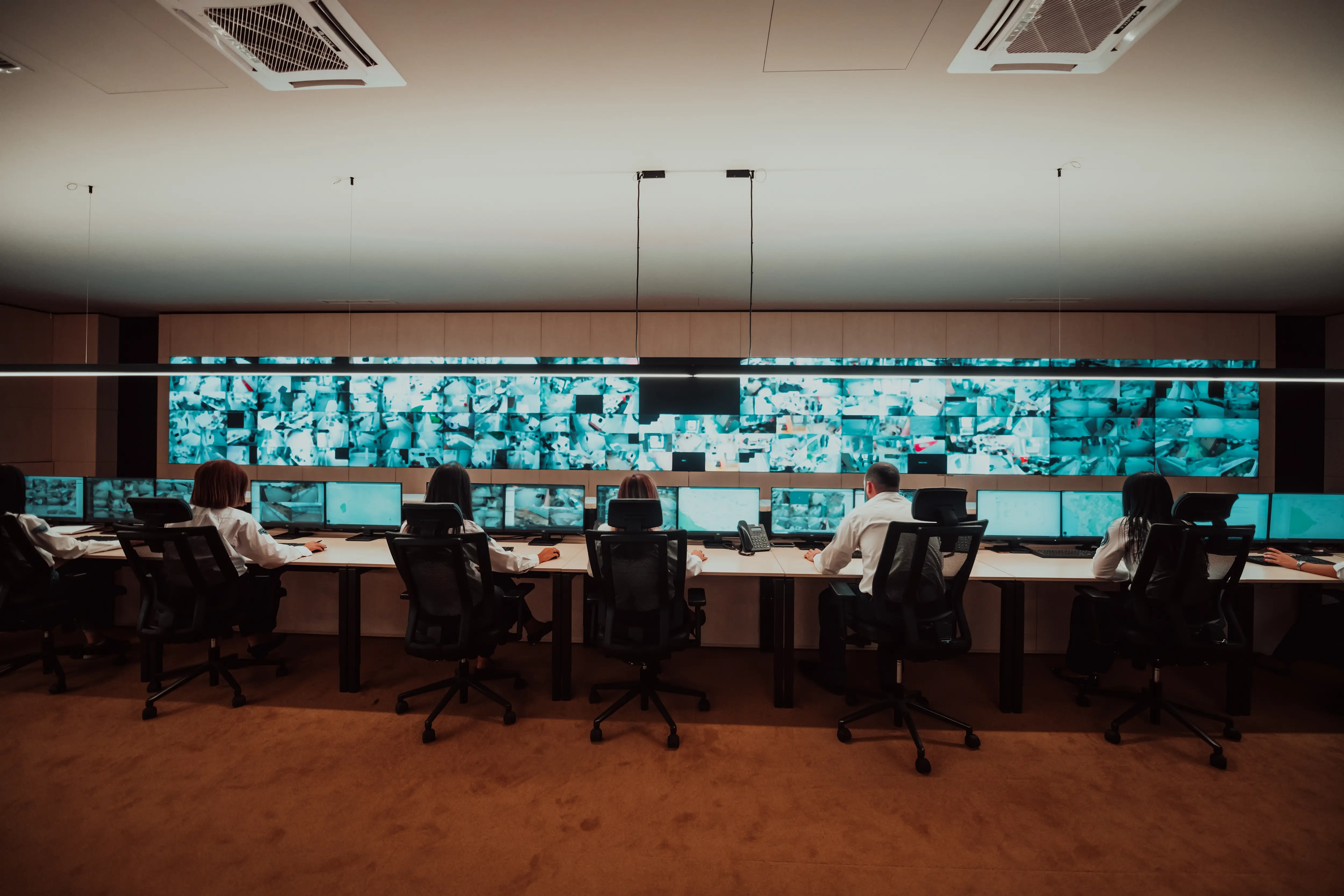
There is a ritual every operations and security team knows, and nobody has ever defended it: scrubbing. An incident happened sometime Tuesday, probably between two and six, possibly at the north dock, and somebody senior enough to know better spends an afternoon dragging a playback slider across hours of footage, eyes glazing, attention decaying, looking for eight seconds that matter. The recording system did its job perfectly, every frame is there, and the archive is functionally opaque, because video is the one major data type enterprises hold that has historically answered no questions about itself. A database can be queried, documents can be searched, and footage could only be watched. This article is about the layer that changes that, generated descriptions that make plant footage searchable in ordinary language, and it belongs to the operations thread of this series under our pillar guide to AI-powered video analytics for manufacturing.
How silent footage becomes findable
Most plant footage has no transcript, because most plant footage has no speech: fixed cameras over lines, docks, and yards record activity, not conversation. Search built on spoken words therefore has nothing to grip, and the archive's opacity is really the absence of any text describing what the frames contain.
Visual description generation supplies exactly the text that has always been missing. As footage is processed, scene detection identifies where the visual content changes, quality filtering discards the frames not worth describing, and a vision model writes what it sees, timestamped across the recording. The output is timed data, each description resolving to its moment, and it is indexed and embedded alongside whatever transcripts and on-screen text the content carries. The archive acquires, in effect, a written account of itself, and search operates on that account: a query in plain language, forklift near the dock door with its forks raised, matches the descriptions, and the results are moments, not files, each a click from its clip.
Two properties of this arrangement deserve emphasis because they shape what it is good for. The descriptions are generated once and searched forever, so the cost of a question is near zero and the habit of asking spreads accordingly; teams that would never have commissioned an afternoon of scrubbing ask casual questions weekly, and the archive starts functioning as institutional memory. And the search is semantic as well as literal, matching meaning through embeddings rather than exact words, so a query about a pallet jack finds descriptions that said hand truck, which matters because the person searching rarely knows what vocabulary the model used.
An honest boundary runs alongside: this searches descriptions of the visual content, in language. It is not image-similarity search, find me frames that look like this photograph, which is a different capability, and it inherits the descriptions' granularity, so a detail the description pass did not mention is a detail search cannot find. The detection events this series builds on remain the precise index for the detection types they cover; description search is the net under everything the detection types were never trained to name.
What teams do differently with searchable footage
The applications sort by who is asking, and the pattern across all of them is the same: minutes where there were afternoons.
Investigations, safety and operational both, start from a question instead of a slider. When was that guard rail last hit. Show material staged in the west aisle last week. What happened at the wrapper before Thursday's stop. The incident investigation article describes assembling a timeline from detection events; description search extends the same reach into everything the event stream did not flag, which is most of history. Compliance and audit requests, the customer quality engineer who wants evidence of how a process ran, the insurer's question about dock procedures, become queries rather than projects. And the everyday operational questions, the ones nobody escalates because they were never worth an afternoon, did the cleaning crew reach the mezzanine, when did that container actually leave, get asked at all, which is the quiet change: the archive joins the set of systems people consult rather than the set they appeal to in emergencies.
Permissions govern all of it, and the governance is structural rather than advisory: retrieval runs under the asking user's identity with their access rights applied as a pre-filter, so an answer cannot be grounded in footage the asker could not open directly. The worker-privacy commitments this series develops apply to search exactly as to live monitoring, because a searchable archive of people working is a more capable instrument than a watchable one, and the written scope, retention, and no-discipline terms from the works-council article are what keep a capability this convenient inside its agreed purpose.
From search results to direct answers
Search returns moments, and yet a meaningful share of real questions want answers rather than clips. The layer above retrieval takes a question in language, gathers the relevant material across the descriptions, transcripts, and documents the asker can access, and produces a grounded answer with citations back to its sources, so the response is checkable against the footage and records it drew from rather than taken on faith. For a plant, this is the difference between "show me clips from the north dock Tuesday" and "summarize what happened at the north dock Tuesday afternoon," and the second form is what a shift-change briefing or an audit response actually needs.
The same grounding discipline that makes answers checkable also bounds them honestly: the answer knows what the descriptions and records contain, not what happened outside coverage or beneath description granularity, and a well-run deployment teaches its users that an answer's citations are its warranty. Where a question outgrows retrieval, when it needs multiple systems consulted, timelines constructed, or actions taken, it crosses into the agentic territory covered by our articles on manufacturing investigations and detection-to-escalation, which build on exactly this retrieval foundation.
Example: tracing a short shipment
One case shaped like the ones operations teams actually face shows the layers cooperating. A finished-goods container is found short at the customer, three weeks after dispatch, and the traditional response is the afternoon of scrubbing this article opened with, if the footage even survives that long. In a described archive the sequence runs differently. The dispatch clerk searches the yard cameras' descriptions for the container's marking, which the live text recognition retained as searchable reads, and lands on its loading window in seconds. The descriptions of that window mention pallets staged at the adjacent bay, so a follow-up query pulls the hour around staging, and the timeline assembles itself: the short pallet went to the neighboring container, visible in the clip, mislabeled per the packing-line record from the same afternoon. Total elapsed time, minutes, and the claim conversation with the customer proceeds from evidence rather than apology. Nothing in the sequence required an investigator; it required an archive that answers questions, which is the entire thesis.
What to measure during an evaluation
Search quality is testable, and a site evaluating this capability should test it rather than admire it. Build a question set from real history, twenty questions the operation actually asked of footage in the past year, with the known answers. Run them against a described sample of the archive and score three things: whether the moment was found, how far down the results it sat, and how long the search took against how long the original answer took. Then probe the boundaries deliberately, ask about details finer than descriptions carry, ask in the second language the floor actually speaks, ask about a zone with poor coverage, because the failures teach the deployment plan: which zones need denser description, where on-demand processing fills gaps, what the training for users should say about granularity. An evaluation run this way produces a configuration, not just a verdict, and it inoculates the team against both the vendor demo and its opposite, the dismissal that assumes video search is marketing.
Deployment considerations
Description generation is processing, and the practical questions are where it runs and what it covers. It runs where the rest of this stack runs, on the plant's own hardware on site, inside the same boundary the footage already lives in, which for manufacturers under export control or Operational Technology (OT) segmentation is not a preference but the condition of the capability existing at all. Coverage is a scoping decision with a cost axis: describing everything the cameras record is rarely the right answer, and the working pattern describes the event-linked clips automatically, since those are the moments already known to matter, plus the zones whose history keeps getting asked about, with the rest available for on-demand processing when a question arrives about footage nobody described in advance. That on-demand path matters more than it sounds, because it means a capability added today reaches backward: material already held can be processed when the need appears, so the archive's past is not locked out of its future.
Description quality also varies with scene type, and the evaluation should sample accordingly: wide static scenes describe reliably, dense fast activity compresses into coarser summaries, and night or low-light footage inherits whatever the camera could actually resolve. None of this is disqualifying; all of it belongs in the expectations users carry into their first searches.
Language deserves a sentence: questions arrive in the languages a workforce actually speaks, and the search layer's multilingual reach should be verified against the site's real linguistic mix during evaluation rather than assumed from a brochure.
Rethinking retention once footage is searchable
One second-order effect deserves the operations director's attention: search changes what retention is worth. Under the scrubbing regime, old footage had negligible practical value, nobody was ever going to watch it, and short retention was rational storage economics. A described archive inverts the calculation, because footage that answers questions in seconds retains investigative and audit value for as long as questions might arrive, which for claims, warranty disputes, and compliance matters is measured in years, not weeks. The design response is tiered rather than absolute: the event-linked clips and their descriptions, small relative to raw streams, carry long retention; described summaries can outlive their source video where policy demands lean storage; and the retention schedule becomes a deliberate document balancing storage cost, legal exposure, and the worker-privacy commitments that cap how long people-footage persists, per the written terms this series keeps in view. The point is not that everything should be kept longer; it is that the decision now has value on both sides, and deserves to be made rather than inherited from the recorder's default.
How VIDIZMO fits
In VIDIZMO's platform, the pieces divide the way this series has consistently described. AI Live Insight owns the live pipeline, detection, events, and the event-linked recordings that land in the Nexus portal. The portal owns the library: access control, retention, audit logs, and the search surface where descriptions, transcripts, and text are indexed and embedded as timed data. Visual description generation runs as part of content processing, available as a workflow step and on demand against existing material, and AI Intelligence Hub supplies the question-answering layer above retrieval, grounded, cited, permission-bounded, and the agent capabilities beyond it. A plant that only wants searchable footage runs without the reasoning layer; the search foundation is the same either way.
A last note on habit formation, because capability without habit is shelfware: the teams that extract the most from a searchable archive appoint no librarian and hold no training marathon, they simply route one recurring meeting through it. The daily production huddle that opens with yesterday's questions answered from search, or the weekly quality review that pulls its clips live, teaches the room faster than any documentation, and within a month the questions arrive without prompting.
The evaluation that tells a team what this is worth costs one week and no consultant: collect every footage question the operation actually asked, count the hours the answers took, then run the same questions against a described archive. The before-and-after on that list is the business case, and the list itself, sites find, is longer than anyone expected, because people had stopped asking questions they assumed could not be answered.