Every case now arrives with more digital evidence than anyone has the hours to review. Here's how assistive AI helps a prosecutor's office review it, protect the people in it, and prepare for disclosure and trial. The hardest cases carry the most evidence. One customer's vehicular homicide file alone held more than 300 photos and up to 90 hours of video.
This is where a missed clip or an unredacted name does the most damage. It comes from systems other agencies already run, body cameras, in-car video, security cameras, phone extractions, reports, 911 and dispatch records. VIDIZMO connects to them, so it all lands in one case folder without disks or re-uploads. Here's the path in four steps: secure, review, protect, and share.
One platform carries the case the whole way with one record of who touched what and one set of permissions. Step one, secure. Body cameras, dash cameras, doorbell video, phone downloads, and jail calls come straight from the agencies into a single case in VIDIZMO Nexus. Open a body cam video and the transcript runs beside it, searchable to the second.
Open a lab report and the names, phone numbers, addresses, and dates are already pulled out. Every view, download, and share is logged with a name and a time, and each person sees only what their role allows. When the defense asks how the evidence was handled, the answer is already on the record. Step two, review.
Every interview, call, and clip becomes a transcript with Spanish translation. Search it like email. Red pickup truck finds the doorbell clip, the body camera moment, and the line in the police report. When five cameras saw the same moment, review it as one event.
The body camera, dash camera, store camera, doorbell, and 911 call line up on one timeline. So at any second, you see what every camera saw and what was said on the call. Ask the case a question in plain English and get the exact clip or page as the answer. The AI points your team to the evidence, and your attorneys make every decision.
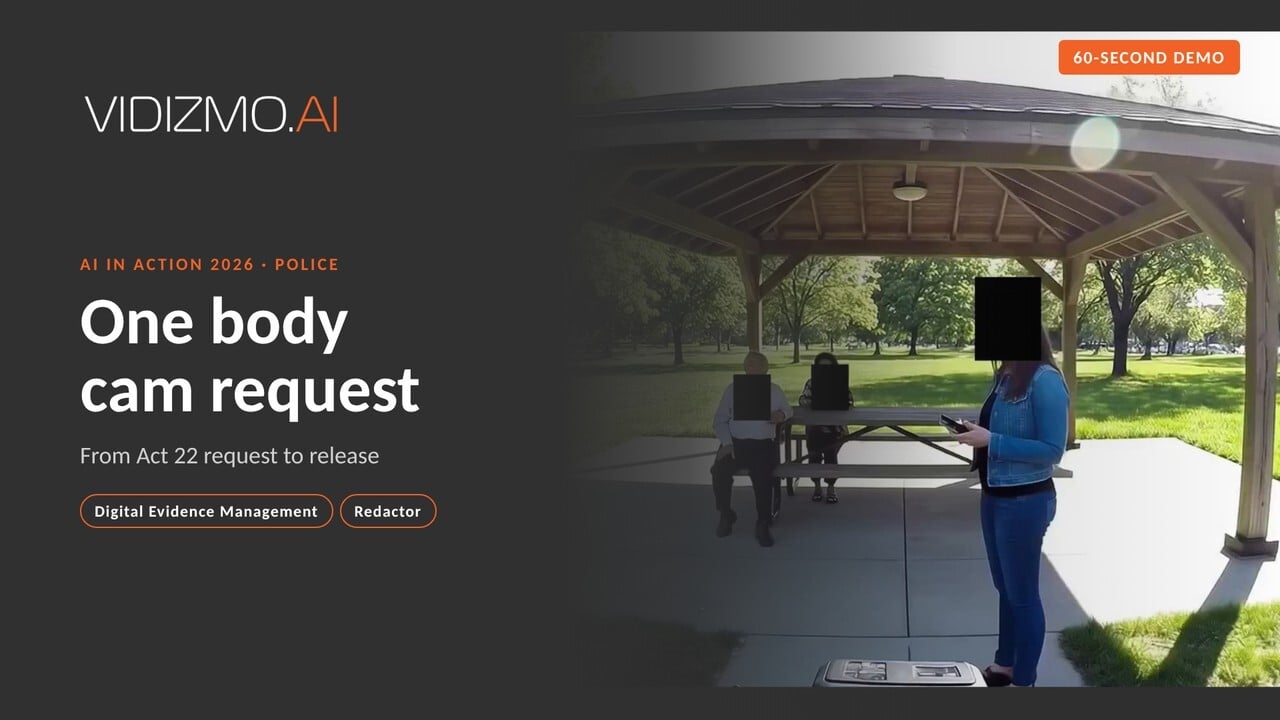
Step three, protect. Before anything leaves your office, Redactor finds faces, license plates, names, phone numbers, and addresses. A blur on video, a bleep on a call, a black bar on a report. A person on your team approves every redaction, and the original stays untouched with a log of every change.
Victims' private details stay out of what you disclose, and you can show what was withheld and why. Step four, share. The approved evidence goes to the court, the public defender, or private counsel as a secure link that expires when you decide, not on a disk. New evidence joins the same share, so the defense sees updates without another round of copying.
You have a record of who received each file, when they opened it, and what they downloaded, ready if disclosure is ever questioned. One county public safety agency measured the first six months. Video release went from 62 days to 7. Investigator effort per case went from 8 hours to 45 minutes.
The prosecutor's package went from 3 business days to the same day, and overdue requests went from 75 to 3. It works alongside the systems your office and your agencies already run, and your evidence stays where you decide, your county's cloud or government cloud, your own servers, or fully disconnected on a CJIS Security Policy-aligned architecture. More evidence than ever, the same duty to get it right. See your own evidence make the journey.
Request a demo at vidizmo.ai.