<img height="1" width="1" style="display:none;" alt="" src="https://px.ads.linkedin.com/collect/?pid=YOUR_ID&amp;fmt=gif">

Where Does Your Data Go During Redaction?

by Ali Rind, Last updated: June 2, 2026

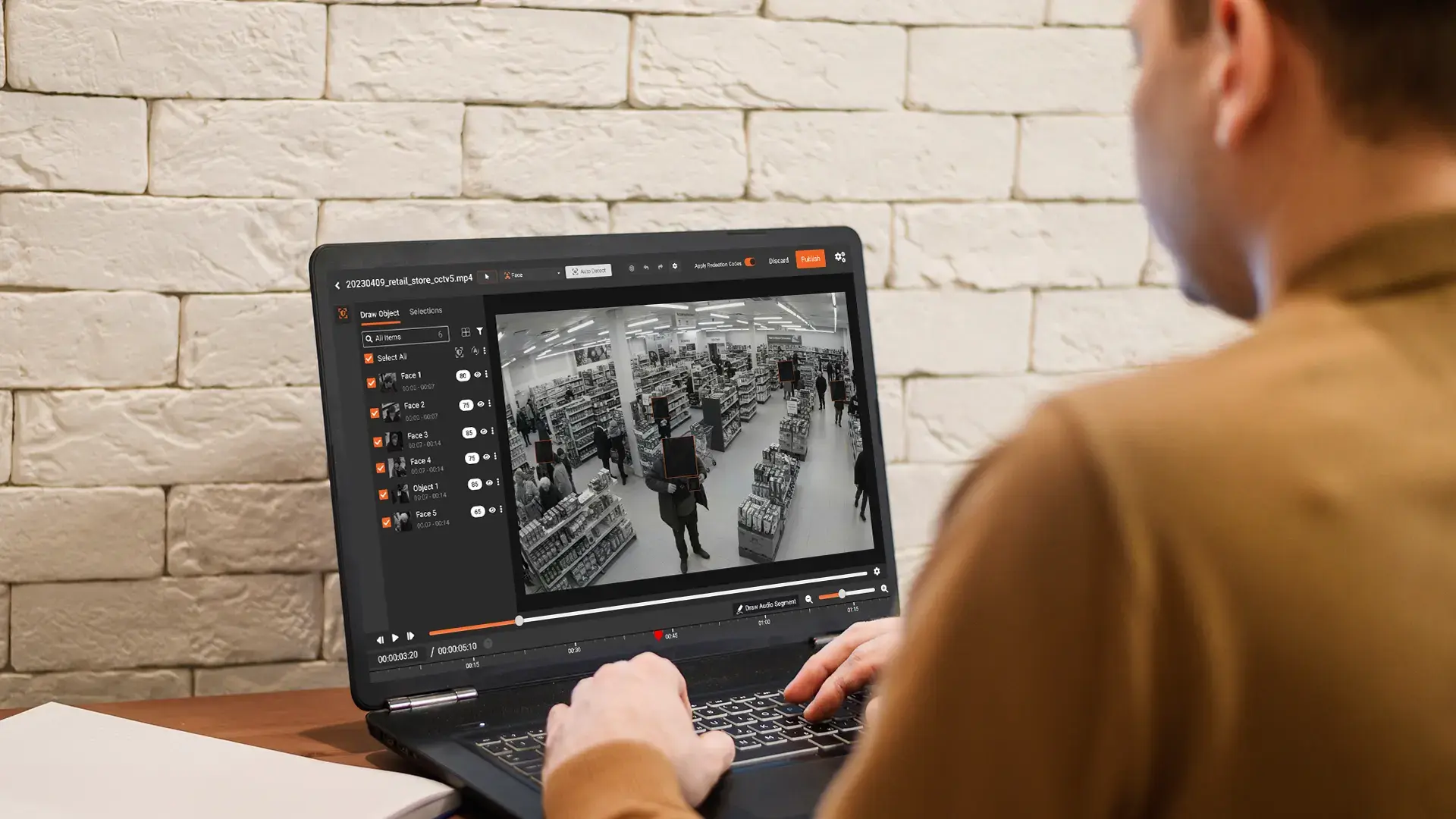
a person redacting a commercial CCTV footage using Redactor

Where Does Your Data Go During Redaction? A Guide to Secure Redaction
7:08

A common assumption about redaction software is that the security question begins and ends with whether the tool produces a properly redacted file. It does not. Before the redaction happens, the source file has to be readable by the tool. The original, unredacted content moves through some processing environment, sits there for some amount of time, and may or may not leave the organization's perimeter. Where it goes, how long it stays, and who can see it are the security questions that matter before any redaction takes place.

This guide is for security-conscious buyers and compliance researchers at the early stage of evaluating redaction options. It frames the questions to ask, the deployment models that change the answers, and what good practice looks like in either case.

Why data handling during processing is a real concern

Redaction is the opposite of encryption. To redact a file, the tool has to read it in plain form. A document with Social Security numbers, a video with patient faces, an audio recording with spoken account details, all of it has to be visible to the redaction engine for the engine to find what needs removing. That readability is the exposure window, and it exists no matter how good the redacted output is.

This shapes compliance scope. HIPAA, GDPR, PCI DSS, and equivalent frameworks define their controls around where personal data is processed and who has access during processing, not just where the final file ends up. A tool that processes PHI in the cloud becomes a HIPAA business associate, and its agreement, infrastructure, and data handling all become part of the covered entity's compliance picture. The same logic applies to GDPR processors, PCI DSS service providers, and CJIS-aligned environments.

So the question is not whether the tool redacts correctly. It is where the unredacted source lived during processing, and what controls applied to it there.

Intermediate storage, and why temporary is not never-stored

Most redaction tools stage content during a job. The source file is uploaded, written to a processing tier, read by the detection engine, transformed where needed (transcribed for audio, run through OCR for scanned documents, decoded for video), redacted, and the output is written to a destination. Every one of those stages involves some form of storage, even if it is short-lived.

That is intermediate storage. The content is not kept permanently, but it exists in the tool's infrastructure long enough to be processed, whether that is seconds, minutes, or hours depending on the job size. During that window, the controls that apply to permanent storage need to apply to the intermediate stage too: encryption at rest, access controls, audit logging, and isolation from other tenants.

Temporary is not the same as never-stored. Buyers should ask where intermediate storage sits, how it is encrypted, how long content persists, and who can access it during the processing window. A vendor that cannot answer those clearly is not ready for sensitive workloads.

Retention and auto-delete

After processing, the tool holds the source file, the redacted output, and any audit records from the job. Defaults vary widely. Some vendors retain content until the customer deletes it, some retain for a configurable period, some auto-delete the source and keep only the output and audit log.

The right setting depends on the use case. Legal discovery often needs the source preserved alongside the output for chain of custody. Healthcare disclosure often wants the source deleted as soon as the redacted copy is verified, to shrink the surface area of PHI. Regulatory submissions may carry their own retention rules that override either default.

What matters is that retention is configurable per workload, that the configuration is documented, that deletion is verifiable through an audit record rather than a screen confirmation, and that the customer controls the schedule. A vendor that hard-codes one retention policy is not built for varied compliance environments.

The deployment model changes the answer

Deployment is the single biggest factor in data-handling security. The same tool can have very different security profiles depending on how it runs.

SaaS and cloud processing means data leaves the customer's environment to be processed in the vendor's infrastructure. The questions become how that environment is secured, what agreement covers the relationship, where the data resides, which sub processors touch it, and how long it stays. SaaS fits many use cases, but the buyer is accepting that sensitive content transits to and resides in vendor infrastructure during processing.

Self-hosted, private cloud, and on-premises change the question entirely. The redaction engine runs inside the customer's own environment, such as their Azure or AWS account, or their own data center. The data never leaves the customer's perimeter, so the tool operates inside the same trust boundary as the source rather than across it. The trade-off is that the customer takes on more of the operational work of running it.

Hybrid setups combine both, usually with sensitive workloads on-premises and the rest in SaaS. Air-gapped deployments are the most restrictive, used where no external connectivity is allowed. No single model is universally better. The right answer depends on data sensitivity, the regulatory environment, and operational capacity, and a vendor that supports only one model forces compromises that surface later.

What to look for in any redaction tool

A short set of questions worth asking before sending the first file:

  • Does the vendor act as a processor only, with no use of customer content beyond providing the service?
  • Is retention configurable per workload, with verifiable deletion at the end of the window?
  • Is encryption applied at rest and in transit, with documented standards?
  • Is every action against customer content logged, with logs available for audit?
  • Is the deployment choice flexible across SaaS, private cloud, on-premises, and hybrid, or is the buyer locked into one model?
  • Is the infrastructure certified to relevant standards such as ISO 27001, with sector frameworks where applicable?

A vendor that answers these clearly and in writing is ready for serious evaluation.

How VIDIZMO approaches this

VIDIZMO is built to operate as the processor inside the customer's compliance setup, with HIPAA-aligned workflows for healthcare data. The Redactor platform deploys across SaaS (shared or dedicated), private cloud in the customer's own Azure or AWS environment, on-premises, government cloud, hybrid, and air-gapped, so the data-handling answer can match the use case rather than forcing one model. It encrypts content in transit and at rest, integrates with identity and access management providers, logs actions for audit, and holds ISO/IEC 27001:2022 certification.

People Also Ask

Is redaction software secure?

It depends on the vendor and the deployment. Secure redaction software encrypts data in transit and at rest, isolates customer content from other tenants, supports configurable retention with verifiable deletion, and logs every action against the content. Vendors that act as data processors and offer flexible deployment, including private cloud and on-premises, give buyers more control over the security posture.

Where is my data processed during redaction?

It depends on the deployment model. In SaaS, the data is processed in the vendor's cloud infrastructure under their management. In private cloud or self-hosted deployments, it is processed inside the customer's own environment and never leaves the customer's perimeter. The deployment model is the biggest factor in where sensitive content physically resides during a redaction job, so it is the first thing to confirm.

Can redacted files be deleted after processing?

Yes, when the platform supports configurable retention. Defaults vary: some vendors retain content until manual deletion, others auto-delete after a set window. The strongest practice is configurable retention per workload with verifiable deletion through an audit record rather than a screen confirmation. Buyers handling sensitive content should confirm retention behavior in writing before sending the first file.

Does the vendor see my data during redaction?

In SaaS deployments, the content is handled inside the vendor's infrastructure during processing, so the vendor's access controls and audit logging are what protect it. In self-hosted or private cloud deployments, the data stays in the customer's environment, so vendor access is limited by the deployment boundary itself. Reviewing staff-access policies and audit logging is worthwhile in either case.

What is the difference between SaaS and on-premises for redaction security?

SaaS processes data in the vendor's cloud, so the vendor's security posture covers the processing window, and it is faster to deploy with lower operational overhead. On-premises processes data in the customer's own infrastructure, so the content never leaves the perimeter and the vendor's posture matters less, at the cost of more operational responsibility. Hybrid setups combine both by data sensitivity.Share


About the Author

Ali Rind

Ali Rind is a Product Marketing Executive at VIDIZMO, where he focuses on digital evidence management, AI redaction, and enterprise video technology. He closely follows how law enforcement agencies, public safety organizations, and government bodies manage and act on video evidence, translating those insights into clear, practical content. Ali writes across Digital Evidence Management System, Redactor, and Intelligence Hub products, covering everything from compliance challenges to real-world deployment across federal, state, and commercial markets.

Jump to

    No Comments Yet

    Let us know what you think

    back to top