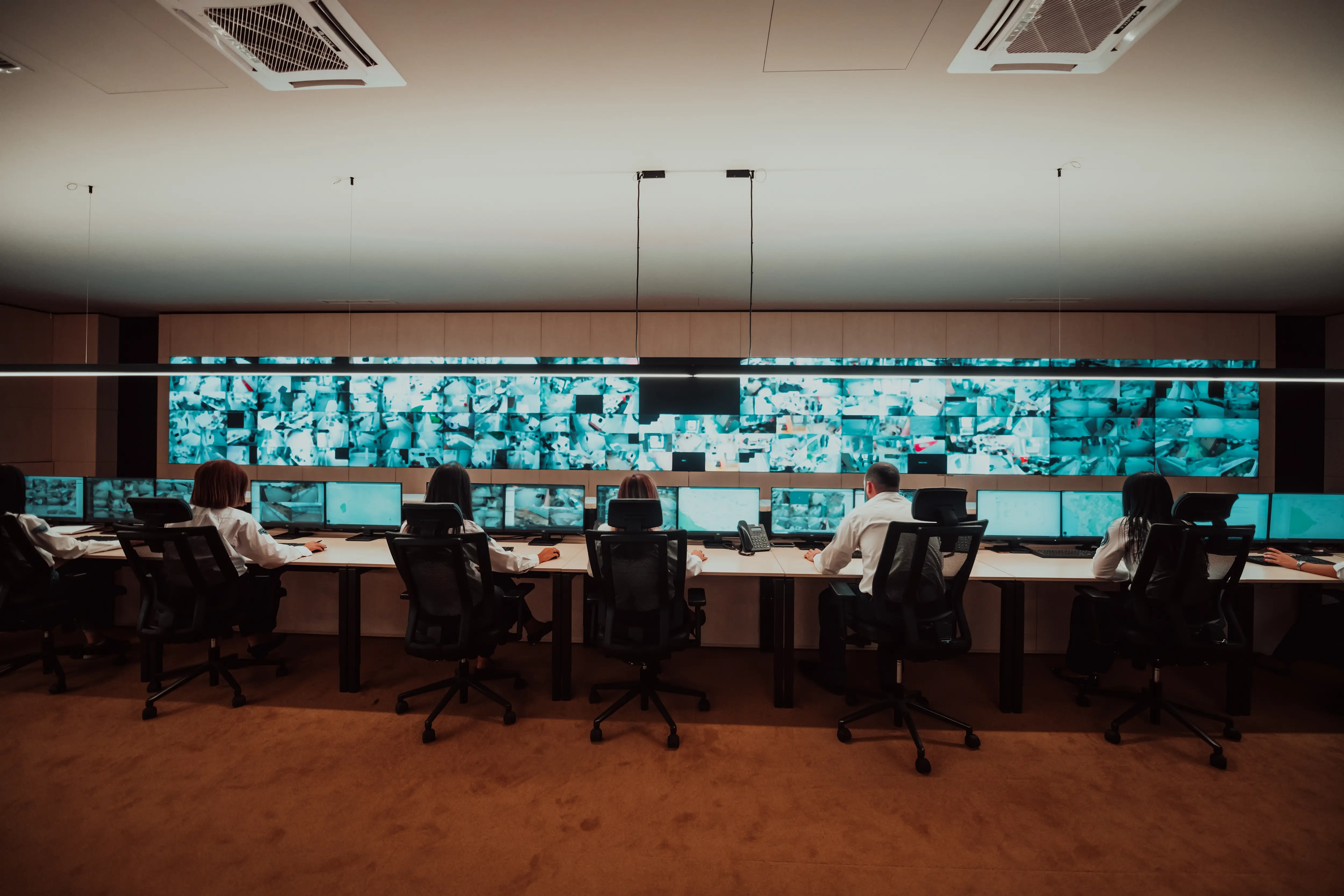
Recordkeeping is the unglamorous end of workplace safety, right up until the moment it is the entire subject. A questionable entry on the Occupational Safety and Health Administration (OSHA) 300 log surfaces during an inspection. A workers' compensation carrier disputes whether the injury happened the way the report says. A citation arrives and the company's response depends on establishing what actually occurred at 2:14 on a Tuesday six months ago. In each of those moments, the organization discovers exactly how good its records are, and increasingly the record that decides the question is video, if it still exists, if anyone can find it, and if it can be trusted. This article is about where camera evidence genuinely fits in the recordkeeping and reporting obligations a US manufacturer carries, and where it does not belong at all. It is part of our broader guide to AI for workplace safety in manufacturing.
What Part 1904 requires
The recordkeeping framework lives in 29 CFR Part 1904, and its architecture is worth keeping straight because each piece interacts differently with video. Covered employers maintain the 300 log of recordable injuries and illnesses, the 301 incident reports behind each entry, and the annual 300A summary. Recordability turns on defined criteria, death, days away from work, restricted work, medical treatment beyond first aid, and the determinations are made by people applying those criteria to facts.
Separate from the log sits the reporting rule at 29 CFR 1904.39, and its deadlines are the ones worth memorizing: a work-related fatality must be reported to OSHA within 8 hours, and an in-patient hospitalization, amputation, or loss of an eye within 24 hours. Those clocks apply to virtually all employers under OSHA jurisdiction, including ones exempt from routine recordkeeping, and they start at the event, which means an employer's practical ability to meet them depends on knowing quickly that something reportable happened and establishing basic facts fast.
Nothing in Part 1904 requires video, and no camera system makes any determination. What video changes is the quality of the facts the humans apply the criteria to, and the speed at which those facts are available when an 8-hour clock is running.
Where footage helps
Consider the determinations that generate the most internal argument, and notice how many are factual disputes wearing regulatory clothes.
Work-relatedness is the classic version of the dispute. An employee reports a back injury Monday morning; whether it belongs on the log depends on whether something happened at work, and absent evidence the discussion becomes competing recollections. Where the event occurred in a covered area, the preserved clip settles what no interview can: there was a lift, a slip, an impact, or there visibly was not. The same applies to the mechanism of injury, which drives both the 301 narrative and the corrective action. Investigation teams reconstruct events from testimony gathered days later, and human memory under stress is unreliable in well-documented ways; footage from before the incident through its aftermath replaces reconstruction with observation. Our article on investigating workplace accidents from camera footage covers that process end to end.
The reporting clocks are a less obvious fit and a sharper one. An employer with a serious event on a night shift has hours, not days, to establish what happened and make a defensible report. A monitoring system that detected the event, a person down, a vehicle impact, has already timestamped it, preserved the surrounding footage, and alerted someone, which converts the first frantic hour of fact-gathering into a review of material already in hand.
And then there is the defensive file every employer eventually wishes it had built. Citations get contested, and contests turn on facts: whether the hazard existed as described, whether the exposure duration was as claimed, whether the employer's controls were in use. A site with event-based recording has contemporaneous evidence on all three, cutting in whatever direction the truth cuts. Sites should be clear-eyed that this is symmetrical, a point this series has made before: the same archive that exonerates also documents, and the organization that builds it should resource the response side accordingly, because a recorded hazard that stayed unfixed is now a recorded, unfixed hazard.
Where footage does not belong
The boundaries matter as much as the capabilities, and three are worth stating bluntly.
Video does not make recordability determinations, and treating detection events as log entries is a category error waiting for an auditor. A Personal Protective Equipment (PPE) absence is not an injury; a zone intrusion is not a recordable; a fall detection becomes relevant to the log only if the fall produced an outcome meeting the 1904 criteria, which only medical facts and human judgment establish. The clean mental model: detections feed the safety program, footage feeds investigations, and investigations feed the log.
Retention needs a policy before the first incident, not after. Surveillance retention is typically short and operational; litigation and claims run long. The failure mode is predictable and common: an injury occurs, nobody flags the footage, and the thirty-day cycle quietly overwrites the best evidence anyone had, a fact that looks terrible in every subsequent forum regardless of what the footage would have shown. Event-based recording helps structurally here, because clips tied to detections are discrete objects that can carry their own retention rather than drowning in a continuous stream, but somebody still has to own the rule: incident-linked clips get preserved on legal-hold timelines, and the linkage happens the day of the event.
And the integrity of the record is only as good as its handling. A clip that has passed through personal phones, email threads, and desktop folders before arriving at a hearing invites exactly the challenge it will get. What preserves evidentiary weight is unremarkable discipline: footage lands in a system with access control, every view and export is logged, and the path from camera to hearing is reconstructable. This is chain-of-custody thinking, standard in law enforcement contexts and increasingly expected of employers whose records end up in contested proceedings.
Electronic submission raises the stakes
Recordkeeping used to be a filing cabinet obligation, reviewed only when an inspector asked. The electronic submission rule at 29 CFR 1904.41 changed its audience. Covered establishments submit their 300A summary data to OSHA's Injury Tracking Application by March 2 each year, and since 2024, establishments with 100 or more employees in designated high-hazard industries, a list that includes much of manufacturing, submit their detailed 300 and 301 case data as well. Establishments with 19 or fewer employees at peak, and those in exempted industries, stay outside the requirement, but for a typical mid-size manufacturer the practical position is that the injury log is now a dataset a federal agency holds, mines for targeting, and can compare across years and across establishments.
Two consequences follow for how seriously the underlying facts deserve to be handled. The first is that inconsistency is now visible at a distance. A 301 narrative that conflicts with the 300 entry, or year-over-year patterns that look implausible, no longer wait for an on-site inspection to be noticed, and the cure for inconsistency is the same as it has always been, determinations built on solid facts, which is precisely the layer video strengthens. The second is that the submission deadline creates an annual moment when every questionable determination from the prior year gets revisited under time pressure, and the difference between "we think it happened this way" and "here is the clip and the investigation file" is the difference between a filing exercise and an archaeology project.
Employees hold rights in this system that a monitoring program must not erode. Part 1904 guarantees workers and their representatives access to the injury records, and its anti-retaliation provisions prohibit programs that deter reporting. Camera evidence changes none of that, and a site should be able to say plainly that footage is used to establish what happened, never to build a case against the person it happened to. That sentence, kept true, is what lets the workforce see the recordkeeping system as theirs rather than as management's.
Protecting employee reporting rights
Part 1904 contains a provision safety teams sometimes forget when deploying monitoring: employees have rights in the recordkeeping system, including reasonable procedures for reporting that do not deter or discourage reporting. A camera program positioned as an enforcement dragnet works against that requirement in spirit and practice, giving workers reasons to route injuries and near misses away from official channels, which corrupts the very log the program was meant to improve. The posture that keeps the record honest is the same no-discipline, conditions-not-individuals framing covered in our article on works councils and worker privacy: the cameras exist to make the workplace measurable, and the log improves because the facts improve, not because anyone is being watched harder.
Workers' compensation uses the same evidence
Workers' compensation runs parallel to the OSHA framework and usually matters more financially, so it belongs in the same evidence conversation. A comp claim opens its own fact-finding, the carrier asks what documentation exists, and footage of the event, where it exists and has been handled cleanly, shortens claims that should be short and defends against the ones that should be defended. The handling discipline is identical to the regulatory case: preserved promptly, held under access control, exported through a logged path, because a clip whose provenance cannot be established helps no one and a clip that surfaces late looks like a clip that was withheld.
One coordination point in all of this deserves a named owner rather than an assumption. The safety team, HR, and whoever manages claims each assume someone else flagged the footage for preservation, and the thirty-day retention cycle does not wait for the confusion to resolve. The working rule at well-run sites is mechanical: any event that produces a 301, a comp claim, or a 1904.39 report triggers the footage hold the same day, by the person filing the paperwork, as part of the paperwork. It is one checkbox worth of process, and it is the difference between the evidence existing and the evidence having existed.
How VIDIZMO supports the record
VIDIZMO AI Live Insight watches the plant's existing cameras with processing on the customer's own hardware on site, and when a detection fires, it writes a clip around the event, configurable footage before the trigger through after it ends, so the moment that matters is preserved as a discrete object rather than a needle in a continuous stream. Those clips land in the VIDIZMO Nexus portal the deployment works side by side with, and that is where the recordkeeping value concentrates: role-based access control over who can view, audit logs recording every view and export with user and timestamp, retention policies that can hold an incident-linked clip long after routine footage cycles, and hash-verified integrity so the clip presented later is demonstrably the clip captured. For the 8-hour and 24-hour clocks, alerts with the snapshot attached mean the safety team learns of a serious event when it happens rather than at shift end, and the timeline view assembles what the cameras saw into a reviewable sequence while the report is being drafted.
The practical starting point is a tabletop exercise that costs an afternoon: take the site's last serious incident, and walk through what the file would contain had event-based recording, retention holds, and audit-logged handling been in place, versus what the file actually contained. Run the walk-through with the people who actually touched the incident, the shift supervisor who found out an hour late, the HR partner who assembled the timeline from interviews, the counsel who asked whether footage existed and got a shrug. Each of them will locate a different gap, and the composite is a requirements document no vendor could have written for you.
The exercise usually ends on the same three findings. The footage that mattered was overwritten or never flagged. The timeline took days to assemble from artifacts that a detection system would have assembled by itself. And nobody could say with confidence who had viewed or copied what along the way. Those three, fixed, are what a defensible recordkeeping posture looks like from the video side, and every one of them is cheaper to fix in advance than to explain afterward.