Every technology conversation in a state human services agency eventually hits the same wall, usually voiced by the budget office: there are no state funds for this. In eligibility technology, that wall has a door in it, and the door has a name. The Advance Planning Document process is how states obtain federal matching funds that can cover the large majority of an eligibility system investment, and understanding APD funding for eligibility systems is the difference between a project that waits years for a state appropriation and one that moves on a fraction of its sticker price.
The catch is procedural and absolute: approval must come before spending. This article explains how the match works, what federal reviewers fund, and how to position the verification technology described in our guide to social services eligibility verification as the kind of project the process was built for.
How Eligibility Technology Is Actually Funded
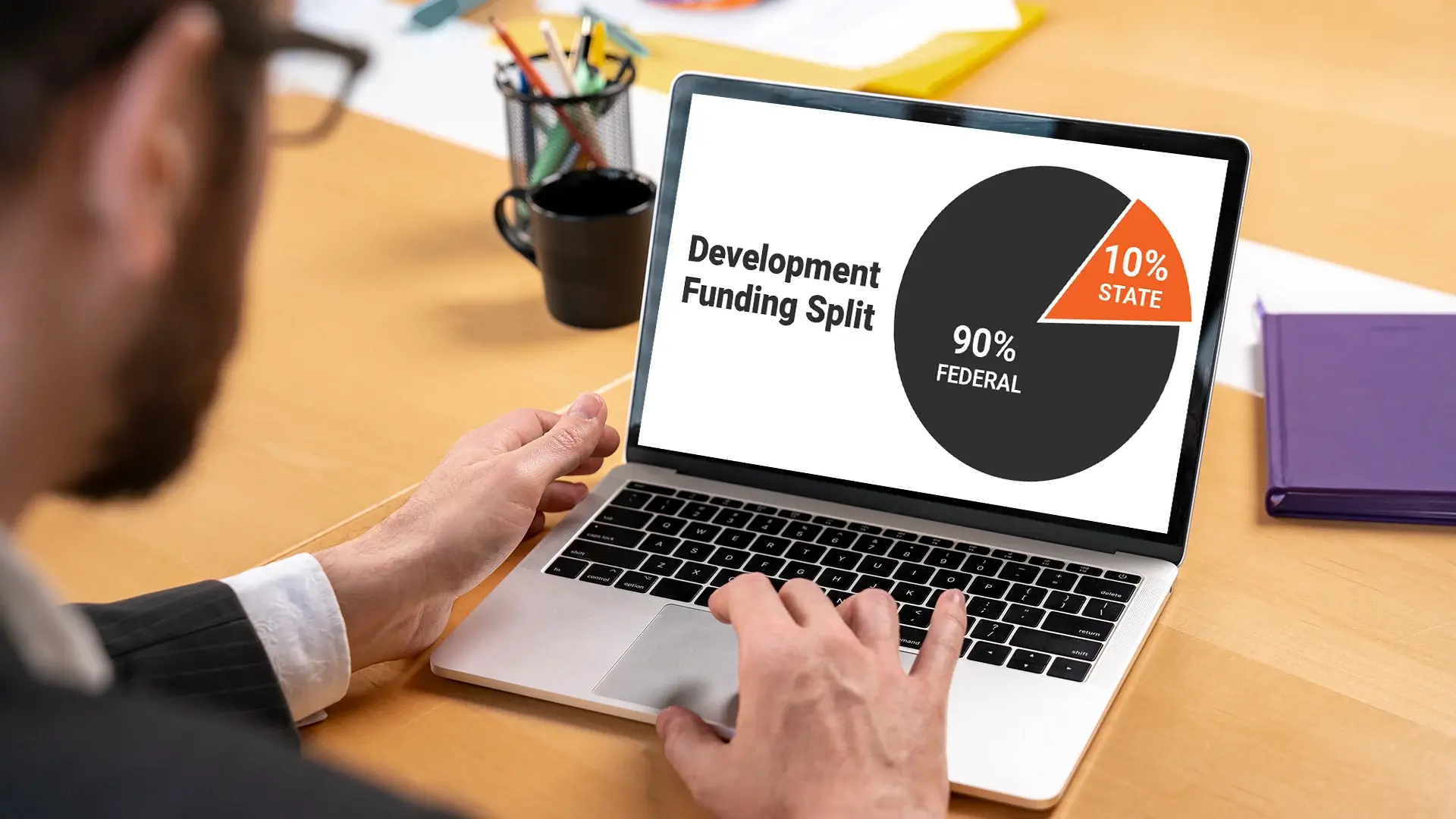
The Medicaid enhanced match is defined in federal regulation with unusual clarity. For eligibility and enrollment systems, 42 CFR 433.112 provides 90 percent federal financial participation for design, development, installation, and enhancement, and the regulation states the condition in plain terms: the enhanced rate is available only if the APD is approved by CMS prior to the state's expenditure of funds. Ongoing operations draw 75 percent FFP under 42 CFR 433.116. In budget terms: a dollar of approved eligibility system enhancement costs the state a dime during development and a quarter in operations.
SNAP runs a parallel gate. USDA's APD process requires prior federal approval for state automation projects, covering eligibility systems explicitly, with its own thresholds and documentation expectations set out in Handbook 901. Because most verification technology serves SNAP, Medicaid, and TANF simultaneously, real projects typically involve both federal partners and a cost allocation across programs, which is not a complication to dread but a discipline to plan for: allocation questions answered early are approval questions avoided later.
The strategic consequence deserves emphasis with budget offices. The wall they see, no state funds, prices the project at 100 percent state cost. The APD path prices development at 10 percent for the Medicaid-allocable share, with SNAP's share governed by its own matching rules. Few line items in state government change price that much based on paperwork sequencing.
What an APD Is, in Plain Language
Strip the acronyms and an APD is a business case addressed to a federal reviewer, submitted in stages. A planning document seeks approval, where needed, for the analysis phase itself. The implementation document is the substantive submission: the problem, the proposed solution, the alternatives considered, the costs by year and program, the cost allocation, the schedule, and how results will be measured. Updates keep the approval current as scope or costs change; annual updates are routine, and material changes trigger as-needed amendments.
Federal reviewers read many of these, and the ones that move quickly share traits. The problem is quantified from data the reviewer already trusts. The solution maps to recognized architectural direction, which for eligibility systems means modularity: components that enhance rather than monolithically replace, integrate through defined interfaces, and avoid duplicating what the state already owns. The outcomes are measurable and the state commits to measuring them. And the cost allocation follows benefit: each program pays in proportion to what it gains.
Timelines vary by state and complexity, but the planning reality is that the APD cycle, drafting, submission, federal questions, approval, is measured in months. It belongs at the front of the project schedule, run in parallel with procurement preparation, not appended after a vendor is chosen.
Why Verification AI Is a Strong APD Candidate
Some technology asks reviewers to accept a vision. Verification automation asks them to accept arithmetic, and the arithmetic comes from federal sources.
The problem statement writes itself from the government's own publications: a 10.62 percent national SNAP payment error rate, with 55.5 percent of errors traceable to income and 57 percent agency-caused; Medicaid improper payments attributed largely to documentation and verification gaps; each state's own rows in those tables supplying the local numbers. A state proposing document extraction and automated cross-checking is proposing a remedy aimed at the documented majority cause of its documented problem.
The solution shape fits the modularity expectation cleanly. A reconciliation layer over existing systems, as described in Why Eligibility Systems Don't Talk to Each Other, enhances the state's eligibility architecture without proposing to replace it, integrates through interfaces, and can be described honestly as non-duplicative, since none of the incumbent systems perform document-level extraction and cross-system reconciliation. Multi-program benefit is inherent, income and identity verification serve every program in the stack, which supports the cost allocation rather than straining it.
The outcomes are the kind reviewers can hold a state to: error-rate reduction against the QC baseline, timeliness against the federal processing standards, churn and rework reduction, documented verification trails. A state that commits to those metrics is committing to numbers federal partners already measure, which makes the promise credible and the follow-through visible.
Timing: Three Clocks Running
The APD calendar now interacts with three other schedules, and alignment among them is where CFO attention pays off.
The first clock is the error-rate lookback. State cost sharing under the 2025 budget law begins in fiscal year 2028, keyed to fiscal year 2025 or 2026 error rates, with later years billed on a three-year lookback. Verification improvements affect the error rate only after deployment, and deployment follows approval. An APD moving now influences the measured years that set future bills; the full arithmetic is in The 6% Line.
The second clock is the administrative match cut. The same law reduces federal participation in SNAP administrative costs from 50 to 25 percent beginning fiscal year 2027, raising the state price of labor-intensive error correction just as error rates gain a price. Investments that reduce per-case labor hedge that cut; the APD is how they get funded at enhanced rates before it lands.
The third clock is corrective action. States carrying quality control liabilities already operate under settlement terms that direct half of liability amounts into root-cause investment. A verification APD and a corrective action plan aimed at the same income-error root cause reinforce each other, and reviewers notice coherence between the two.
Working With, Not Around, the Integrator
In most states, the core eligibility platform is operated under a long-term systems integrator contract, and any APD describing changes to the eligibility environment will be read with that relationship in mind. The workable posture is explicit coexistence: the overlay reads from the core system through defined interfaces, writes nothing into its transaction tables, and appears in the APD with the integration responsibilities assigned, who builds the interfaces, on what schedule, under whose change process. States that resolve those questions in the planning phase submit stronger documents and run smoother procurements. Vendors experienced with federally matched purchases, VIDIZMO among them, expect to support the state's APD narrative with the architecture, security, and outcome documentation the submission needs, the security half of which is mapped in Keeping Applicant PII Safe When You Add AI, and a vendor unfamiliar with that expectation is itself a signal worth heeding, one of several flagged in the buyer's checklist.
The Bottom Line
The APD process is the funding instrument that turns verification modernization from an unaffordable state expense into a federally matched investment, and verification AI is unusually well suited to it: a problem quantified in federal data, a modular solution that enhances rather than replaces, and outcomes the government already measures. The discipline it demands is sequencing, approval before spending, planned against the error-rate clock that now sets state bills. Where the technology itself fits in the eligibility architecture is mapped in the guide to social services eligibility verification.