<img height="1" width="1" style="display:none;" alt="" src="https://px.ads.linkedin.com/collect/?pid=YOUR_ID&amp;fmt=gif">

How Police Build a Digital Evidence Investigation Timeline

by Ali Rind, Last updated: January 8, 2026, Code: 

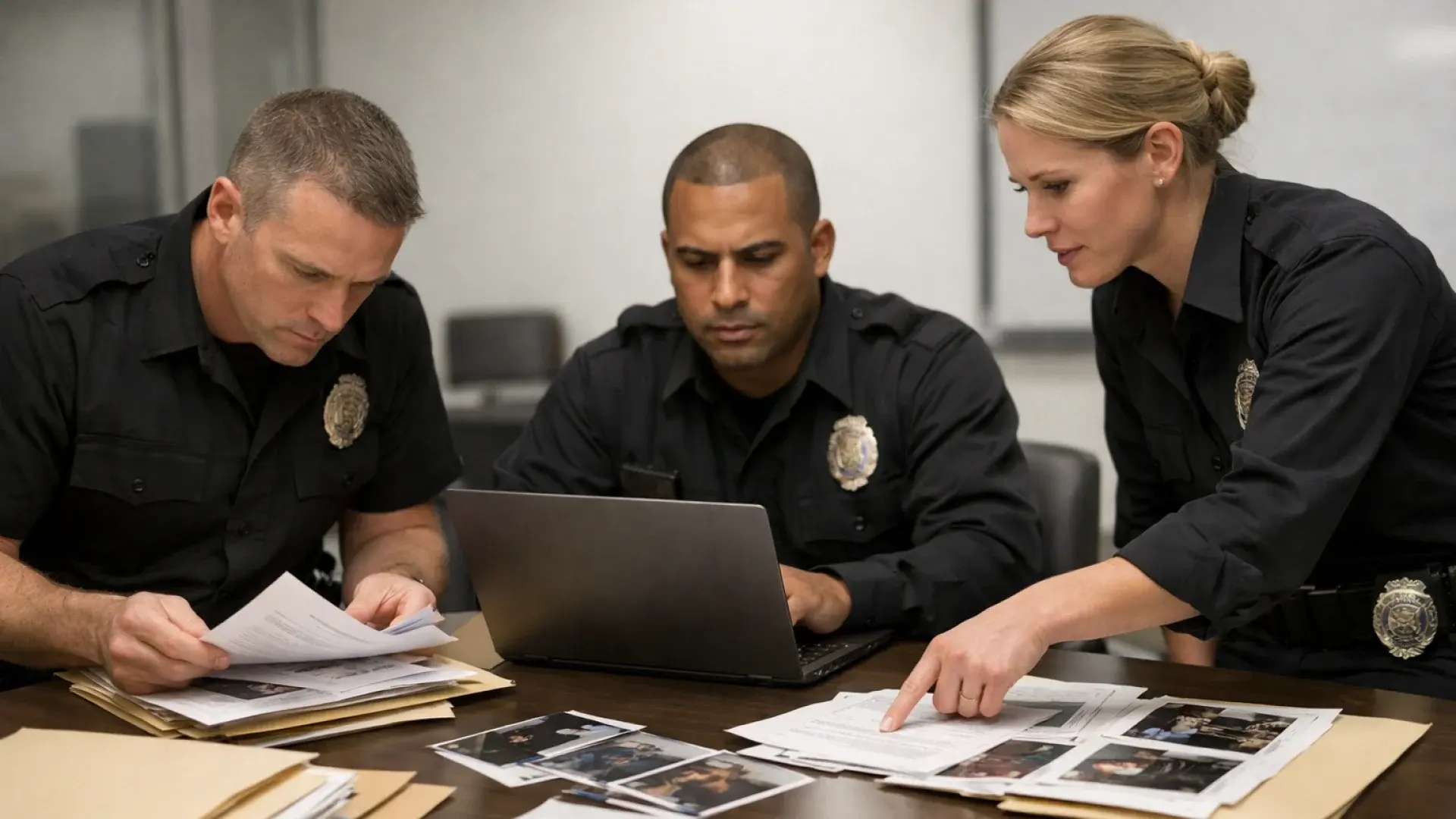
Police investigators analyzing digital evidence to build an investigation timeline

Digital Evidence Timeline Analysis in Police Investigations
7:34

In police investigations, evidence does not become meaningful until it can be placed in the correct order. A single incident may generate hours of recordings and logs, yet the case often turns on whether investigators can establish a reliable sequence of actions and decisions.

Building that sequence is not a passive task. Investigators must determine which timestamps can be trusted, which need adjustment, and how separate pieces of evidence relate to one another in time. Small discrepancies can change the interpretation of events, especially in cases involving use of force, pursuit, or contested timelines.

This is why digital evidence analysis increasingly centers on timeline reconstruction. Investigators are expected to move beyond reviewing individual files and instead validate chronology across evidence, reports, and statements. The strength of an investigation now depends not just on what evidence shows, but on whether the timeline behind it is accurate, consistent, and defensible.

This article explains how police analyze digital evidence to build investigation timelines, the challenges they face when evidence volumes grow, and how technology supports timeline-driven investigations without replacing investigative judgment.

Why Digital Evidence Investigation Timelines Matter

A police investigation timeline establishes the chronological order of events using verified digital evidence. It allows investigators to:

  • Confirm or challenge witness and officer statements
  • Identify gaps or inconsistencies in events
  • Understand suspect movement across locations
  • Present clear, court-defensible findings

Without an accurate timeline, evidence exists in isolation. With a timeline, evidence becomes context.

What Digital Evidence Actually Adds to a Timeline

Digital evidence is useful for timelines only when its relationship to time is understood. Some records show continuous activity, others capture isolated moments, and some rely on human recollection rather than automated recording. Each behaves differently when events are reconstructed.

The investigator’s task is not to compare files, but to determine how reliably each piece of evidence represents sequence. A strong timeline comes from recognizing where timestamps are precise, where they are ambiguous, and how evidence can corroborate or challenge other events.

How Police Analyze Digital Evidence to Build Timelines

1. Collecting Evidence from Multiple Sources

Evidence is collected from officers, agencies, third parties, and the public. Files arrive in different formats and at different times. Early in the process, investigators focus on identifying all potential timeline-relevant evidence, not just the most obvious videos.

2. Examining Metadata and Timestamps

Metadata is critical to timeline accuracy. Investigators analyze:

  • Creation and recording timestamps
  • Device time settings
  • Upload and modification times
  • GPS and location data where available

This step often reveals issues such as incorrect device clocks or missing metadata that must be accounted for during analysis.

3. Normalizing Time Across Evidence

To build a reliable police investigation timeline, timestamps must be converted to a common reference. Investigators account for:

  • Time zone differences
  • Clock drift between devices
  • Delayed recording starts or stops
  • Manual corrections supported by corroborating evidence

Normalization ensures that events from different sources can be compared accurately.

4. Sequencing Events Chronologically

Once timestamps are validated, investigators sequence events across evidence sources. This includes:

  • Aligning body camera footage with dispatch audio
  • Matching suspect movement across multiple CCTV feeds
  • Identifying overlapping or missing time segments

This step transforms disconnected files into a coherent digital evidence timeline.

5. Correlating Evidence with Investigative Narratives

Digital evidence is compared against:

  • Officer reports
  • Witness statements
  • Incident logs

Discrepancies are flagged early, reducing the risk of surprises later in legal proceedings.

Common Challenges in Digital Evidence Timeline Analysis

Despite best practices, investigators face persistent challenges:

  • Manual timeline construction using spreadsheets or notes
  • Reviewing hours of footage for seconds of relevance
  • Disconnected systems that prevent evidence correlation
  • Human error when handling timestamps
  • Defense scrutiny of timeline accuracy in court

As evidence volumes grow, these challenges become harder to manage without purpose-built tools.

How Technology Supports Timeline-Driven Investigations

Modern digital evidence management systems support investigators by:

  • Automatically extracting and preserving metadata
  • Enabling time-based search and filtering
  • Visualizing events in chronological order
  • Linking evidence across sources and incidents
  • Maintaining secure audit trails and chain of custody

Technology does not replace investigative judgment. It strengthens it by reducing manual effort and improving accuracy.

How VIDIZMO DEMS Supports Digital Evidence Investigation Timelines

VIDIZMO Digital Evidence Management System is designed to support timeline-focused investigations by enabling:

  • Centralized access to all digital evidence
  • Metadata-driven search and filtering
  • Correlation of video, audio, and data sources
  • Secure evidence handling with full audit trails
  • Investigator-friendly review and analysis workflows

By helping agencies move beyond basic storage, VIDIZMO Digital Evidence Management System allows investigators to focus on analysis, clarity, and accountability.

As investigative demands increase, agencies need better ways to make sense of digital evidence over time. Request a free trial or book a meeting to learn how timeline-focused evidence analysis can strengthen investigative outcomes.

Key Takeaways

  • Digital evidence investigation timelines are critical for modern policing
  • Metadata accuracy is essential for reliable timeline reconstruction
  • Multiple evidence sources must be normalized and correlated
  • Manual timeline building increases risk and inefficiency
  • Technology enhances investigative accuracy without replacing judgment

People Also Ask

What is a digital evidence investigation timeline?
A digital evidence investigation timeline is a chronological reconstruction of events using verified timestamps from digital evidence sources such as video, audio, and system logs.

How do police verify timestamps in digital evidence?
Police examine metadata, device settings, and corroborating evidence to validate and normalize timestamps across multiple sources.

Why are timelines important in criminal investigations?
Timelines help establish sequence, identify inconsistencies, support investigative conclusions, and strengthen court defensibility.

Can digital evidence management systems build timelines automatically?
While systems can automate metadata extraction and visualization, investigators remain responsible for validating and interpreting timelines.

How does VIDIZMO Digital Evidence Management System help build investigation timelines?
VIDIZMO Digital Evidence Management System supports investigation timelines by extracting metadata, enabling time-based search, correlating evidence across sources, and preserving audit trails for accuracy and court defensibility.

Jump to

    No Comments Yet

    Let us know what you think

    back to top