
by Ali Rind, Last updated: May 15, 2026
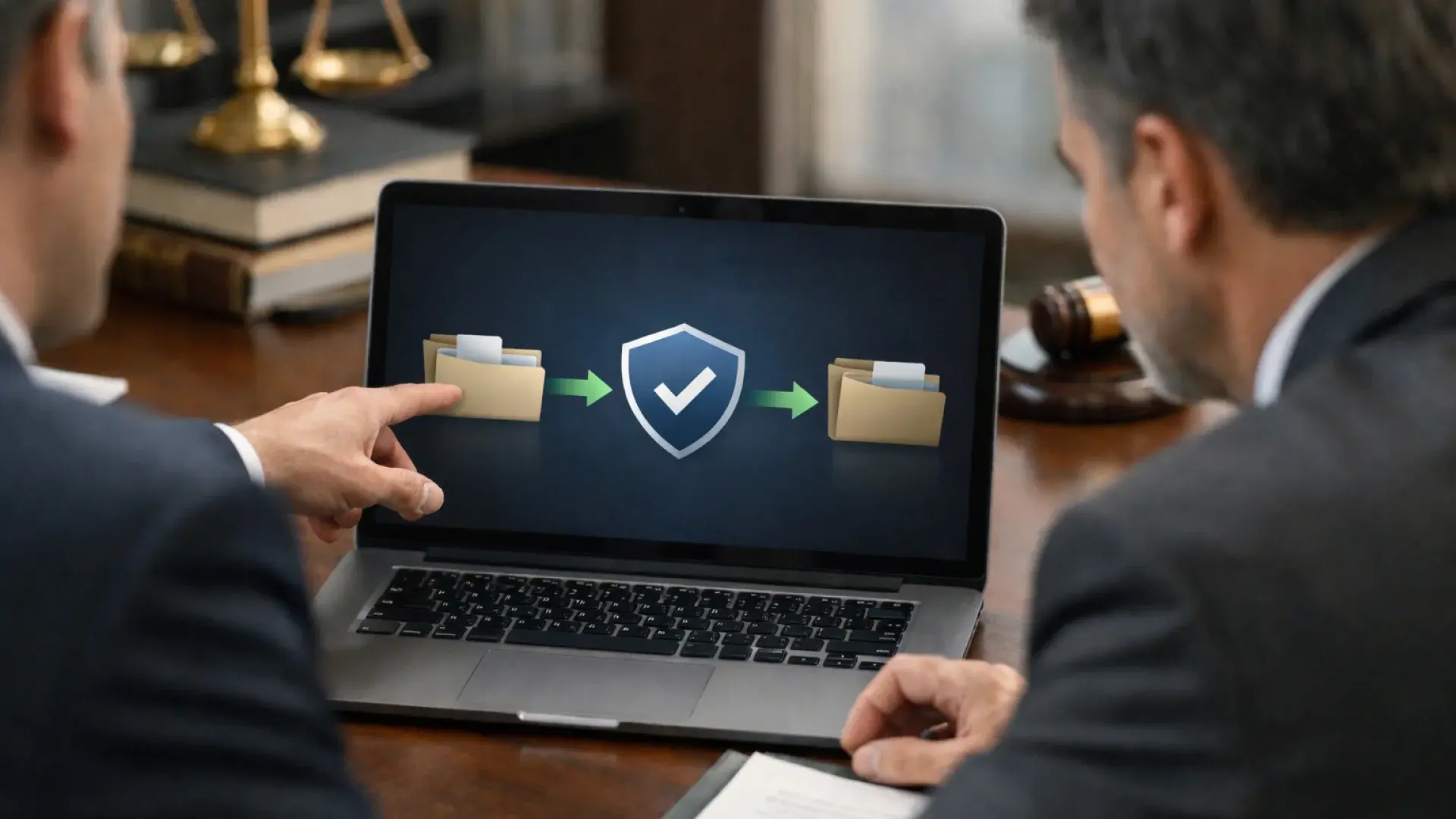
Attorneys increasingly rely on timely, secure access to digital evidence to build cases, review materials, and meet court deadlines. For public prosecutors, the stakes extend further. Every transfer of evidence between investigators, prosecution offices, courts, and defense counsel must be verifiable, auditable, and legally defensible. Traditional sharing methods like USB drives and email pose risks that purpose-built digital evidence management eliminates.
Traditional methods of sharing evidence, such as USB drives, external hard disks, email attachments, or generic file-sharing platforms, were never designed for legal evidence. As evidence volumes grow and cases become more complex, these approaches introduce unnecessary risk and inefficiency.
This is where digital evidence management for attorneys plays a critical role. A purpose-built digital evidence management platform for attorneys enables secure, controlled, and auditable sharing of evidence without compromising integrity or slowing down legal workflows.
Why Evidence Sharing is a Growing Challenge for Attorneys
Digital evidence today includes body-worn camera footage, surveillance video, audio recordings, images, documents, and forensic files. Attorneys often need access to this evidence quickly, sometimes across multiple cases and jurisdictions.
However, common challenges include:
- Delays caused by manual evidence preparation and transfer
- Limited visibility into who accessed evidence and when
- Difficulty proving evidence integrity after sharing
- Risk of unauthorized distribution or tampering
- Inconsistent processes across cases or teams
For attorneys, these issues can affect case preparation and courtroom readiness. For agencies, they can raise compliance and admissibility concerns.
Digital Evidence Management for Attorneys: Secure Sharing Without Legal Risk
Digital evidence management for attorneys enables secure, controlled sharing of sensitive evidence without exporting files or compromising integrity. Instead of relying on email, physical media, or generic cloud tools, attorneys grant role-based access to centrally stored evidence.
Every interaction with evidence is automatically logged, metadata is preserved, and chain of custody remains intact even when evidence is shared with courts, co-counsel, or external experts. This allows attorneys to collaborate efficiently while reducing disclosure risk and supporting admissibility.
The Limitations of Traditional Evidence Sharing Methods
Physical Media Creates Risk and Inefficiency
USB drives and hard disks are still widely used to share evidence, but they can be lost, damaged, or duplicated without oversight. Tracking access once media leaves the organization is nearly impossible.
Email and Generic File-Sharing Tools Fall Short
Email attachments and consumer file-sharing platforms lack the controls required for legal evidence. They often provide minimal audit logs, limited access controls, and no built-in chain of custody tracking.
Manual Tracking Weakens Chain of Custody
When evidence access is tracked manually or across disconnected systems, gaps emerge. These gaps can be challenged during legal proceedings, even if the evidence itself is authentic.
Key Capabilities That Enable Secure Evidence Sharing for Attorneys
Centralized Evidence Access
A digital evidence management system provides a single source of truth for all digital evidence. Attorneys no longer juggle multiple copies across systems.
Evidence remains stored centrally while access is granted securely, eliminating duplication and version conflicts.
Role-Based Access Control
Digital Evidence Management Systems allow attorneys to control who can view, download, annotate, or share evidence.
Permissions can be assigned by role, case, or user type. For example, expert witnesses may view evidence without downloading it, while co-counsel may have broader access.
This level of control reduces accidental disclosure and supports ethical obligations around confidentiality.
Secure Sharing Links with Expiration
Instead of sending files, attorneys can share secure, time-limited links. Access can be revoked instantly if circumstances change.
This simplifies collaboration with courts, opposing counsel, or investigators while maintaining oversight.
Automatic Audit Trails
Every access, view, download, or share is logged automatically. Attorneys gain a defensible audit trail that supports discovery obligations and evidentiary challenges.
These logs help demonstrate that evidence was handled properly at every stage.
Metadata Preservation and Chain of Custody
A digital evidence management system preserves original metadata and documents each transfer of custody. Attorneys can show when evidence was ingested, who accessed it, and whether it was altered.
This is critical when responding to motions challenging authenticity or handling procedures.
Secure Collaboration Without Compromising Evidence Integrity
Legal cases rarely involve one party. Attorneys must collaborate with law enforcement, prosecutors, defense teams, and courts.
A Digital Evidence Management System simplifies collaboration by enabling controlled access without relinquishing ownership of evidence.
Instead of exporting files repeatedly, attorneys grant access to the same authoritative record. This reduces risk, saves time, and improves confidence in evidence handling.
Secure Evidence Sharing for Public Prosecutors
For prosecutors, digital evidence does not arrive in a single package. A typical criminal case involves evidence moving through multiple custodians before trial, collected in the field, uploaded into a repository, reviewed by investigators, enriched by forensic teams, and then transferred to the prosecution office for case preparation.
Each handoff must preserve authenticity, maintain strict access control, and document every interaction.
A centralized Digital Evidence Management System replaces uncontrolled file movement with governed access. Instead of sending copies between departments, each party is granted role-based access within the same secure environment. Every review, annotation, or download is recorded automatically. For a full overview of how this works across the evidence lifecycle, see our guide on secure digital evidence sharing.
This structural shift from file distribution to access governance reduces chain of custody risk at every stage of the prosecution workflow.
Managing Prosecution Disclosure with Transparency and Accountability
Disclosure is one of the most legally sensitive phases in any prosecution. Incomplete or poorly documented disclosure can lead to appeals, mistrials, or dismissed charges.
Secure evidence sharing systems provide controlled disclosure environments where defense counsel can access approved materials through governed portals. Access permissions are role-based and time-limited when necessary. Viewing activity is logged automatically. Downloads can be tracked or restricted.
The prosecution office retains a complete digital record of:
-
What was disclosed
-
When it was disclosed
-
Who accessed it and for how long
This documented disclosure trail protects prosecution offices from challenges rooted in Brady or Giglio obligations. Courts increasingly expect not just procedural explanations but verifiable proof that disclosure was complete and properly controlled.
Courtroom Presentation and Long-Term Evidence Governance
When digital evidence is introduced in court, its credibility depends on demonstrable integrity. A mature Digital Evidence Management System allows prosecutors and attorneys to generate instant verification reports including original hash values and complete chain of custody logs that judges and opposing counsel can review directly rather than relying on testimony alone.
Beyond trial, prosecution offices must retain evidence according to statutory requirements and preserve materials for potential appeals. Automated retention schedules, legal hold enforcement, and secure archival storage ensure evidence remains protected over time. Controlled destruction processes, when authorized, are logged and verifiable, completing the evidentiary lifecycle.
Supporting Compliance and Ethical Obligations
Attorneys are bound by professional conduct rules, discovery regulations, and data protection laws. A digital evidence management system supports these obligations by design.
Security controls, access logs, encryption, and controlled disclosure workflows help attorneys demonstrate compliance rather than rely on manual processes.
For firms handling sensitive personal data, regulated evidence, or high-profile cases, secure sharing is a compliance requirement, not a convenience.
How VIDIZMO DEMS Supports Secure Evidence Sharing for Attorneys
VIDIZMO Digital Evidence Management System is designed for organizations that must share digital evidence securely while preserving legal integrity.
VIDIZMO DEMS enables attorneys to:
- Store evidence securely with preserved metadata
- Share evidence using role-based and case-based permissions
- Generate automatic audit logs for every interaction
- Maintain defensible chain of custody across collaborators
- Control access without duplicating or exporting files
For prosecution offices, VIDIZMO also supports structured disclosure workflows, prosecutorial case preparation environments, and configurable retention policies that enforce long-term evidentiary governance.
Whether working with prosecutors, defense teams, courts, or external experts, VIDIZMO Digital Evidence Management System simplifies secure evidence sharing without introducing legal risk.
Book a meeting with our team to review how VIDIZMO Digital Evidence Management System supports secure evidence sharing, access control, and auditability for legal professionals.

What Attorneys and Agencies Should Expect From Digital Evidence Management
When evaluating digital evidence management for attorneys, organizations should look for systems that offer:
- secure, link-based sharing workflows
- granular access and permission controls
- comprehensive audit logs and reporting
- scalable storage for long-term retention
- ease of use for both internal users and legal recipients
These capabilities help balance accessibility with security and compliance.
Key Takeaways
-
Attorneys handle sensitive digital evidence that cannot be shared through email or consumer cloud tools without legal risk
- Prosecutors face additional disclosure obligations that require documented, auditable sharing workflows — not just controlled access.
- End-to-end evidence governance, from field ingestion through trial presentation and post-verdict retention, requires a system purpose-built for the legal chain of custody.
-
A Digital Evidence Management System simplifies secure sharing while preserving chain of custody and admissibility
-
Role-based access, audit logs, and controlled sharing links reduce disclosure errors and unauthorized access
-
Digital evidence management platforms help attorneys collaborate with courts, investigators, and experts without duplicating or losing evidence
-
Secure evidence sharing is no longer an IT concern but a legal risk management requirement
Secure Sharing Requires Evidence-First Systems
Secure sharing for attorneys is not about moving files faster. It is about protecting evidence integrity, client confidentiality, and legal defensibility.
A Digital Evidence Management System simplifies secure sharing by replacing fragmented workflows with controlled, auditable, and legally aligned processes.
If your evidence sharing still relies on email, ad hoc portals, or physical media, it is time to rethink the risk.
About the Author

Jump to

Digital Evidence Governance: How Attorneys Maintain Control Over a Case
Cloud Evidence Management: CJIS-Compliant Digital Evidence Storage


No Comments Yet
Let us know what you think