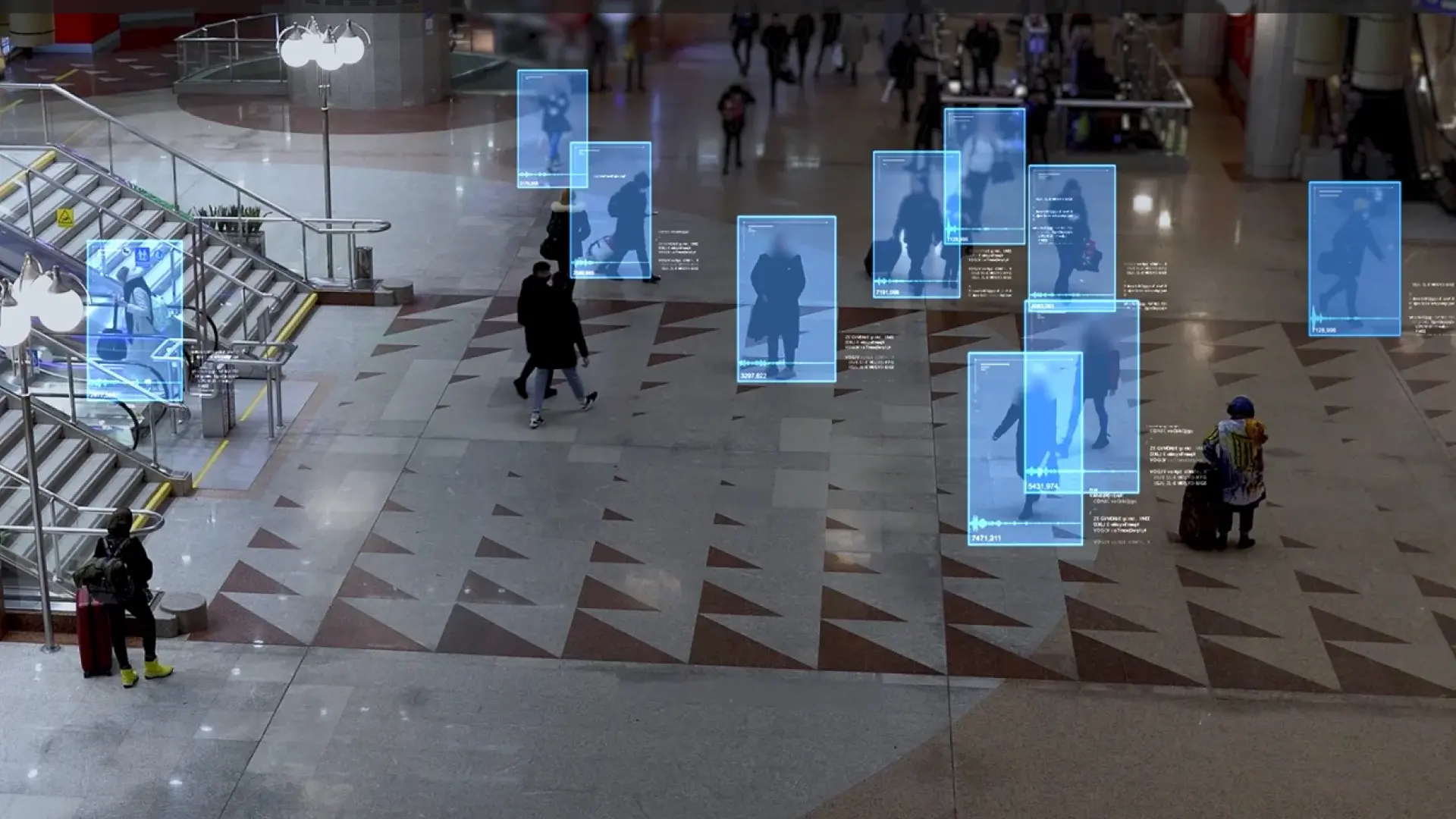
Security investigations often start with a simple question: Who did it, what did they take, where did they go, and when did it happen? In surveillance-driven environments, the answers are usually inside CCTV footage. The problem is that without AI object detection, investigators rarely know exactly where to look.
Instead of searching video based on what actually matters, a person, a vehicle, a weapon, a bag, investigators end up searching based on time guesses and camera-by-camera playback. That turns incident response into a manual process built on assumptions, fatigue, and limited time.
For enterprise security teams, physical security managers, system integrators, and public safety organizations, investigating incidents without object detection is not just slow. It increases the risk of missed evidence, weakens reporting, and creates higher operational and compliance exposure.
Why Modern CCTV Makes Investigations Harder, Not Easier
Camera deployments have increased, but investigation capability has not scaled at the same pace.
Most organizations now operate surveillance across:
- Multiple buildings and entrances
- Parking lots and perimeters
- Warehouses and restricted areas
- Public-facing locations and shared spaces
When an incident occurs, footage is typically scattered across many cameras and long time ranges. Even a “short” incident can require reviewing hours of video before and after the event to establish context and movement.
Without object detection, CCTV becomes a volume problem:
- More cameras produce more footage
- More footage increases review time
- More review time increases delays and costs
- Delays increase the likelihood of incomplete investigations
The result is a growing gap between how much video exists and how much of it can realistically be investigated.
What Gets Lost When Investigators Must Review Video Manually
Manual review is not just inefficient. It changes how investigations are conducted, and often, what gets discovered.
1. Investigations become timeline guessing exercises
When you cannot search by people, vehicles, or objects, investigators are forced to guess:
- Which camera likely captured the activity
- What time window is relevant
- How long before and after the incident to review
If the incident time is wrong, even by 20 minutes, teams can miss key moments like entry, staging, and escape.
2) Camera switching creates blind spots
Incident reconstruction usually requires jumping across multiple cameras. Without object detection to connect the dots, teams manually stitch together:
- Entrances and hallways
- Parking areas and exits
- Perimeter cameras and interior cameras
This makes investigations slower and increases the chance that a critical moment is never reviewed.
3) Human fatigue increases missed evidence risk
Investigators reviewing hours of footage are vulnerable to fatigue and inconsistency. Key evidence is often brief:
- A suspect appears for seconds
- A vehicle passes through a frame quickly
- An object is placed or removed in a crowded scene
Manual review can miss these moments, especially under time pressure.
4) Manual workflows increase cost per investigation
In real operations, time spent searching video is expensive. It consumes:
- Analyst time
- Supervisor review time
- Reporting and export time
- Overtime during high-incident periods
This is one reason organizations feel they have “video everywhere” but still struggle to close incidents quickly.
Operational Impact: What Security Teams Experience Without Object Detection
When object detection is missing, the pain shows up in day-to-day security operations.
Slow incident resolution and delayed response
Investigations take longer, which delays:
- Internal actions (disciplinary steps, policy enforcement)
- Threat containment (revoking access, tightening controls)
- Law enforcement collaboration (sharing timely evidence)
Backlogs that keep growing
Security teams often face multiple incidents at once. If each case requires hours of manual review, the backlog becomes permanent, and teams start prioritizing only the most severe incidents.
Inconsistent outcomes across investigators
Two reviewers can watch the same video and notice different details. Without object detection to standardize evidence discovery, results vary depending on who investigated and how much time they had.
Legal and Compliance Risk Without Object Detection
In many environments, video evidence is not only used for internal decision-making. It must stand up to scrutiny.
Evidence integrity and defensibility
Manual handling, exporting clips, copying files, and sharing through informal channels can create gaps that raise questions about authenticity and handling.
Audit and accountability challenges
When organizations cannot clearly demonstrate who accessed footage, what was exported, and when, investigations become harder to defend during audits or legal review.
Privacy and policy pressure
Even when privacy redaction is required, finding all relevant faces, plates, or sensitive objects without AI support can be slow and error-prone.
These risks increase as the number of stakeholders involved in an investigation increases.
How AI Object Detection Fixes the Investigation Bottleneck
AI object detection automatically identifies objects within footage and makes them discoverable through search and filtering.
Faster investigations through object-based search
Instead of reviewing entire timelines, investigators focus on segments where relevant objects appear.
Better accuracy and consistency
AI can scan footage frame-by-frame without fatigue, reducing the chance that brief but critical evidence is missed.
Scalable investigations across many cameras
Object detection supports large camera networks by enabling investigators to search across multiple feeds more efficiently.
The value is simple: less time spent searching, more time spent resolving.
Investigation Scenarios Where the Lack of Object Detection Hurts Most
Corporate security: unauthorized access or insider incident
A badge misuse incident may require tracking a person across multiple interior cameras. Without object detection, teams manually follow movement camera by camera. With object detection, they can locate appearances faster and build a clean timeline.
Public safety: incident in a crowded location
In public spaces, suspects and vehicles blend into crowds. Without object detection, teams must review wide-angle footage repeatedly. With detection, they can narrow the search to objects of interest and accelerate identification.
Critical infrastructure: restricted zone breach
When perimeter breaches occur, investigators need quick answers. Manual review delays response. Object detection supports faster identification of intrusions, vehicles, and suspicious objects.
These scenarios are common, and they all share the same failure point when object detection is missing: video cannot be searched by what matters.
Bridging the Investigation Gap with VIDIZMO DEMS and AI Object Detection
VIDIZMO Digital Evidence Management System (DEMS) is designed to manage video evidence securely and make investigations more efficient. In the context of this challenge, VIDIZMO DEMS helps in two practical ways.
1) AI Object Detection that makes surveillance video searchable
VIDIZMO Digital Evidence Management System uses AI object detection to automatically identify and tag key objects in video footage so investigators can search based on investigative intent, not guesswork.
This directly reduces:
- Manual review time
- The risk of missed evidence
- Investigation backlogs
2) Evidence management that supports defensible investigations
Beyond detection, investigations often require evidence controls. VIDIZMO DEMS supports this lightly but meaningfully through capabilities such as:
- Chain of custody and audit history for accountability
- Centralized evidence organization for casework
- Deployment flexibility (cloud, on-premises, hybrid) to meet security and compliance needs
The outcome is a more structured, faster workflow: identify, search, validate, and package evidence with less friction.
Explore AI Object Detection within VIDIZMO Digital Evidence Management System or request a free trial to see how your organization can investigate security incidents faster, more accurately, and with greater confidence.
Key Takeaways
-
Investigating security incidents without object detection forces teams to rely on manual video review, slowing investigations and increasing the risk of missed evidence.
-
Modern CCTV environments generate large volumes of unstructured video, making time-based playback ineffective for incident reconstruction.
-
Manual investigations introduce operational inefficiencies, investigator fatigue, inconsistent outcomes, and higher investigation costs.
-
The absence of object detection creates legal and compliance risks, including weak evidence defensibility and chain-of-custody challenges.
-
AI-powered object detection transforms surveillance video into searchable evidence by automatically identifying people, vehicles, and objects.
-
Object-based search significantly improves investigation speed, accuracy, and scalability across large camera networks.
-
VIDIZMO Digital Evidence Management System (DEMS) helps organizations overcome these challenges by combining AI object detection with secure, centralized evidence management.
-
Object detection is no longer optional; it is a foundational capability for effective, modern security investigations.
Investigating Without Object Detection Puts Security Outcomes at Risk
Investigating security incidents without object detection is increasingly ineffective in surveillance-heavy environments. As camera networks expand, manual video review slows investigations, strains security teams, and increases the risk of missed or incomplete evidence. Relying on time-based playback instead of object-based search makes it harder to reconstruct events accurately and respond in a timely manner.
AI-powered object detection transforms video footage into searchable evidence by automatically identifying people, vehicles, and objects within surveillance video. This removes guesswork from investigations, reduces review time, and enables faster, more consistent outcomes.
VIDIZMO Digital Evidence Management System (DEMS) helps organizations overcome the limitations of manual investigations by combining AI object detection with secure, centralized evidence management. As surveillance data continues to grow, object detection is no longer optional. It is essential for modern, effective security investigations.
 Updated August 19, 2026