
Law enforcement agencies edit digital evidence every day. Clips are extracted for court presentations. Footage is prepared for prosecutor disclosure. Recordings are converted into compatible formats. These are legitimate, necessary actions and they are also where structural risk begins if they happen outside a controlled management system.
Evidence rarely becomes vulnerable at the moment it is created. Vulnerability begins when it is handled. The moment digital evidence is edited, exported, converted, or prepared outside a secure management system, control begins to shift. Files move between desktops, shared drives, and external tools. Documentation becomes manual. Oversight becomes inconsistent.
As that shift occurs, integrity is no longer enforced by infrastructure. It begins to depend on individual behavior and informal processes. Under legal scrutiny, that dependency becomes a weakness. Courts do not only evaluate what the footage shows. They examine how it was preserved, accessed, and prepared.
The risk is not the act of editing digital evidence itself. The risk is editing it without system-enforced safeguards designed to maintain accountability and protect its integrity.
Editing Digital Evidence Without System Controls Creates Structural Risk
Editing digital evidence outside a secure management system creates structural risk. The moment a recording is opened in external software for modification, conversion, or preparation, it leaves the protection of a controlled environment.
Within a secure system, integrity is enforced automatically:
- Original files remain protected and unaltered
- User permissions are role-based and controlled
- Every action is logged and time-stamped
- Edited outputs remain traceable to their source
Outside that environment, editing may result in:
- Modified files stored on local workstations
- Multiple versions without documented lineage
- Exports created without automated audit logs
- Evidence shared across unsecured locations
Even routine editing actions can fragment documentation and weaken oversight. Under legal scrutiny, agencies must demonstrate how evidence was edited, by whom, and under what controls. If that proof depends on manual records instead of system-enforced tracking, defensibility weakens. Editing may be necessary. Editing outside controlled systems is where exposure begins.
Editing workflow risk is one of several critical vulnerabilities in digital evidence handling. For the complete picture of what agencies face across the evidence lifecycle, from collection through disclosure, see the full guide to digital evidence challenges in law enforcement.
Common Editing Scenarios That Create Legal Exposure
The risk is not unique to large or complex cases. Routine editing actions create exposure when they occur outside controlled systems:
-
Clip extraction for court. Pulling a segment from a longer recording in external software creates a derivative file with no documented lineage. Courts may question whether the clip represents the complete context or was selectively prepared.
-
Format conversion for disclosure. Converting proprietary body camera formats to MP4 or similar for prosecutor handoff can strip embedded metadata including timestamps, GPS coordinates, device identifiers that authenticate the original recording.
-
Redaction in third-party tools. Applying redaction in generic video software leaves no system-enforced record of what was redacted, by whom, and under which authority. If redaction choices are later challenged, agencies must reconstruct the decision from memory or manual notes.
-
Multi-version proliferation. Without a centralized system, edited versions circulate on local drives, shared folders, and email threads. Identifying the authoritative version under legal challenge becomes reconstructive work rather than a straightforward audit pull.
When Editing Practices Are Examined Under Legal Scrutiny
In court, digital evidence is judged on more than its content. It is evaluated on both what it shows and how it was handled. While agencies may focus on the footage itself, opposing counsel often focuses on the process behind it.
When digital evidence has been edited outside a secure management system, scrutiny shifts quickly to procedural control. Questions such as the following can arise:
- Who accessed the original recording?
- Was the original file ever modified?
- How was the edited version generated?
- Is there documented proof of the sequence of actions?
If editing occurs in external software without system-enforced logging, agencies may have to rely on testimony, manual records, or reconstructed timelines to explain what happened. That reliance introduces uncertainty at the very moment clarity is required.
Legal scrutiny does not require proof of misconduct. It requires proof of control. If the editing process cannot be demonstrated through automated logs, protected storage, and traceable workflows, credibility begins to weaken. The question is not whether the edit was justified. The question is whether the process behind it can be clearly and confidently defended.
Within a secure Digital Evidence Management System, documentation is generated automatically and preserved as part of the evidence lifecycle. Outside such a system, documentation must be recreated after the fact. When the process is examined under legal challenge, that gap becomes visible and cannot be reversed.
Operational Risk Extends Beyond the Courtroom
The consequences of editing digital evidence outside secure systems extend beyond the courtroom. Operational risk begins long before a case is challenged.
When editing workflows are decentralized, evidence handling becomes inconsistent. Files may be stored in multiple locations, versions may circulate without clear lineage, and access may not be centrally monitored. Over time, this fragmentation creates inefficiencies that are difficult to detect but costly to manage.
Supervisors may struggle to identify the authoritative version of a recording. IT teams may lack visibility into where sensitive files reside. Staff may spend valuable time reconstructing activity histories instead of focusing on investigative priorities.
As evidence volumes grow, these inefficiencies compound. A fragmented editing process increases exposure not only to legal scrutiny, but also to compliance gaps, audit findings, and security risks. Without centralized control, enforcing retention policies, maintaining consistent security standards, and responding quickly to oversight requests becomes significantly more difficult.
Digital evidence is now operational infrastructure. When editing occurs outside controlled systems, governance weakens across the entire evidence lifecycle.
What Controlled Evidence Editing Looks Like
Secure evidence management is not about restricting necessary work. It is about enforcing accountability at the system level.
When editing occurs within a controlled Digital Evidence Management environment, safeguards are embedded into the workflow. Integrity is enforced by design rather than left to individual discipline.
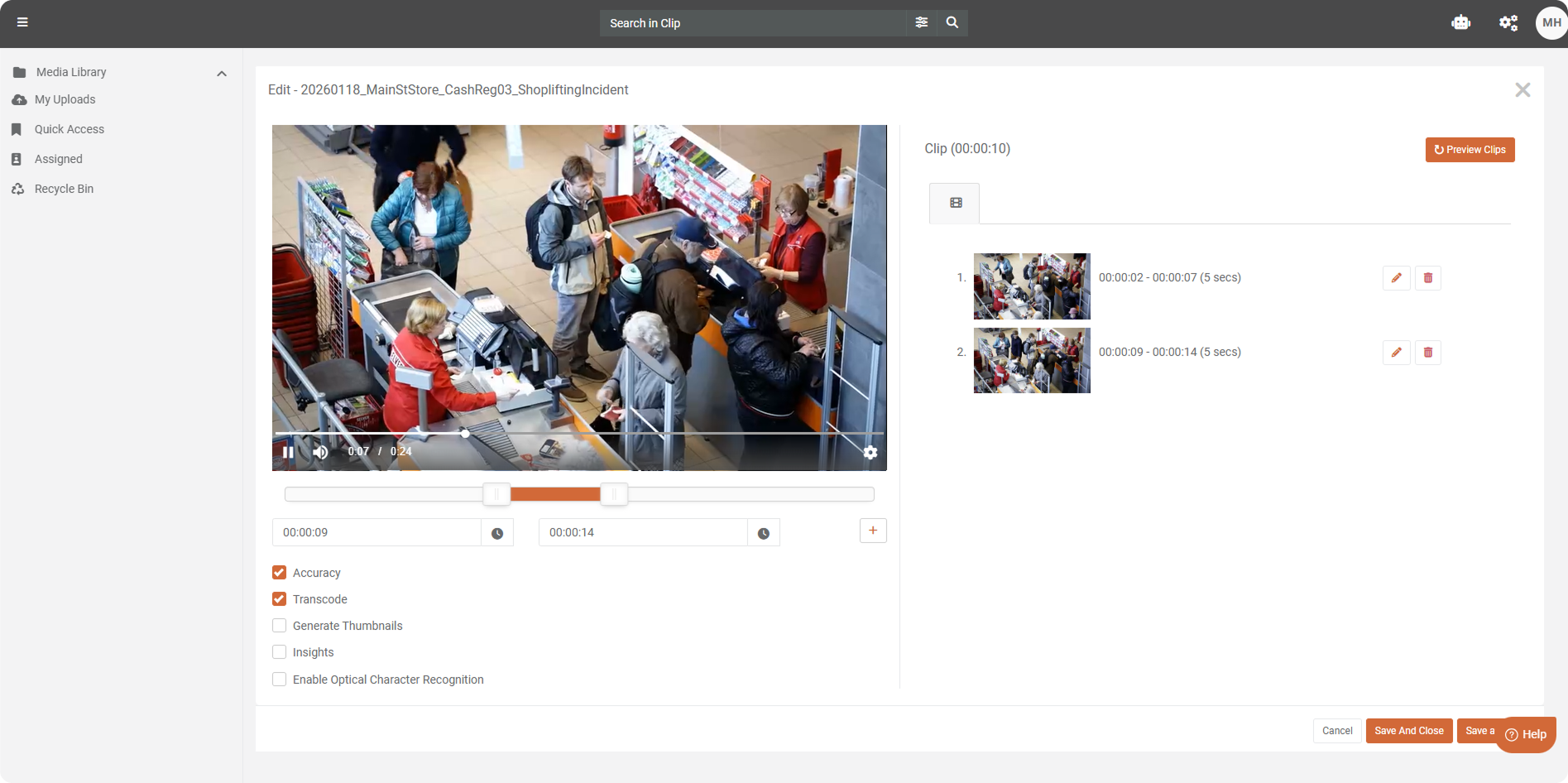
Within a secure system:
- Original recordings remain preserved and protected
- Access permissions are role-based and automatically enforced
- Every action is logged in real time
- Edited outputs remain traceable to their source
This shifts oversight from manual effort to system control. Documentation becomes automatic, compliance becomes enforceable, and governance becomes consistent.
Editing still occurs, but it happens within infrastructure built for legal defensibility and operational accountability rather than informal processes that must later be explained or reconstructed.
Ensure your evidence editing workflow is built for defensibility. Explore VIDIZMO Digital Evidence Management System or contact us today.

The Strategic Decision Agencies Must Make
Digital evidence is now central to investigations, prosecutions, and public accountability. As its importance grows, so does the expectation that it is managed within controlled and defensible systems.
Editing and preparing evidence is inevitable. The real question is where those actions occur and what safeguards govern them.
When editing happens outside secure systems, integrity depends on manual controls and individual discipline. Even well-intentioned processes can create gaps that accumulate into structural risk.
Within a controlled Digital Evidence Management environment, integrity is system-enforced. Activity is logged, access is restricted, and file lineage is preserved automatically. Oversight is embedded rather than reconstructed later.
The difference may not be visible during routine operations, but it becomes clear under scrutiny. For agencies focused on governance and defensibility, the environment where evidence is edited is a strategic safeguard, not a technical detail.
Key Takeaways
- Editing digital evidence outside secure systems creates structural risk.
- Legal scrutiny evaluates not only the content of evidence, but how it was handled.
- Decentralized editing workflows lead to fragmented documentation and reduced oversight.
- Manual processes weaken defensibility under courtroom examination.
- A controlled Digital Evidence Management System enforces integrity automatically.
- System-enforced logging, access control, and file traceability reduce legal and operational exposure.
- Evidence governance is an infrastructure decision, not just an operational task.
Editing digital evidence is unavoidable. The question is whether it happens within infrastructure designed for legal defensibility or outside it. For agencies reviewing their broader evidence management posture — chain of custody, access controls, retention, and disclosure practices — the complete guide to digital evidence challenges police face covers each risk and what to look for in a system built to address them.
FAQ
Frequently Asked Questions
Is it risky to edit evidence using standard video software?
Editing evidence in generic video software can introduce risk if the workflow lacks automated logging, protected storage, and traceable file lineage. Without system-enforced controls, agencies may struggle to demonstrate defensible handling.
Why is audit logging important in digital evidence management?
Audit logging provides verifiable records of who accessed, edited, or exported evidence and when those actions occurred. Automated logs strengthen defensibility and reduce reliance on manual documentation.
Can law enforcement edit digital evidence?
Yes. Law enforcement agencies may need to edit, prepare, or export digital evidence for investigative or prosecutorial purposes. However, those actions should occur within a secure management system that preserves integrity and maintains documented control.
You may also like
Making a Digital Recording the Official Record
Most guidance about digital court recording assumes the argument is over. It describes microphones, channels, ...

A Maturity Model for Court Digital Evidence: Foundational, Developing, Advanced
Budget conversations about court technology go badly when the ask is a product and well when the ask is a stage.

Efficiently Recording and Managing Microsoft Teams Meetings
Imagine this: you're managing a team meeting that’s running late. Everyone is juggling updates, and somewhere along the ...