
by Zain Noor, Last updated: March 19, 2026
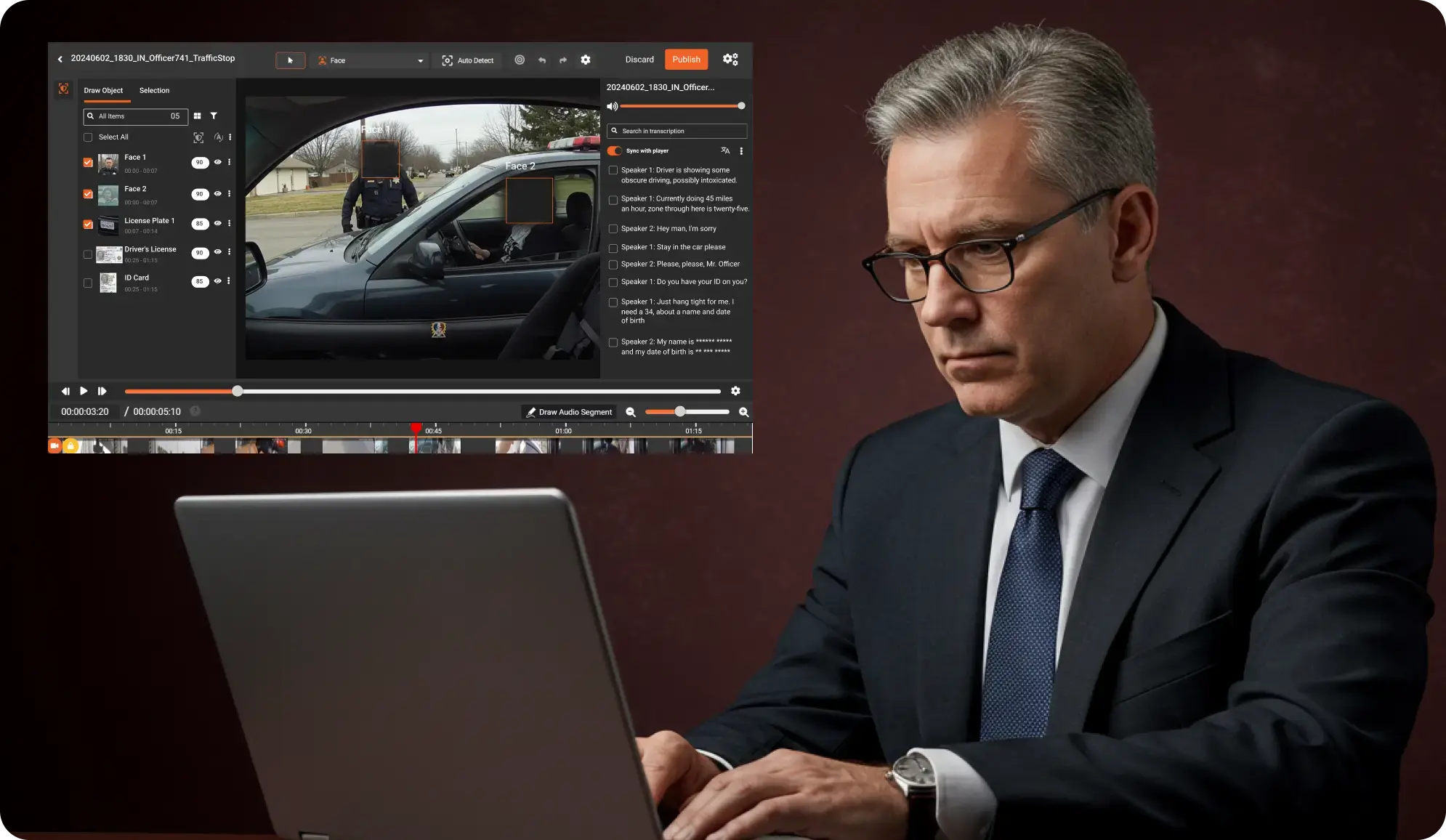
Government agencies are managing an unprecedented volume of video evidence from body-worn cameras and CCTV footage to interview recordings and public meeting videos. At the same time, transparency laws such as FOIA require timely disclosure, while privacy regulations demand strict protection of sensitive information.
Manually reviewing and redacting video is slow, costly, and prone to human error. As video volumes grow, agencies increasingly rely on AI-powered video redaction tools to meet compliance requirements, reduce FOIA backlogs, and protect public trust.
Below are the best video redaction tools for government agencies, starting with solutions designed specifically for high-volume public sector workflows.
Best Video Redaction Tools for Government Agencies
1. VIDIZMO Redactor
Best for: Government agencies handling high volumes of FOIA and public records requests across multiple media types.
VIDIZMO Redactor is purpose-built for government organizations that need to redact video at scale without sacrificing accuracy or compliance. Unlike tools focused solely on body-worn camera footage, VIDIZMO supports redaction across video, audio, documents, and images within a single platform.
Key capabilities
- AI-assisted detection of faces, license plates, people, screens, text, and sensitive audio
- Bulk and queue-based redaction for large FOIA backlogs
- Multi-format redaction from one centralized interface
- Review, approval, and audit trails for defensible disclosure
- Deployment flexibility aligned with government IT requirements
- Optional managed redaction services for understaffed teams
VIDIZMO Redactor helps agencies move from manual, reactive redaction to repeatable, scalable compliance workflows.
2. Axon
Best for: Law enforcement agencies already using Axon body-worn cameras and Axon Evidence.
Axon’s redaction tools integrate directly into its evidence management platform, allowing users to blur faces, license plates, and other identifiers within Axon-hosted video.
Key capabilities
- Native integration with Axon body-worn cameras and evidence systems
- Redaction of faces, license plates, and other sensitive identifiers
- Streamlined workflows within the Axon Evidence environment
- Tools designed for public safety disclosure requirements
- Familiar user experience for teams already using Axon technology
3. VIDIZMO Digital Evidence Management System (DEMS)
Best for: Agencies seeking end-to-end digital evidence management with built-in redaction.
VIDIZMO DEMS goes beyond standalone redaction by managing the entire lifecycle of digital evidence from ingestion and secure storage to review, redaction, and controlled sharing.
Key capabilities
- Centralized management of bodycam, CCTV, dashcam, drone, and interview footage
- Built-in AI-assisted redaction via VIDIZMO Redactor
- Secure evidence sharing with prosecutors, courts, and oversight bodies
- Chain-of-custody tracking and audit logs
- Role-based access control and policy enforcement
4. Veritone Redact
Best for: Agencies prioritizing AI transcription and search-driven redaction workflows.
Veritone Redact focuses on applying artificial intelligence to help agencies analyze, search, and redact video and audio content efficiently. By combining transcription with AI-powered detection, it supports faster review and preparation of media for disclosure.
Key capabilities
- Speech-to-text transcription for video and audio content
- AI-assisted object and keyword detection
- Searchable transcripts to support review and redaction
- Automation tools to improve redaction efficiency
- Support for video and audio redaction workflows
5. CaseGuard
Best for: Government and law enforcement agencies handling FOIA and public records requests.
CaseGuard is designed to support public records and disclosure workflows by enabling agencies to redact sensitive information across multiple media types. It helps teams prepare content for release while maintaining consistency and compliance.
Key capabilities
- Redaction support for video, audio, documents, and images
- Workflows aligned with FOIA and public records requirements
- Tools for applying consistent redaction rules
- Review and quality control features
- Support for preparing content for public release
What to Look for in a Government Video Redaction Tool
Not all redaction tools are built for government use. When evaluating solutions, agencies should look for:
1. AI-Assisted Detection
Automatic detection of:
- Faces
- License plates
- People and vehicles
- Screens and documents
- Spoken names or sensitive audio
2. Bulk & Queue-Based Redaction
FOIA requests rarely involve a single file. Agencies need to redact dozens or hundreds of videos at once without starting from scratch each time.
3. Multi-Format Support
Public records requests often include:
- Video
- Audio recordings
- Documents
- Images
Using separate tools for each format slows everything down.
4. Audit Trails & Review Workflows
Agencies need defensible processes:
- Who redacted what
- When changes were made
- Approval workflows before release
5. Deployment & Security Flexibility
Government IT teams often require:
- On-prem or private cloud options
- Role-based access control
- Secure handling of evidence and records
Final Thoughts
Video redaction is no longer a niche requirement for government agencies. It is a core operational capability tied directly to transparency, compliance, and public trust.
The right solution should scale with growing video volumes, support multiple media types, and fit naturally into existing workflows. Platforms like VIDIZMO Redactor are designed to meet these needs while helping agencies modernize how they respond to public records requests.
As video continues to play a central role in government operations, investing in the right redaction technology is essential for meeting both transparency obligations and privacy expectations.
You Can Start Your Free Trial Today - NO Credit Card Needed

About the Author
Jump to
Video Redaction Best Practices: A Complete Guide to Privacy-Safe, Defensible Video Release
Best Bulk CCTV Video Redaction Tools for Enterprise and Government Use

No Comments Yet
Let us know what you think