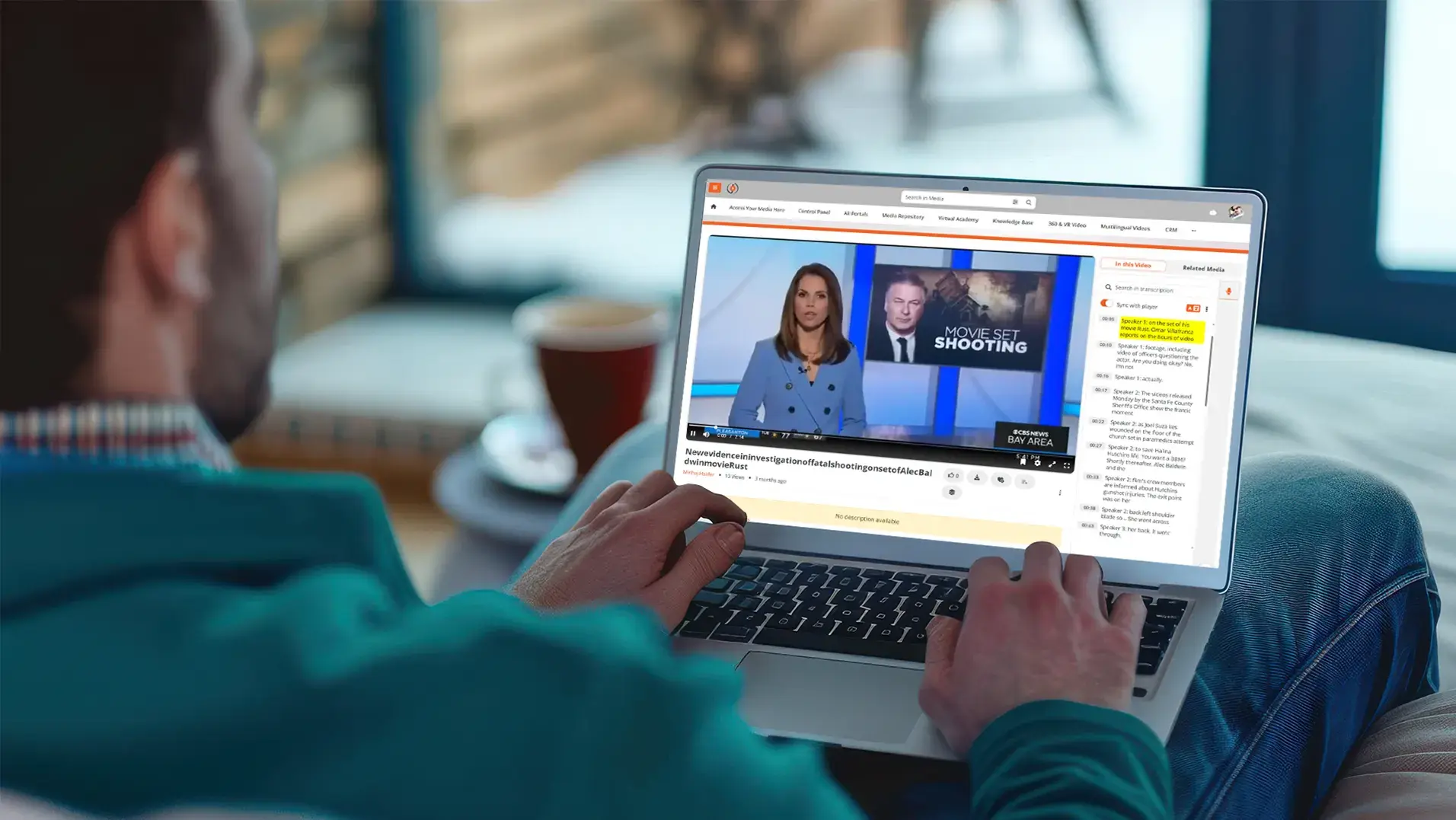
Most discussions of VOD vs live streaming treat the choice as binary. Pick one, build around it, move on. That framing works for consumer streaming services where the business model dictates the format. It breaks down inside enterprises, where the question isn't which mode wins but which mode fits a specific use case, and where most organizations end up using both.
This guide covers when VOD is the right choice, when live streaming is the right choice, why most enterprises run both, and a five-question decision framework you can use to match the format to the use case. The goal is to help business and IT leaders make the format decision with clarity, not based on which mode they happened to use last.
The Core Difference: Real-Time vs Recorded
Video on demand (VOD) is pre-recorded. The video gets uploaded, transcoded into multiple bitrates and resolutions, and stored before any viewer sees it. Viewers watch whenever they want, pause, rewind, fast-forward, and rewatch. The technical pipeline optimizes for quality and adaptive playback across devices and networks.
Live streaming delivers video as the event happens. Viewers tune in during the broadcast or miss it. The technical pipeline runs on tighter latency budgets, often using HLS, LL-HLS, or WebRTC for sub-second delivery. Audience interaction (chat, polls, live Q&A) happens during the stream itself, not afterward. For a deeper look at how each protocol handles latency and compatibility, see our guide to video streaming protocols.
The technical foundations overlap heavily. Most enterprise platforms support both modes natively. The difference that matters for business leaders is when the audience watches, not how the video gets delivered.
When Video On Demand (VOD) Is the Right Choice
VOD wins when the audience needs flexibility about when they watch and when the content has lasting value beyond a single moment.
Training and onboarding
New hires and existing employees move at different paces. Onboarding modules, compliance training, and skills development all benefit from recorded content that learners can complete on their own schedule, pause when they need to take notes, and revisit when they need a refresher. Completion tracking and LMS integration give the L&D team auditable proof of training delivery.
Customer education
Product walkthroughs, tutorials, and certification courses serve customers across time zones and varying technical levels. A customer in Singapore evaluating your product at midnight local time should not have to wait for a live demo to be scheduled.
Knowledge management
Recorded subject matter expert sessions, lecture archives, and process documentation preserve institutional knowledge that would otherwise leave when employees retire or transition. The library becomes a searchable knowledge base that scales with the organization.
Internal documentation
Recorded process explanations, troubleshooting guides, and how-to content reduce repeated questions for IT and HR teams. Employees self-serve from a video library instead of opening tickets.
Compliance training
Audit-trackable, completion-tracked, and available across time zones, with retention policies aligned to regulatory requirements. For real-world examples of how regulated industries deploy VOD, see our breakdown of video on demand use cases by industry.
When Live Streaming Is the Right Choice
Live streaming wins when the moment matters more than the replay, when interaction is essential, or when the content has time-sensitive impact.
Town halls and all-hands meetings
Leadership presence carries more weight when employees are watching together. Real-time Q&A surfaces unfiltered questions and concerns. The collective experience of watching with colleagues is part of what makes the format work.
Product launches and announcements
Live launches generate urgency, audience energy, and media coverage that recorded announcements rarely match. The shared moment is the point.
Webinars and virtual events
Interactive engagement, live polling, audience Q&A, and panel discussions all depend on real-time participation. Attendees ask questions, presenters adapt their content, and the conversation builds throughout the session.
Time-sensitive announcements
Earnings calls, breaking news, regulatory updates, and crisis communications all require live delivery because the timing itself communicates importance. A pre-recorded earnings call signals something different than a live one.
Interactive training sessions
Some training works better with live instruction. Complex technical topics, leadership development, and sessions that require role-playing or live feedback benefit from real-time interaction between instructor and learners.
The pattern across these scenarios is that live adds something a recording cannot replicate: immediacy, interactivity, and shared experience.
Why Most Enterprises Use Both
The realistic enterprise pattern is rarely VOD only or live only. It's live first, VOD after.
The all-hands streams live to give employees the real-time experience and Q&A, then gets posted to the internal video library so anyone in a different time zone or who missed the session can watch it later. The product launch happens live for the energy and media impact, then becomes a highlight reel that sales teams use as VOD enablement content for months afterward. The training webinar streams live for instructor interaction, then the recording goes into the LMS for asynchronous access by employees who couldn't attend.
Recorded Zoom and Teams meetings follow the same pattern. The meeting happens live, gets recorded automatically, and flows into the video library where it becomes a searchable VOD asset. For one common workflow, see how to live stream Zoom meetings through a secure video platform.
The technical implication is that the platform decision matters more than the format decision. Enterprise platforms typically support both modes natively, with finished livestreams converting automatically to VOD recordings. The format you start with is rarely the format the content stays in.
Decision Framework: 5 Questions to Ask
When evaluating a specific use case, walk through these five questions. The answers tell you whether VOD, live, or both fits.
1. Does the audience need to watch at the same time, or at their convenience?
Same time signals live. Convenient time signals VOD. If both matter, plan for live with recording.
2. Is real-time interaction essential to the value of the content?
If the audience needs to ask questions, vote in polls, or shape the discussion as it happens, live is the right format. If interaction is not essential, VOD works fine and offers the convenience advantage.
3. Will the content be referenced repeatedly, or is it a one-time event?
Repeatedly referenced content (training, product walkthroughs, knowledge sessions) belongs in VOD. One-time events (launches, town halls, earnings calls) work as live, with the recording serving as VOD afterward.
4. Does the content need to be searchable, transcribed, or indexed for discovery?
VOD platforms typically index transcripts, generate AI-powered search across spoken words, and surface specific moments inside videos. Live alone does not provide this. If discovery matters, the content has to end up as VOD.
5. What are the bandwidth and infrastructure realities of your audience?
Distributed audiences with varying bandwidth benefit from VOD with adaptive bitrate streaming. Office-based audiences watching simultaneously can saturate corporate networks during live events, which is why enterprise content delivery networks (eCDNs) become important for large live broadcasts. According to Cisco's Annual Internet Report, live video traffic continues to grow faster than recorded video traffic, which makes the bandwidth question increasingly important for any organization planning large-scale internal events.
What This Means for Platform Selection
The format decision should not lock you into a single-mode platform. Most enterprise use cases need both, and switching platforms based on format wastes resources and fragments your video library.
Practical platform criteria to evaluate: native support for both live and VOD in a single backend, automatic conversion of finished livestreams into VOD recordings, the same identity and access control across both modes, a unified library where live recordings and VOD assets live together and become searchable, and analytics that work consistently across both formats.
For a comparison of platforms that handle both modes well, see our roundup of the best on-demand video platforms for 2026.
For a closer look at how these formats support specific industry deployments, see our breakdown of enterprise video on demand use cases.
VIDIZMO EnterpriseTube supports both live streaming and VOD on a single platform, with automatic conversion of finished livestreams into searchable VOD recordings. Start a free trial or contact us to discuss your video format requirements.

FAQ
Frequently Asked Questions
What is the difference between VOD and live streaming?
VOD is pre-recorded and stored before viewers see it, so they can watch anytime, pause, and rewatch. Live streaming delivers video in real time as the event happens, with viewers tuning in during the broadcast.
Is live streaming better than VOD for business?
Neither is inherently better. Live streaming wins for town halls, product launches, and interactive events. VOD wins for training, knowledge management, and customer education. Most enterprises use both, depending on the use case.
Can a live stream be converted to VOD?
Yes. Most enterprise video platforms automatically record live streams and convert them into VOD recordings, which are added to the searchable video library after the live event ends.
Which is better for corporate training: VOD or live streaming?
VOD is better for self-paced learning, onboarding, and compliance training where employees need flexibility. Live streaming works better for interactive sessions, instructor-led training, and topics that benefit from real-time discussion and feedback.
Do enterprises use both VOD and live streaming?
Yes. The most common enterprise pattern is to stream events like town halls and webinars live, then record them as VOD assets for asynchronous viewing across time zones. Most enterprise video platforms support both modes natively.
TopicsVideo Content ManagementEnterpriseTubeVideo StreamingVideo DeliveryEnterprise Video Platform

About the author
Ali Rind is a Product Marketing Executive at VIDIZMO, where he focuses on digital evidence management, AI redaction, and enterprise video technology. He closely follows how law enforcement agencies, public safety organizations, and government bodies manage and act on video evidence, translating those insights into clear, practical content. Ali writes across Digital Evidence Management System, Redactor, and Intelligence Hub products, covering everything from compliance challenges to real-world deployment across federal, state, and commercial markets.
You may also like

Deploying a Low-Latency Surveillance Pipeline: An Architecture Guide
"Real-time" is one of those phrases that gets used loosely, and in a video analytics pipeline it hides a lot of ...
Choosing a GPU for Real-Time Video Analytics
Capacity planning tells you how many GPUs a deployment needs. This is the other half of the question: which GPU to ...
GPU Capacity Planning for Real-Time AI Video Analytics
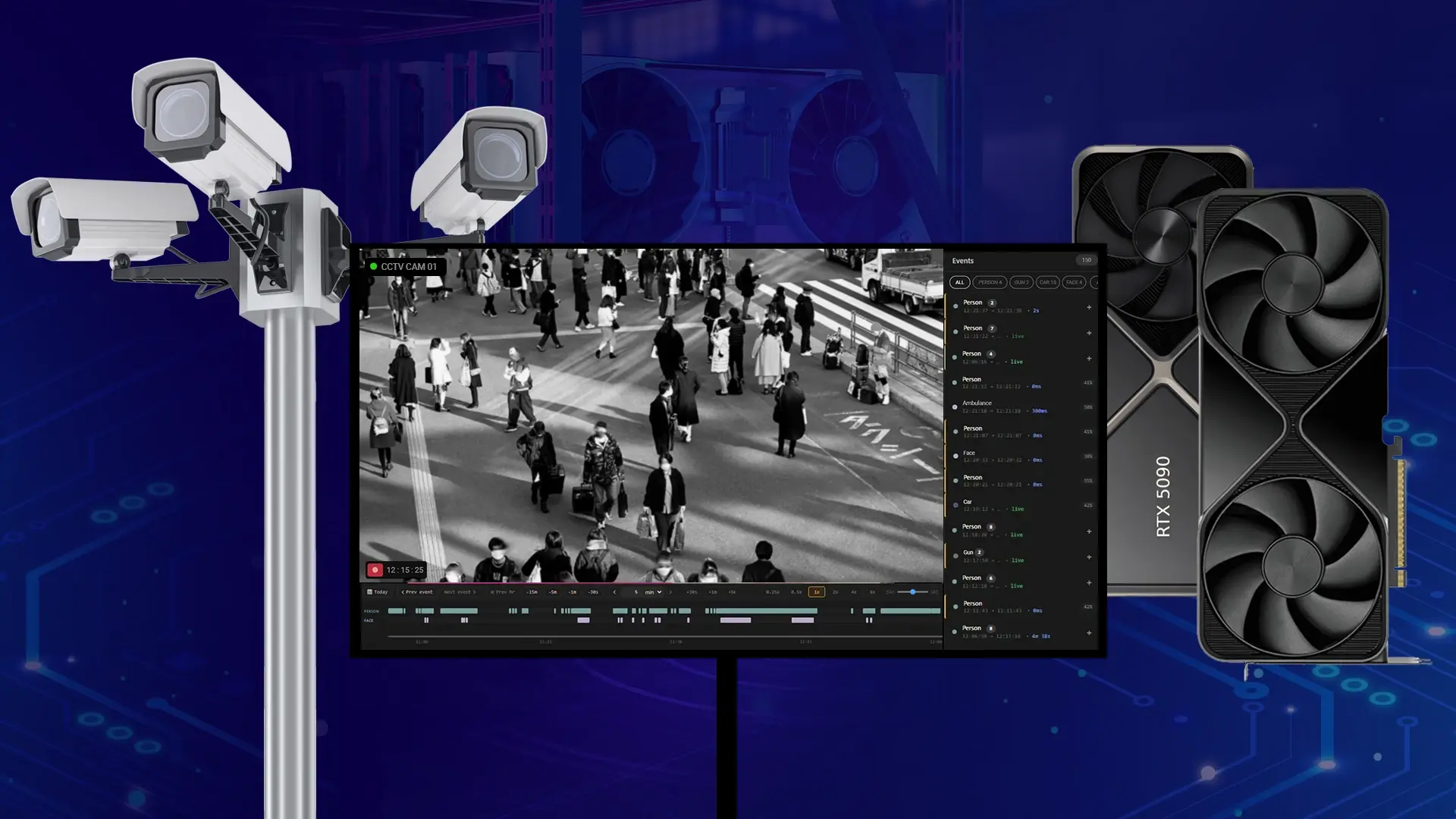
Ask a vendor how many cameras their AI runs on one GPU and you will usually get a single confident number with no ...