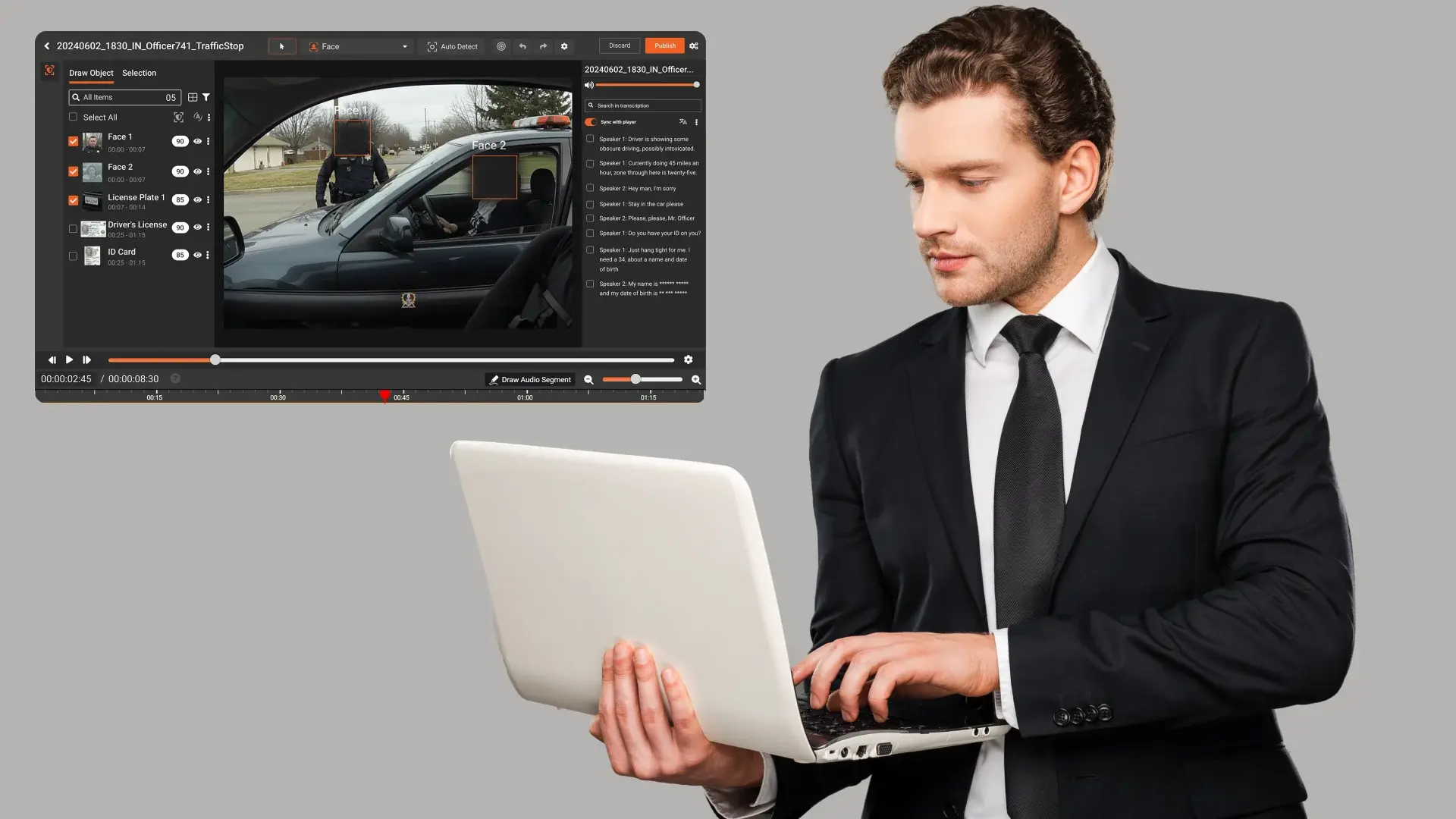
Video has become one of the most requested, shared, and scrutinized forms of digital evidence and records. From body-worn cameras and surveillance footage to interview recordings and meeting videos, organizations today must release video responsibly without exposing sensitive or legally protected information.
That’s where video redaction best practices come in.
This guide outlines what must be redacted, how to build a defensible redaction workflow, common mistakes to avoid, and how modern redaction software like VIDIZMO Redactor helps organizations meet privacy, compliance, and turnaround expectations at scale.
Why Video Redaction Matters More Than Ever
Organizations across the public and private sectors are handling unprecedented volumes of video. Public records requests, FOIA disclosures, legal discovery, and regulatory audits increasingly involve video and audio not just documents.
At the same time:
- Privacy laws and disclosure obligations are expanding
- Redaction errors are harder to detect in video than in text
- Manual workflows cannot keep up with volume or deadlines
In short, video redaction is no longer optional. It is a critical privacy, compliance, and trust requirement.
What Is Video Redaction?
Video redaction is the process of permanently obscuring sensitive visual and audio information in video recordings before they are shared, published, or released.
Unlike video masking or blurring for live monitoring, redaction is irreversible and intended for:
- Public release
- Legal discovery
- Regulatory compliance
- Records retention and sharing
Effective video redaction must address both visual and audio risks.
What Information Must Be Redacted in Video
Visual Information Commonly Requiring Redaction
Best practices and regulatory guidance consistently identify the following as high-risk visual elements:
- Faces of minors, victims, witnesses, or bystanders
- License plates and vehicle identifiers
- Personal addresses visible on buildings or documents
- Screens showing personal or confidential information
- Medical details, injuries, or identifying features
- Identification badges, paperwork, or computer monitors
Audio and Spoken PII (Often Overlooked)
Many redaction failures occur not in the video but in the audio.
Sensitive audio may include:
- Names spoken aloud
- Phone numbers or email addresses
- Home addresses or locations
- Medical, financial, or case-specific details
Best practice: Video redaction workflows must treat audio as a first-class risk, not an afterthought.
Video Redaction Best Practices: End-to-End Workflow
1. Define Redaction Policy Before Touching the Video
Before processing footage:
- Identify the purpose of release (FOIA, court, internal, public)
- Map applicable laws, exemptions, and internal policies
- Define what must, may, and must not be redacted
A documented policy ensures consistency and defensibility.
2. Use Automated Detection to Handle Scale
Modern redaction best practices rely on AI-assisted detection to pre-identify:
- Faces
- People
- Vehicles and license plates
- Other common visual identifiers
Automation dramatically reduces manual effort but it does not replace human judgment.
3. Apply Human-in-the-Loop Review
After automated detection:
- Review each redaction zone
- Adjust placement, duration, and scope
- Add manual redactions for edge cases AI may miss
- Confirm alignment with policy
This step is critical for accuracy and legal defensibility.
4. Redact Audio and Spoken PII
Best-in-class workflows:
- Transcribe spoken audio
- Identify sensitive terms and phrases
- Apply audio redaction alongside visual edits
Ignoring audio is one of the most common—and costly—redaction mistakes.
5. Implement Quality Assurance and Second Review
High-risk or public releases should include:
- Secondary review rules (e.g., minors, use-of-force incidents)
- Random sampling for quality assurance
- Final playback verification before export
This reduces accidental disclosures and rework.
6. Maintain Records and Audit Trails
Defensible redaction includes:
- Documented justification for redaction decisions
- Version control
- Retention of original, unredacted files
- Logs of who redacted what and when
This protects organizations during audits, appeals, or legal challenges.
You Can Start Your Free Trial Today - No Credit Card Needed

Common Video Redaction Mistakes to Avoid
- Relying solely on manual frame-by-frame editing
- Treating audio redaction as optional
- Using tools that only redact video but not documents or images
- Inconsistent application of redaction rules
- Lack of quality assurance or review workflow
- No documentation of redaction decisions
What to Look for in Video Redaction Software
A redaction platform that supports best practices should offer:
- AI-powered detection for faces, people, vehicles, and objects
- Manual redaction tools for full control
- Spoken PII and audio redaction capabilities
- Support for multiple video formats and sources
- Bulk processing for large request volumes
- Human-in-the-loop workflows
- Audit trails and export verification
How VIDIZMO Redactor Supports Video Redaction Best Practices
VIDIZMO Redactor is designed specifically for privacy-driven, compliance-focused organizations handling large volumes of video and audio.
It enables best practices by providing:
- AI-powered video redaction for faces, people, vehicles, license plates, and objects
- Spoken PII redaction to protect sensitive audio content
- Unified redaction across video, audio, documents, and images from a single platform
- Multi-source and multi-format support, including body-worn cameras, CCTV, dashcams, drones, and interview recordings
- Human-in-the-loop workflows with manual review and adjustment
- Bulk processing to reduce backlogs and meet disclosure deadlines
- Audit-ready workflows that support defensible redaction decisions
By combining automation with human oversight, VIDIZMO Redactor helps organizations reduce risk without sacrificing accuracy or control.
Who Benefits Most from Following These Best Practices
Public Records & FOIA Teams
- Meet statutory deadlines
- Reduce backlog and rework
- Ensure consistent, defensible releases
Law Enforcement & Evidence Units
- Protect the privacy of minors, victims, and bystanders
- Maintain trust while releasing footage
- Scale redaction without increasing staff
Compliance & Privacy Teams
- Reduce exposure under GDPR, CCPA, HIPAA, and similar regulations
- Respond faster to DSARs and disclosure requests
- Apply consistent privacy controls across media types
Final Thoughts
Video redaction is no longer just a technical task it is a privacy, compliance, and trust function.
Organizations that follow structured video redaction best practices supported by the right tools can:
- Release video responsibly
- Reduce risk and rework
- Meet deadlines with confidence
- Maintain public and stakeholder trust
VIDIZMO Redactor enables organizations to apply these best practices consistently, accurately, and at scale.
FAQ
Frequently Asked Questions
What is the difference between video redaction and video blurring?
Video redaction permanently removes or obscures sensitive information in a way that cannot be reversed. Blurring or masking is often temporary and may be undone with post-processing tools. For legal disclosure, FOIA responses, or court submissions, redaction is the required standard because it holds up to scrutiny.
What types of information must be redacted in a video before public release?
Any element that identifies a protected individual or exposes confidential data must be redacted. This includes:
- Faces of minors, victims, witnesses, or bystanders
- License plates and vehicle identifiers
- Addresses, badges, and visible documents
- Spoken names, phone numbers, or medical details in the audio track
Is audio redaction required or is visual redaction enough?
Audio redaction is required. Sensitive information such as names, addresses, and case details is frequently spoken aloud in body cam footage, interviews, and surveillance recordings. Redacting only the visuals while leaving the audio untouched is one of the most common and costly compliance failures.
Can AI be fully trusted to handle video redaction automatically?
AI accelerates detection of faces, license plates, and other identifiers at scale, but it should never be the only layer. Best practice requires human-in-the-loop review after automated detection to catch edge cases, adjust redaction zones, and ensure every decision aligns with your disclosure policy. Automation handles volume; human judgment ensures accuracy.
How do you make video redaction legally defensible?
Defensible redaction requires more than just obscuring footage. You need:
- A documented redaction policy tied to applicable laws
- Audit trails showing who redacted what and when
- Retention of original unredacted files
- Quality assurance review before export
Without documentation, redaction decisions cannot be justified during audits or legal challenges.
How does video redaction support FOIA and public records compliance?
FOIA and public records laws require agencies to release records while protecting exempt information such as personal identities, ongoing investigation details, and minor-related content. Structured redaction workflows allow teams to meet statutory deadlines, apply exemptions consistently, and produce releases that are accurate and defensible without manually reviewing every frame.
What should you look for when choosing video redaction software?
Prioritize platforms that offer:
- AI-powered detection for faces, vehicles, and objects
- Built-in audio and spoken PII redaction
- Human review and manual adjustment tools
- Bulk processing for high-volume requests
- Audit trails and export verification
- Support for multiple formats including body cams, CCTV, and dashcams
Avoid tools that only handle visual redaction or lack workflow documentation features.
How long does video redaction take with modern software?
Manual frame-by-frame redaction can take several hours per video. AI-assisted platforms like VIDIZMO Redactor dramatically reduce processing time by automatically detecting and tagging sensitive elements across the full video. Human review is still required but is significantly faster when automation handles the initial pass, making it viable to process large backlogs within disclosure deadlines.
TopicsRedaction
About the author
Zain Noor is a Product Marketing Executive at VIDIZMO with expertise in AI redaction technology. He focuses on how public safety agencies, government bodies, and commercial organizations adopt and operationalize video intelligence at scale.
You may also like

Deploying a Low-Latency Surveillance Pipeline: An Architecture Guide
"Real-time" is one of those phrases that gets used loosely, and in a video analytics pipeline it hides a lot of ...

Choosing a GPU for Real-Time Video Analytics
Capacity planning tells you how many GPUs a deployment needs. This is the other half of the question: which GPU to ...
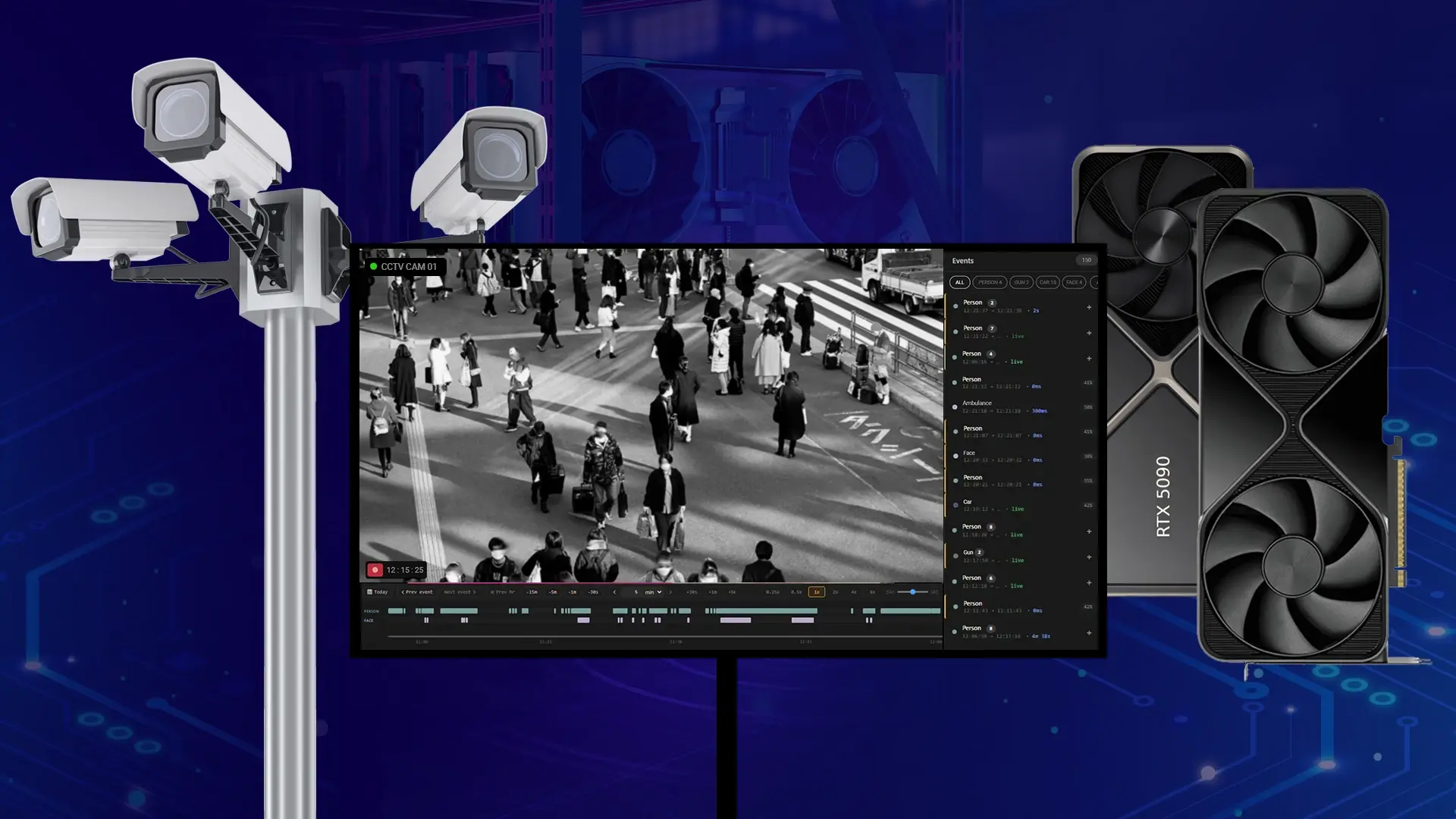
GPU Capacity Planning for Real-Time AI Video Analytics
Ask a vendor how many cameras their AI runs on one GPU and you will usually get a single confident number with no ...