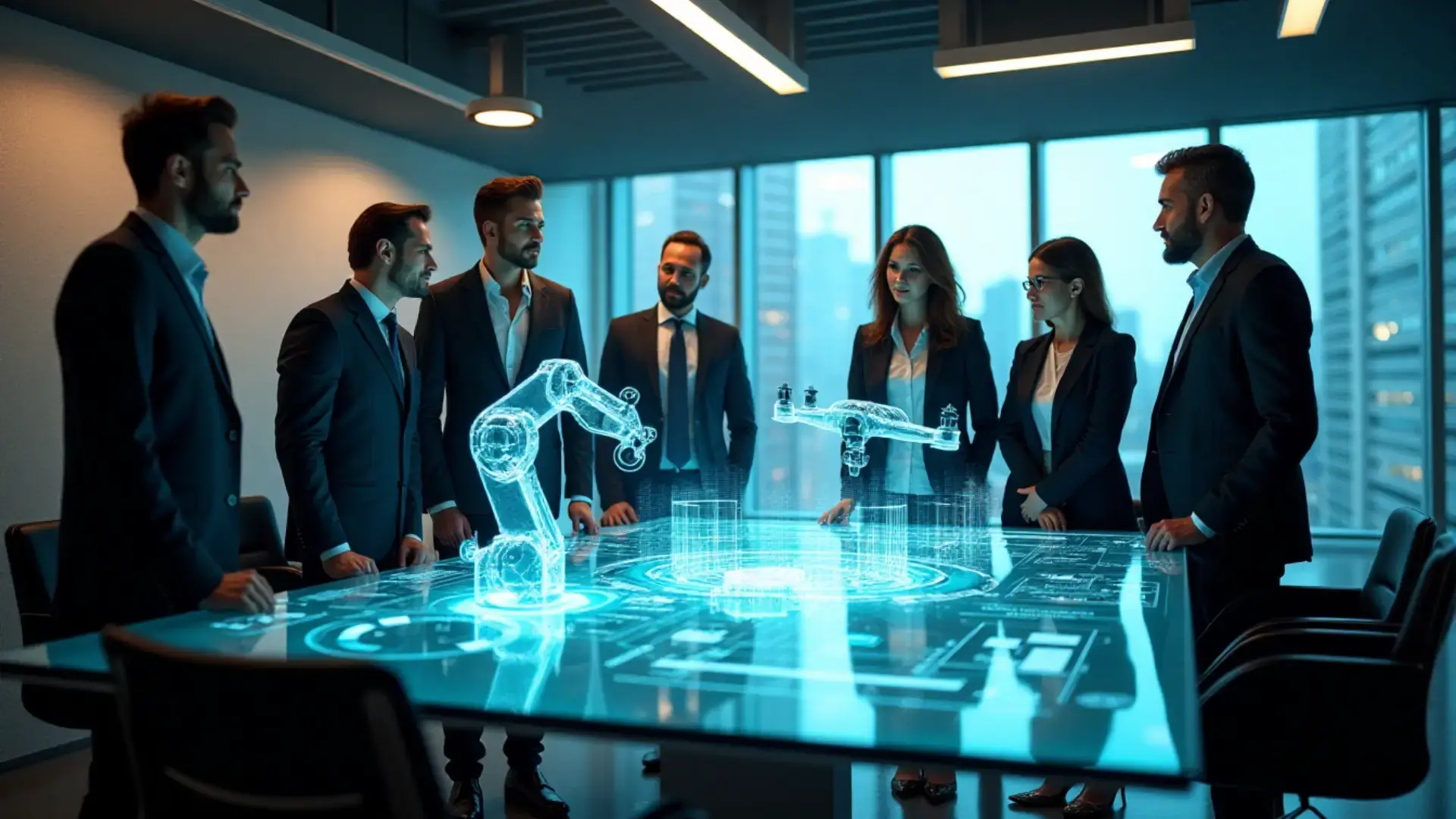
Explore how computer vision services enhance business operations by automating tasks, boosting efficiency, ensuring compliance, and improving security across manufacturing, retail, and healthcare industries.
In today’s business environment, enterprises receive data faster than ever, with global data creation expected to reach 181 zettabytes by 2025, according to IDC. From surveillance videos to digital surveillance data, visual data is being generated at an unprecedented rate.
However, this vast volume of unstructured visual data presents a significant challenge for many businesses: how can they quickly and efficiently extract valuable insights from these data streams?
Enter computer vision services. Computer vision technologies allow businesses to process and analyze images and videos, turning visual data into actionable insights. Whether you're in manufacturing, retail, or construction, computer vision can drastically improve operational efficiency, ensure compliance, enhance security, and ultimately help businesses thrive in an increasingly data-driven world.
In this blog, we’ll explore 10 ways computer vision services transform modern enterprises and the benefits they bring across various industries:
The Impact of Computer Vision Services on Enterprises
Computer vision services are revolutionizing how enterprises function, providing intelligent automation, enhanced security, and deep insights into business operations. Below are some key areas where these services are having a significant impact:
- Enhancing Operational Efficiency Through Automation
- Ensuring Compliance with Regulatory Standards
- Optimizing Customer Experience with Real-Time Insights
- Improving Data-Driven Decision Making
- Enhancing Safety and Security Monitoring
- Automating Object and Vehicle Tracking
- Streamlining Foot Traffic Analysis
- Recognizing Brand Mentions for Marketing and Social Listening
- Preventing Animal Poaching in Environmental Protection
- Reducing the Costs of Manual Search and File Management
Each of these areas are explored in detail below:
1. Enhancing Operational Efficiency Through Automation
Manufacturing operations are complex, often involving the coordination of multiple tasks such as inventory management, product inspection, and machinery maintenance. Manual processes in these areas can be slow, inefficient, and error prone.
Manual inventory checks can result in stockouts or overstocking, and product defects can go unnoticed until they’re discovered late in the production cycle. Additionally, equipment failures can lead to unplanned downtime, costing businesses valuable time and money.
Computer vision development services can automate many of these tasks. For example, object detection technology can help automate inventory management by identifying and counting products on shelves or production lines. This reduces human error and ensures better stock management.
Additionally, predictive maintenance powered by computer vision can preemptively identify signs of equipment failure through visual monitoring of machine conditions. Early detection of product defects during production stages, facilitated by defect detection algorithms, ensures consistent product quality and can help avert costly recalls. Implementing defect detection post-production also ensures that defective products are not sold, potentially safeguarding the brand’s reputation.
With AI vision, manufacturing managers can optimize workflows, reduce errors, and prevent production halts, leading to significant operational efficiency gains.
2. Ensuring Compliance with Regulatory Standards
Stringent regulatory standards bind industries such as construction, healthcare, and retail. Construction sites, for instance, must comply with OSHA regulations, while HIPAA guidelines govern healthcare entities to ensure the protection of sensitive patient data.
Maintaining compliance typically demands continuous monitoring and frequent manual inspections. Failure to comply will result in penalties, legal issues, and damage to a company's reputation. The traditional manual approach to confirming that all safety protocols are observed is time-consuming and susceptible to human error.
AI vision services can ensure regulatory compliance through automation. For example, PPE detection systems use computer vision to monitor whether construction site workers wear the appropriate equipment, like helmets and gloves. This reduces the burden on compliance officers and ensures that safety standards are consistently met.
In healthcare, data redaction features can automatically remove personally identifiable information (PII) and protect health information (PHI) from medical imaging scans such as MRIs, X-rays, or patient monitoring videos, maintaining compliance with privacy regulations like HIPAA.
By using AI vision to automate compliance checks, businesses can avoid penalties, enhance safety, and ensure that their operations adhere to the necessary regulations without manual intervention.
3. Optimizing Customer Experience with Real-Time Insights
Retailers and e-commerce businesses are constantly looking for ways to enhance shopping experience. However, monitoring customer behavior and preventing theft in real time can be challenging, especially in large retail environments.
Manual observation of in-store behavior or constant surveillance of shoplifting is labor-intensive. At the same time, retailers need to ensure customers have a personalized shopping experience that drives sales.
Computer vision services provide tools to optimize customer experiences. For instance, theft detection algorithms automatically detect suspicious behavior, such as shoplifting, in real time. When a suspicious activity is identified, store personnel are immediately alerted to take action, preventing losses before they happen.
Additionally, consumer behavior analysis allows retailers to track customer movements throughout the store, analyzing purchase patterns, dwell times, and areas of interest. This data helps improve store layout, product placement, and the overall shopping experience, making customers feel more valued and increasing sales.
By leveraging AI vision, retailers can enhance customer experience, reduce theft, and ultimately drive more conversions and repeat business.
4. Improving Data-Driven Decision Making
In today’s fast-paced world, businesses deal with an overwhelming amount of unstructured data, especially visual data like videos and images. Manually extracting valuable information from this data is slow, inefficient, and costly.
AI-powered search enables businesses to quickly and accurately navigate vast amounts of unstructured data. For example, businesses can instantly search for specific text, objects, or metadata within videos, images, or audio files to retrieve critical information. This dramatically reduces the time spent on manual research and ensures teams can quickly act on insights.
For example, a security team in a corporate building can instantly retrieve footage of a specific person entering a restricted area rather than manually reviewing hours of surveillance video.
Similarly, in legal and compliance teams, AI-powered search can quickly identify and redact personally identifiable information (PII) or protected health information (PHI) from multimedia files, ensuring data privacy regulations like HIPAA and GDPR are met.
By using computer vision to quickly analyze visual data, enterprises can make smarter, data-driven decisions that improve operational efficiency and customer satisfaction.
5. Enhancing Safety and Security Monitoring
Enterprises increasingly rely on video surveillance to ensure the safety of their premises. However, manually reviewing hours of video footage to identify potential security threats can be daunting and inefficient.
The sheer volume of video data can overwhelm security teams, and threats may go unnoticed if not monitored in real-time. This can lead to security breaches, unauthorized access, and even physical harm to employees or customers.
Computer vision services can significantly improve safety and security monitoring. Facial recognition technology can identify individuals entering restricted areas, alerting security personnel to potential threats.
Activity recognition systems can detect unusual behavior, such as trespassing or theft, ensuring that security teams are alerted immediately. Additionally, video analytics can be used to monitor public spaces for safety hazards, ensuring that the premises remain secure and safe for both employees and customers.
By automating surveillance with computer vision, businesses can improve security, respond faster to threats, and ensure a safer environment.
6. Automating Object and Vehicle Tracking
In logistics and transportation, tracking the movement of objects and vehicles can be complex and difficult to manage manually, especially when dealing with large fleets or busy highways.
The lack of automation in tracking can lead to inefficiencies such as lost shipments, missed deliveries, and accidents on the road, ultimately affecting business performance and customer satisfaction.
Computer vision services offer advanced object tracking and vehicle detection capabilities. For instance, in logistics, computer vision can track the movement of goods within a warehouse or during transit, ensuring that shipments are delivered on time and reducing the risk of loss.
Similarly, license plate recognition helps monitor vehicles on busy highways, providing real-time data on traffic flow, speed limits, and road conditions. This information can be used to optimize transportation routes and improve road safety.
By automating object and vehicle tracking, businesses can streamline operations, improve logistics, and ensure a higher level of road safety.
7. Streamlining Foot Traffic Analysis
Retailers and service providers struggle to understand customer flow within their physical locations. Optimizing store layouts and offering personalized services requires data on how customers interact with products and spaces.
Without clear insights into foot traffic patterns, businesses may miss opportunities to enhance customer experience, optimize product placements, or increase sales.
Foot traffic analysis through AI computer vision allows businesses to track customer movements in stores, monitoring areas with high or low traffic. This data can optimize store layouts, place popular products in high-traffic areas, and adjust staffing levels based on real-time foot traffic data.
Understanding where customers spend the most time can help retailers better place products and enhance sales strategies.
By leveraging computer vision to analyze foot traffic, businesses can create better customer experiences and drive sales growth.
8. Recognizing Brand Mentions for Marketing and Social Listening
Marketing teams often struggle to monitor brand mentions across multiple channels, especially within visual media like videos or social media. Manually scanning content for brand mentions is inefficient and ineffective.
Missing brand mentions in videos or social content can hurt marketing efforts, as businesses might fail to respond to opportunities for engagement or promotion.
Computer vision services can help with brand mentions and recognition in video content, social media, and other media sources. By automating this process, marketing teams can track real-time conversations, identify trends, and respond quickly to customer feedback or brand mentions.
For example, an apparel company might use computer vision to identify when their products are shown in influencer videos or media content, allowing them to engage directly with audiences or adjust marketing strategies accordingly.
9. Preventing Animal Poaching
Environmental conservation organizations need to monitor vast areas to prevent illegal activities such as poaching, hunting, and logging. These activities can damage ecosystems and threaten endangered species.
Without the proper monitoring tools, conservation organizations may struggle to track and prevent poaching, risking the loss of protected wildlife and biodiversity.
Computer vision services offer powerful tools for wildlife monitoring and poaching detection. Conservationists can monitor protected areas in real time using cameras and sensors.
Computer vision can detect and identify intruders, animals, and suspicious activities in these regions, such as poachers using weapons or hunting dogs. By automating this monitoring, conservation organizations can act faster, preventing potential damage to wildlife and protecting endangered species.
By utilizing AI vision services for wildlife monitoring, organizations can enhance their conservation efforts, prevent poaching, and protect biodiversity.
10. Reducing the Costs of Manual Search and File Management
Businesses, especially those in healthcare, retail, and logistics, often deal with large amounts of visual data. Searching videos, images, and records for specific information is time-consuming and expensive.
The inefficiency of manual search processes increases operational costs and delays important actions. Whether retrieving patient data in healthcare or locating specific items in a retail virtual inventory, delays can lead to lost opportunities or critical safety concerns.
AI-powered search tools within custom computer vision development services can quickly identify objects, people, or specific information within large images, videos, or document datasets.
These services can save valuable time by providing instant search results based on text, metadata, or visual elements. For example, doctors can quickly find relevant images in healthcare, such as X-rays or MRIs, without wasting time manually browsing through patient records.
Similarly, managers can quickly locate specific products across their inventory or stores in retail, reducing the time and cost associated with manual searches.
By leveraging AI-driven search features, businesses can streamline operations and improve productivity, lowering costs and enhancing service delivery.
---------------------------------------------------------------------------------------------------------------------------------------------------------------.png?width=1200&height=600&name=Web_Banner_H5.2-A39%20(3).png)
Join VIDIZMO at GITEX EUROPE 2025
Discover VIDIZMO AI solutions for enterprise video content management, digital evidence management, and redaction at Europe’s largest tech event – GITEX EUROPE 2025.
See how computer vision, natural language processing (NLP), generative AI, enterprise LLMs, and intelligent document processing (IDP) solutions can help you automate your existing manual processes and speed up business workflows.
Be part of the AI revolution and engage in live demonstrations and expert discussions. Visit our GITEX EUROPE 2025 page to learn more.
---------------------------------------------------------------------------------------------------------------------------------------------------------------
VIDIZMO AI Services: Empowering Enterprises with Advanced AI Solutions
VIDIZMO’s suite of AI services provides enterprises with powerful tools to unlock the full potential of their visual and textual data. These services include computer vision capabilities, Natural Language Processing (NLP), and Generative AI (Gen AI).
Computer vision services include object detection, facial recognition, PPE detection, and activity recognition, which improve operations, enhance compliance, and ensure security.
Additionally, Natural Language Processing (NLP)v enables capabilities such as automatic speech recognition (ASR), speaker diarization, emotion detection, sentiment analysis, named-entity recognition (NER), video chaptering, topic modeling, and tag creation to help businesses extract actionable insights from spoken content and text.
Furthermore, Generative AI (Gen AI) technologies, such as conversational search engines and tools like ChatGPT, can be integrated into business systems to boost productivity, providing enterprises with cutting-edge solutions for automating tasks and improving decision-making processes.
By leveraging custom computer vision development services, businesses can tailor these AI solutions to meet their needs, ensuring more innovative operations and enhanced decision-making across various industries.
Ready to harness the power of AI for your business? Contact us today to explore tailored AI solutions for your enterprise!
Harnessing the Power of Computer Vision Services for Your Business
In an age where data is king, computer vision services provide enterprises with the tools to automate tasks, ensure compliance, enhance security, and drive more intelligent business decisions.
Whether improving operational efficiency, monitoring customer behavior, or detecting safety violations, computer vision offers powerful capabilities that streamline processes and provide actionable insights.
As businesses increasingly rely on data to gain a competitive edge, computer vision will continue to be a critical technology for transforming industries and ensuring success.
FAQ
Frequently Asked Questions
How do computer vision services improve operational efficiency?
Computer vision automates inventory management, defect detection, and predictive maintenance, reducing human error, improving productivity, and lowering operational costs.
Can computer vision help with regulatory compliance?
Yes, AI Computer Vision can automatically detect safety violations (e.g., PPE detection for OSHA compliance), monitor activity for potential legal risks, and redact sensitive data to ensure compliance with privacy regulations like HIPAA or GDPR.
How does computer vision enhance customer experience in retail?
Computer vision services allow retailers to improve the shopping experience, reduce losses, and increase sales by tracking customer behavior, optimizing store layouts, and detecting theft in real-time.
What types of industries benefit from computer vision?
Computer vision can benefit industries such as manufacturing, retail, healthcare, logistics, construction, and security by automating tasks, ensuring compliance, improving safety, and extracting valuable insights.
How does computer vision improve security and surveillance?
Computer vision enhances surveillance capabilities through facial recognition, activity detection, and real-time alerts. This allows security teams to quickly detect and respond to potential threats.
How does computer vision support marketing efforts?
Computer vision can automatically recognize brand logos and mentions in videos or social media, helping marketing teams track brand sentiment, identify influencers, and improve engagement.
How can computer vision reduce manual search costs?
By using AI-powered search capabilities, businesses can instantly locate specific information within large datasets of images or videos, significantly reducing the time and cost of manual searches.
TopicsArtificial Intelligence

About the author
Moazzam Iqbal is a Product Marketing Executive at VIDIZMO covering digital evidence management, enterprise video solutions, and AI-powered technology. He focuses on helping public safety agencies and government organizations make informed decisions about evidence and video infrastructure.
You may also like

Deploying a Low-Latency Surveillance Pipeline: An Architecture Guide
"Real-time" is one of those phrases that gets used loosely, and in a video analytics pipeline it hides a lot of ...
Choosing a GPU for Real-Time Video Analytics
Capacity planning tells you how many GPUs a deployment needs. This is the other half of the question: which GPU to ...
GPU Capacity Planning for Real-Time AI Video Analytics
Ask a vendor how many cameras their AI runs on one GPU and you will usually get a single confident number with no ...